Thailand's Power Grid Overhaul Targets 70% Renewable Energy
Thailand's power authority is restructuring its grid to achieve 70% renewable energy by 2050, requiring upgrades like battery storage, flexible power plants, and demand management systems to handle fluctuating electricity supply. The agency

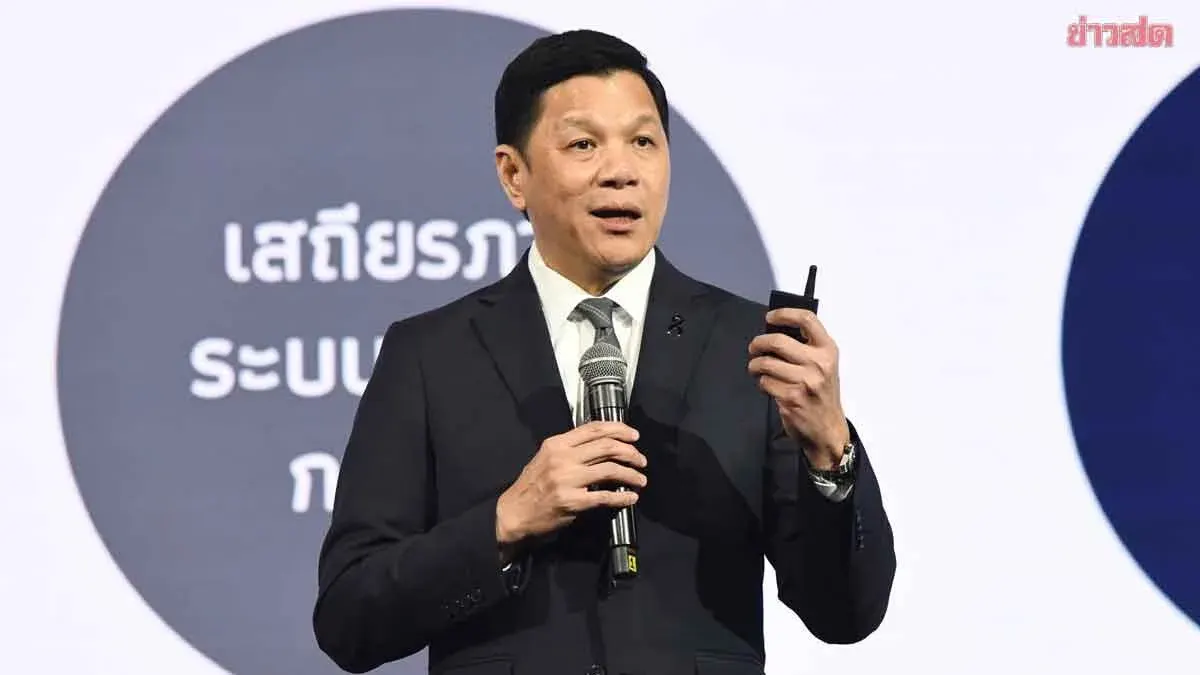
Thailand's Electricity Generating Authority (EGAT) is restructuring its power system to accommodate rising demand for renewable energy, with projections reaching 70 percent of total generation. Deputy Governor for Strategy Vrit Rattanchuen told the Beyond ESG: Thailand Transition seminar that future grid security and the ability to meet fluctuating electricity demand remain central to EGAT's strategy. Unlike conventional goods, electricity cannot be efficiently stored over long periods due to costs and energy losses, so power plants must generate on demand. The grid therefore requires reserve generation capacity to handle plant outages, maintenance, or failures, with reserve plants dispatched based on cost-effectiveness—much like having spare vehicles and choosing the most efficient one when needed.
For Thailand's clean energy goals, EGAT views Net Zero 2050 as the key direction, with the share of clean energy in the grid—including hydropower, renewables, and zero-carbon sources—trending steadily upward, potentially exceeding 70 percent in the future and increasing further as technology and the Power Development Plan (PDP) advance. However, higher renewable penetration requires EGAT to make the grid more flexible through upgrades to existing power plants for rapid output adjustments, installation of responsive transmission equipment, and development of energy storage systems including pumped hydro and batteries.
EGAT is testing battery systems in solar-rich areas such as Lopburi and Chaiyaphum to assess practical feasibility, as Thailand's climate requires cooling systems that may affect costs and performance. Pumped hydro excels at long-term grid support. EGAT also prioritizes Demand Response systems and electricity management to allow consumers to reduce usage during peak periods and address grid inertia challenges as renewable share grows.
Small Modular Reactors (SMRs) represent one option for stable, carbon-free power generation. SMRs are small nuclear plants designed for factory assembly and on-site installation, reducing construction complexity compared to large reactors. They feature enhanced safety systems requiring less external power, such as gravity-based cooling, lowering risks from grid failures. EGAT has not yet chosen SMR technology but is studying it per International Atomic Energy Agency (IAEA) guidelines, covering law, regulation, safety, nuclear waste management, and public acceptance. Thailand has time to compare technologies from both East and West before deciding. While SMRs feature in the PDP, EGAT is also researching hydrogen and carbon capture and storage (CCS), though cost and commercial readiness remain limitations.