Thailand Targets 73% Renewable Energy in 2026 Power Plan
Thailand's Energy Ministry unveiled a power plan targeting 73% renewable energy by 2026 to support growing demand from data centers and electric vehicles while pursuing net-zero emissions by 2050.
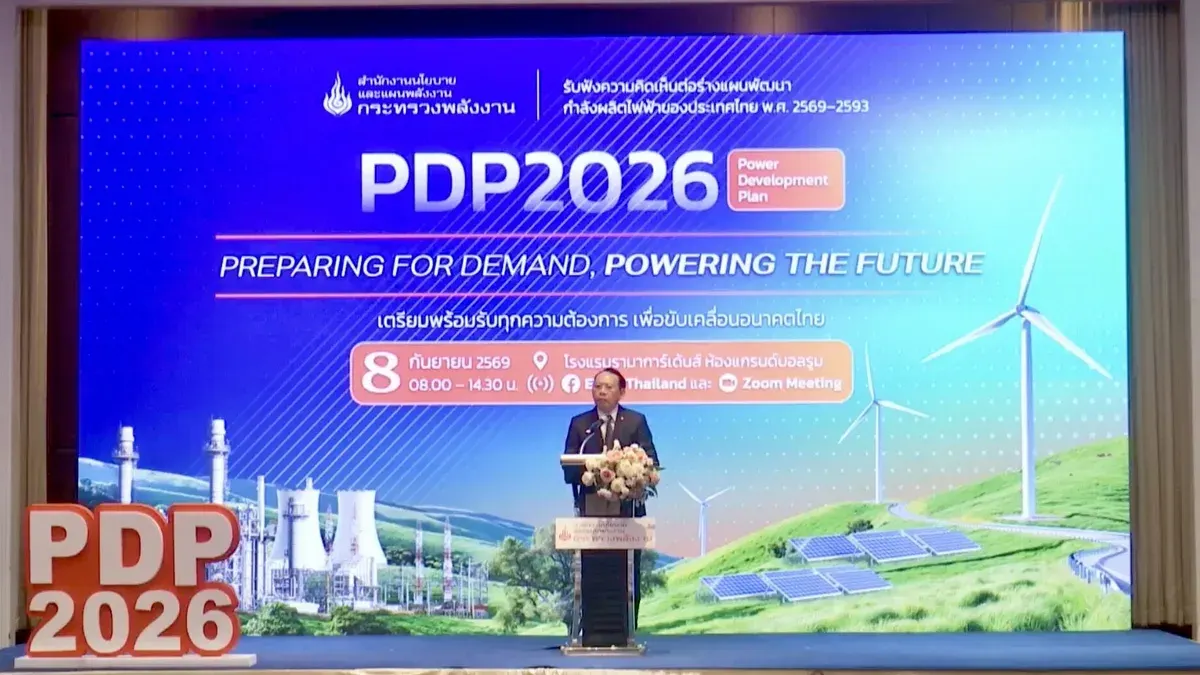
Prasert Sinsukprasert, Secretary of the Energy Ministry, announced four scenarios for the Power Development Plan 2026 (PDP 2026) at a public consultation seminar, emphasizing the need to restructure Thailand's electricity system to support clean energy and achieve Net Zero 2050. This shift is critical for attracting foreign investment and trade, particularly from technology companies requiring stable, clean power. The ministry faces rapid electricity demand growth from data centers and electric vehicles, with requests totaling 22,000-30,000 megawatts, though it estimates data center demand at 8,800 megawatts for the mid-level PDP scenario, ranging from 6,000 to nearly 20,000 megawatts across three projections.
The Energy Ministry proposes adding data centers only if they provide genuine economic value, particularly in digital and AI sectors, with operators paying premium rates for high-quality clean electricity. The draft PDP 2026 targets average electricity rates of approximately 3.88 baht per unit throughout the plan period, potentially rising to 4.50-4.60 baht per unit toward the plan's end. The Office of Energy Policy and Planning has developed four carbon-reduction scenarios, with the preferred hybrid model increasing renewable energy to 73% while incorporating some carbon capture and storage technology to balance affordability, grid security, and climate goals.
The PDP 2026 aims to reduce energy sector carbon emissions to 19 million tonnes from a projected baseline of 121 million tonnes, while conserving approximately 2,000 million cubic feet of natural gas daily from the Gulf of Thailand and reducing dependency on liquefied natural gas imports. The Energy Ministry is accelerating investment in smart grids, energy storage systems, and grid stabilization equipment, alongside demand management using battery storage and electric vehicle resources exceeding 14,000 megawatts, as peak electricity demand has shifted to 21:00-22:00 following increased daytime solar production by residents.
Thailand currently maintains a 25% reserve margin for short-term power generation but must urgently expand transmission and distribution networks at an estimated cost of 300,000 to 700,000 million baht to accommodate rising electricity demand. Small modular nuclear reactors are included in PDP 2026 with a maximum capacity of 9,000 megawatts by 2050, with the first 300-megawatt project to be operated by the Electricity Generating Authority of Thailand.