Lanta & News
No. 01 · ENDLESS
Police

Unidentified 50-Year-Old Man Found Dead in Lampang

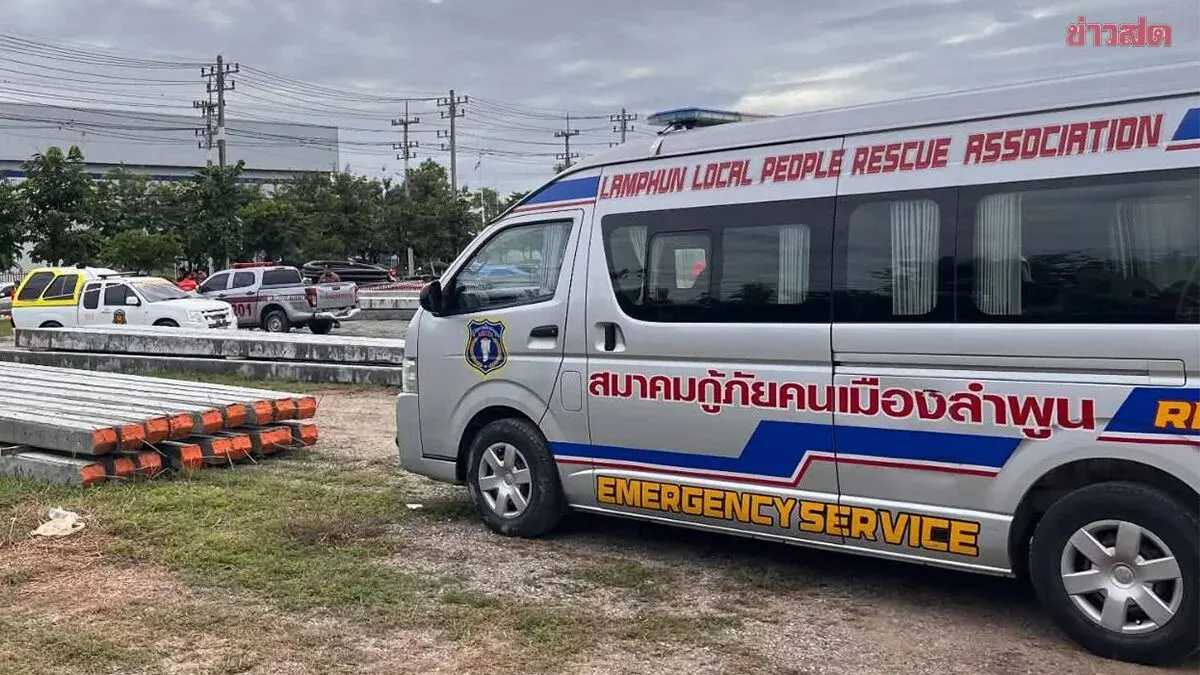
An unidentified 50-year-old man was found dead at a company compound in Lampang's Muang district on July 21, prompting police to launch an investigation into his identity and cause of death.
Unidentified 50-Year-Old Man Found Dead in Lampang
21 Jul Khaosod

On July 21, 2026, at 9:00 a.m., emergency services received a report of a deceased man found within a private company compound in Pa Sak subdistrict, Muang Lamphan district, Lampung province. Rescue volunteers, highway rescue personnel, and officers from Muang Ji police station responded to investigate and discovered a man aged approximately 50 years old sitting on the ground. The body was transferred to the forensic department at Lampang Hospital for examination. The man's identity and hometown remain unknown. Police from the Lampang Industrial Estate police station are continuing their investigation, gathering evidence, and awaiting identity confirmation to proceed with legal procedures and locate relatives to claim the body.

No. 01 of Read at source → Next
National

New Vehicle Registrations Surge 4.28% in June

Thailand recorded 246,992 new vehicle registrations in June, up 4.28% month-on-month, with motorcycles accounting for over 72% of registrations and electric vehicles reaching nearly 40,000 units.

New Vehicle Registrations Surge 4.28% in June
21 Jul Khaosod

The Department of Land Transport, led by Director-General Sarapong Paithurypong, announced that as of June 30, 2025, Thailand had 45,947,597 registered vehicles in total—consisting of 44,574,147 automobiles and 1,373,450 transport vehicles. Electric-powered vehicles numbered 1,277,257 units, or 2.78% of all vehicles, representing a 3.17% increase from the previous month. These comprised 694,320 hybrid electric vehicles (HEV), 491,496 battery electric vehicles (BEV), and 91,441 plug-in hybrid vehicles (PHEV).

In June 2025, 4,328,694 vehicles completed registration and tax transactions, with 3,330,566 mainly paying annual vehicle tax. Most payments (84.25%) were processed at transport department offices, followed by Drive Thru For Tax (10.78%) and online channels (3.84%). New vehicle registrations totaled 274,988 units, with 246,992 newly registered—up 4.28% month-on-month. Personal motorcycles dominated at 72.08%, followed by passenger cars seating up to 7 people at 21.94%.

Electric-powered new vehicles registered in June reached 39,606 units, a 1.01% increase from May, comprising 14,378 HEVs, 22,899 BEVs, and 2,329 PHEVs. Most (36,331) were passenger cars seating up to 7 people, with 3,009 personal motorcycles. The national total of driver licenses and operator permits reached 35,493,073 documents—33,663,919 automobile driver licenses and 1,829,154 transport operator permits. In June, 189,316 new licenses and permits were issued, down 1.94% from May, while 7,005 new public transport driver licenses were issued, up 31.01% due to extended Saturday operating hours for license applications and renewals from June 13 to August 1, 2025. International driving permits requested through the Pao Tang application numbered 5,310, representing 43.89% of 12,099 total applications.

No. 02 of Read at source → Next
National

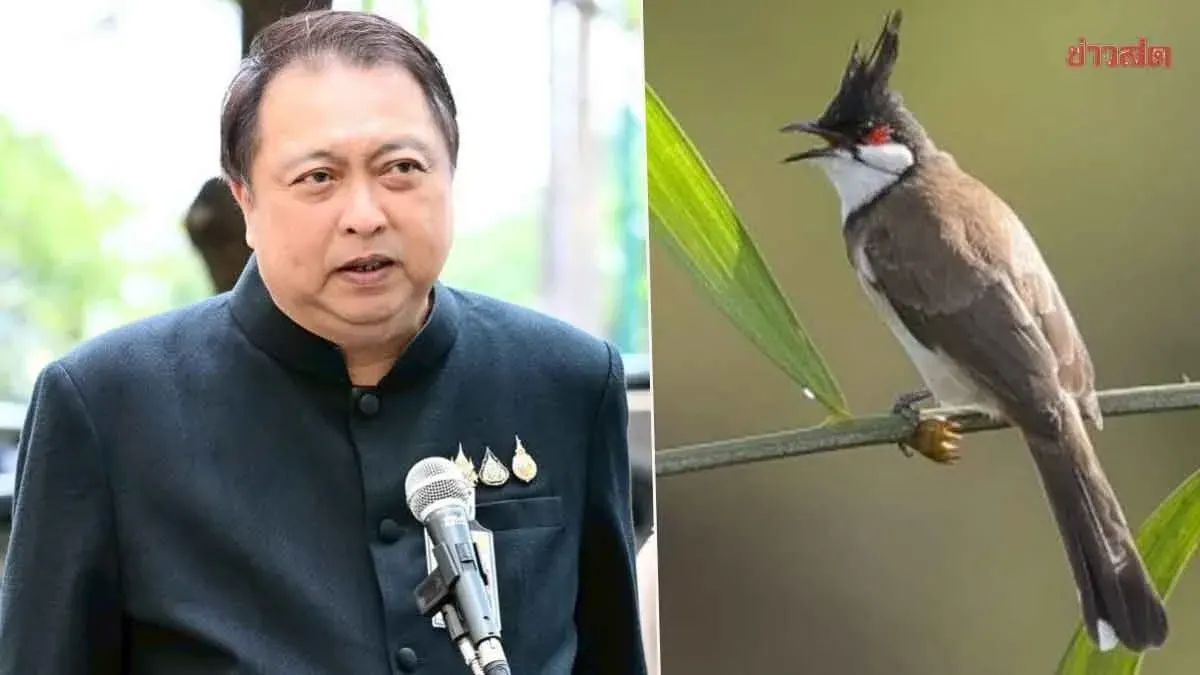
Thailand Delists Hoary-Throated Barwing, Tightens Captive Breeding Rules

Thailand delisted the Hoary-Throated Barwing from protected species on July 21, allowing captive breeding outside forests while maintaining strict safeguards including mandatory registration, movement controls, and identification markers to

Thailand Delists Hoary-Throated Barwing, Tightens Captive Breeding Rules
21 Jul Khaosod

On July 21, 2024, Natural Resources and Environment Minister Suchatchai Chomklin announced cabinet approval of draft regulations delisting the Hoary-Throated Barwing from protected wildlife. The proposal will now be reviewed by the Office of the Council of State before proceeding to the Prime Minister's Office and eventually the Royal Gazette, taking effect 30 days after publication.

For areas outside forests, the Parks Department will enforce strict measures in collaboration with breeders' associations and relevant parties. These include registry surveys, movement controls, animal cruelty law compliance, and community conservation participation. Safeguards against negative ecological impact from released birds include mandatory cage standards, loose-bird reporting centers, voluntary farm registration systems, expert oversight teams, and identification markers to distinguish captive from wild birds.

Parks Director-General Atthapol Charoenchansa emphasized that despite the legal delisting, birds in protected forest areas—national parks, wildlife sanctuaries, and reserved forests—remain fully protected under area-specific laws. Poaching remains illegal. The department will maintain enforcement through patrols, checkpoints, arrest operations, network investigations, personnel training, and civilian surveillance networks. A subcommittee will closely monitor wild populations and can quickly restore protected status if illegal capture threatens the population.

No. 03 of Read at source → Next
National

Thailand Launches Moral Credit System to Reward Good Deeds

Thailand's government is launching a moral credit system that tracks and rewards good deeds with tangible benefits like scholarships and job opportunities, while also prioritizing moral development programs for children under 13 as part of

Thailand Launches Moral Credit System to Reward Good Deeds
21 Jul Khaosod

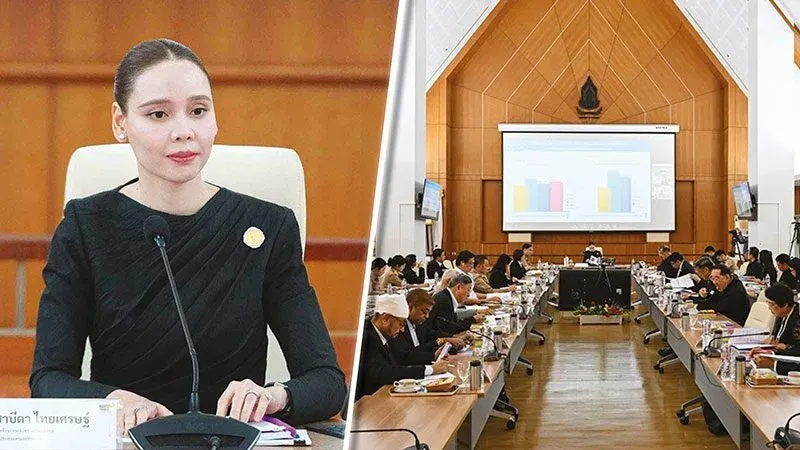
Recently, Ms. Sabeeda Thaisetrach, Minister of Culture, chaired the second 2025 meeting of the National Committee for the Promotion of Moral and Ethical Development, attended by experts and representatives from various agencies at the Ministry of Culture's eighth floor conference center.

Ms. Sabeeda reported that the meeting reviewed past accomplishments across multiple fronts: establishing integrity standards for political office holders and independent organizations, increasing transparency in selecting provincial and Bangkok "good citizens," and integrating five core values—sufficiency, discipline, integrity, volunteerism, and gratitude—into good governance frameworks across the country. The meeting prioritized three key initiatives going forward:

(1) Drafting the third-phase National Moral Promotion Action Plan (2028–2032), emphasizing development of life capital in children under 13, a critical period for behavioral cultivation and learning. The plan will employ age-appropriate mechanisms and create safe, constructive environments enabling children to internalize values from all dimensions—home, temple, school, and community. It will mobilize all sectors to model good behavior, building children's moral foundations and social resilience to grow into quality citizens.

(2) Establishing a concrete moral credit system to build a society that honors good people. The initiative will develop standardized good-deed recording systems, converting abstract moral behavior into measurable "social capital." Research will link good deeds to tangible benefits from multiple sectors—such as scholarships, faster public assistance access, and job opportunity consideration—making moral credit valuable life capital. This creates incentives for sustained goodness across all ages.

(3) Standardizing the moral province assessment mechanism to unify standards and strengthen governance at grassroots levels. The committee assigned a subcommittee to lead assessment across three tiers: moral promotion, moral development, and exemplary moral province, with outstanding exemplary province selection beginning in fiscal year 2027. This will systematize provincial moral data collection and develop local potential as better models.

The meeting also reviewed progress from four policy subcommittees implementing the second-phase National Moral Promotion Action Plan (2022–2026), showing significant advancement.

No. 04 of Read at source → Next
Police

Three Youths Arrested in Fatal Shooting of 17-Year-Old

Three youths arrested in Krabi after a 17-year-old was fatally shot on July 20; police recovered two firearms hidden in a flower pot and charged the suspects with premeditated murder and weapons violations.

Three Youths Arrested in Fatal Shooting of 17-Year-Old
21 Jul Khaosod

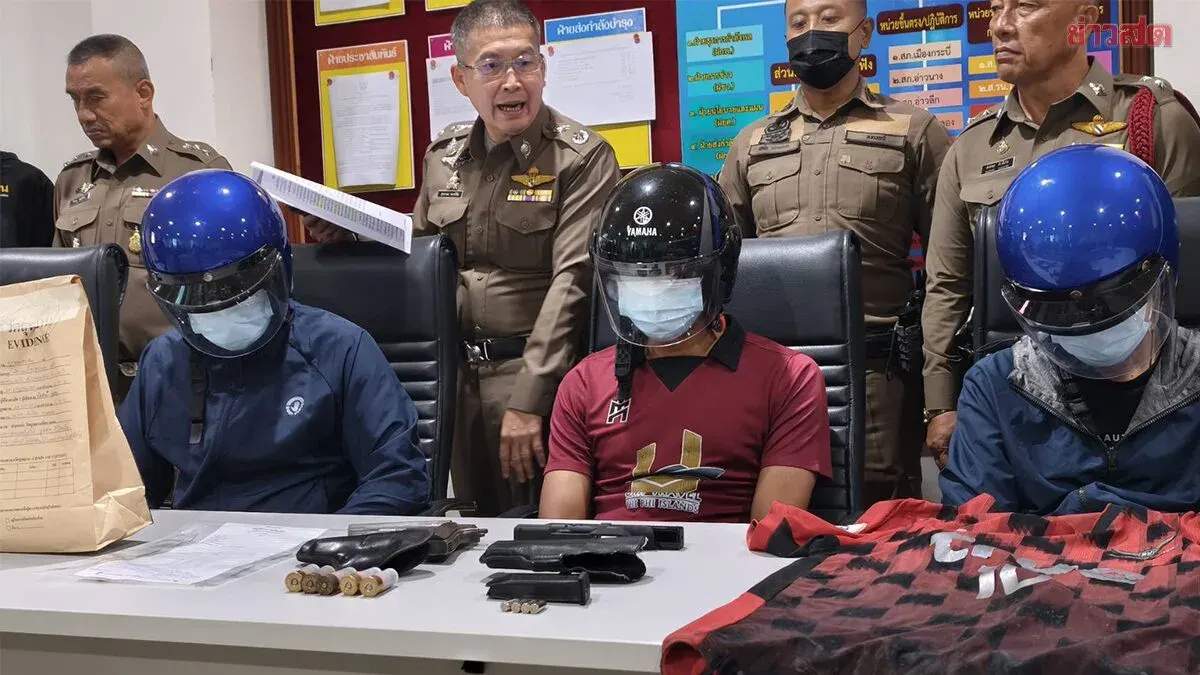
On July 21, 2026, Pol. Lt. Gen. Sukhakhet Nakhon Wilai, commander of Krabi Provincial Police, announced the arrest of three youths in two separate fatal incidents in Khlong Thom and Mueang Krabi districts. In the first case, police arrested two youths accused of shooting a teenager on Waterfall Road in Khlong Thom Nuea sub-district on July 20, 2026, which left three people wounded and a 17-year-old boy dead. After investigation and court approval, both suspects were charged with attempted premeditated murder and violations of the Firearms Act. A third suspect was arrested during the follow-up investigation, and police seized two firearms and ammunition hidden underground in a flower pot. All three are now in custody for prosecution.

In a second case, police arrested a youth suspected of stabbing a man named Mr. Kae to death in Krabi Yai sub-district using a knife. The suspect was apprehended after evidence was gathered and a warrant was issued, and the case has been transferred to Mueang Krabi Police Station.

Pol. Lt. Gen. Sukhakhet revealed that the firearm used by the youth gang was purchased online for only 7,000 baht as a BB gun, then modified to closely resemble a real weapon. However, it was lethal because the projectiles were real bullets. Police have announced that any youth groups involved in disputes will be placed on a monitoring list and closely watched to prevent similar incidents in the future.

No. 05 of Read at source → Next
Community

Buddhist Amulet Guide: Luang Pho Yid Merit Coins

Luang Pho Yid, a revered Buddhist scholar from Prachuap Khiri Khan, was honored with special merit coins featuring his portrait when he turned 89, among several sought-after amulets created by respected monks across Thailand.

Buddhist Amulet Guide: Luang Pho Yid Merit Coins
21 Jul Khaosod

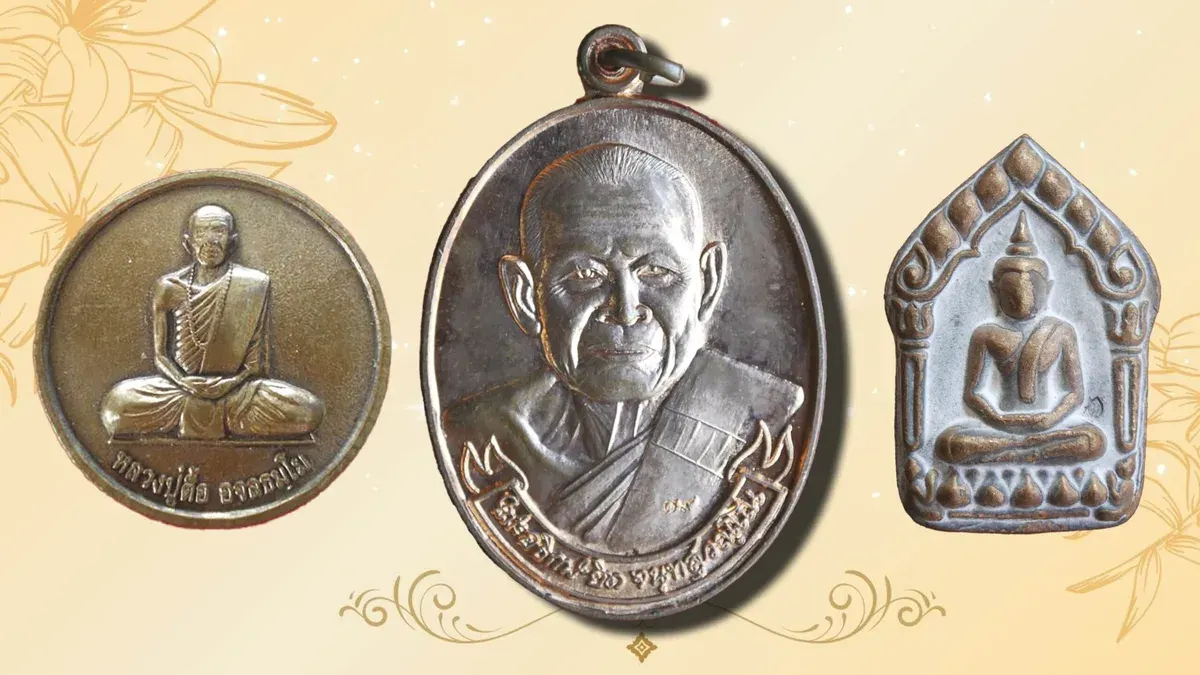
"Faith alone does not succeed; one must have both faith and wisdom," according to a teaching by Luang Pho Cha Suphattho of Wat Nong Pa Phong in Ubon Ratchathani. Luang Pho Yid Chanthsuvanno, a renowned Buddhist scholar from Wat Nong Jok in Kuiburi District, Prachuap Khiri Khan, was honored in 2555 B.E. when his chief disciple Chaiya Am Samang commissioned the "Merit Coin 89" to mark the monk's 89th birth year. The oval coin features a half-length relief portrait with the number 89, Thai script identifying the monk, and decorative borders. The reverse depicts a Hanuman carrying a flag with Khmer script and temple information. The article also covers other popular merit amulets including the Safety Coin of Luang Pho Sawang from Wat Tha Phutra in Kamphaeng Phet (2510 B.E.), the Luang Pu Teuea Memorial Coin from Wat Pa Aranyavivek in Nakhon Phanom (2552 B.E.), and the Khun Phaen Chinbanchorn Victory Amulet by Luang Pho Mian of Wat Ja Niang Vanarama in Buriram (2557 B.E.), all of which have attracted strong collector interest.

No. 06 of Read at source → Next
Police

Ex-Drug Police Chief Offers to Help Tackle Narcotics Crisis

A former narcotics police chief offered his expertise to tackle Thailand's drug crisis, proposing a new approach to handle 2,000 drug offenders he says are caught in a cycle of arrest and reoffense.

Ex-Drug Police Chief Offers to Help Tackle Narcotics Crisis
21 Jul Khaosod

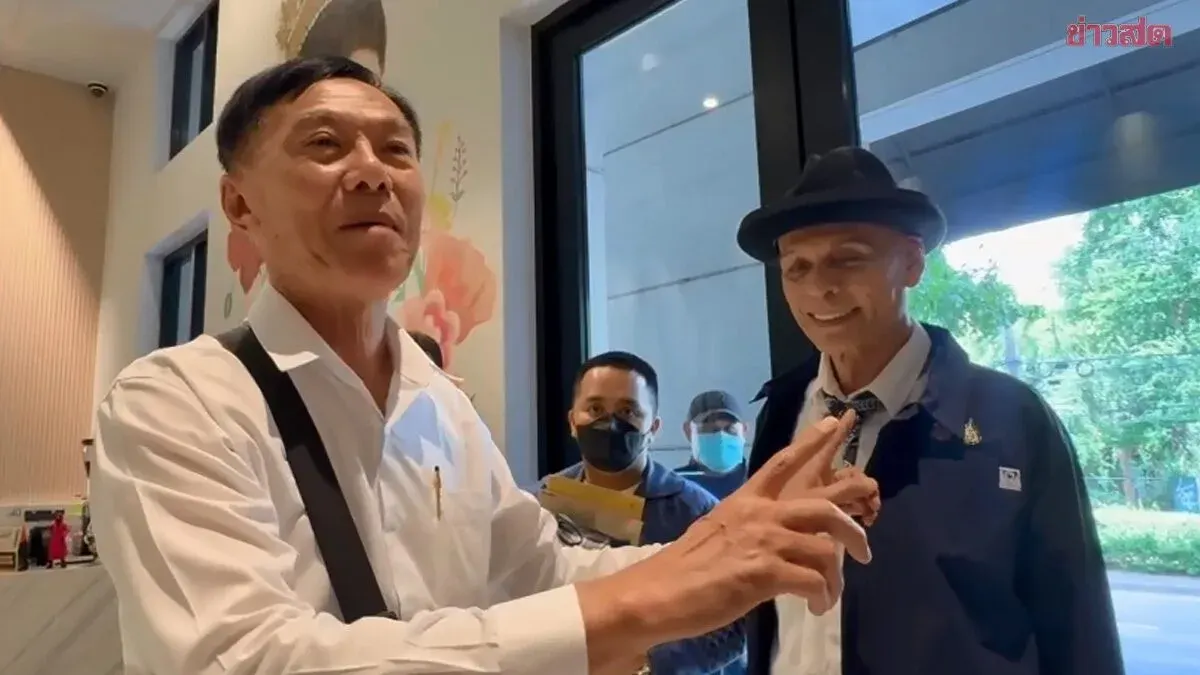
Former narcotics police commander Pol. Lt. Gen. Rewat Klinklaekaew visited Bhumjaithai Party headquarters on July 21 and met with Prime Minister Anutin Charnvirakul and Deputy Interior Minister Worsathit Liangprasit. He denied that he came to join the party, saying he had arranged to meet with Chada Thaisetkasem, an Uthai Thani MP, and coincidentally ended up at the party office.

Rewat revealed he wanted to discuss the drug crisis with the government officials, particularly regarding approximately 2,000 drug-addicted individuals nationwide who need to be apprehended for public safety. He criticized the current cycle where police arrest offenders repeatedly, doctors prescribe medication, and they later abandon the drugs and reoffend, resulting in deaths. He stated he is willing to contribute his expertise to help solve this issue without accepting any official position or salary, instead serving as part of a support team if the government adopts this as a policy priority.

No. 07 of Read at source → Next
National

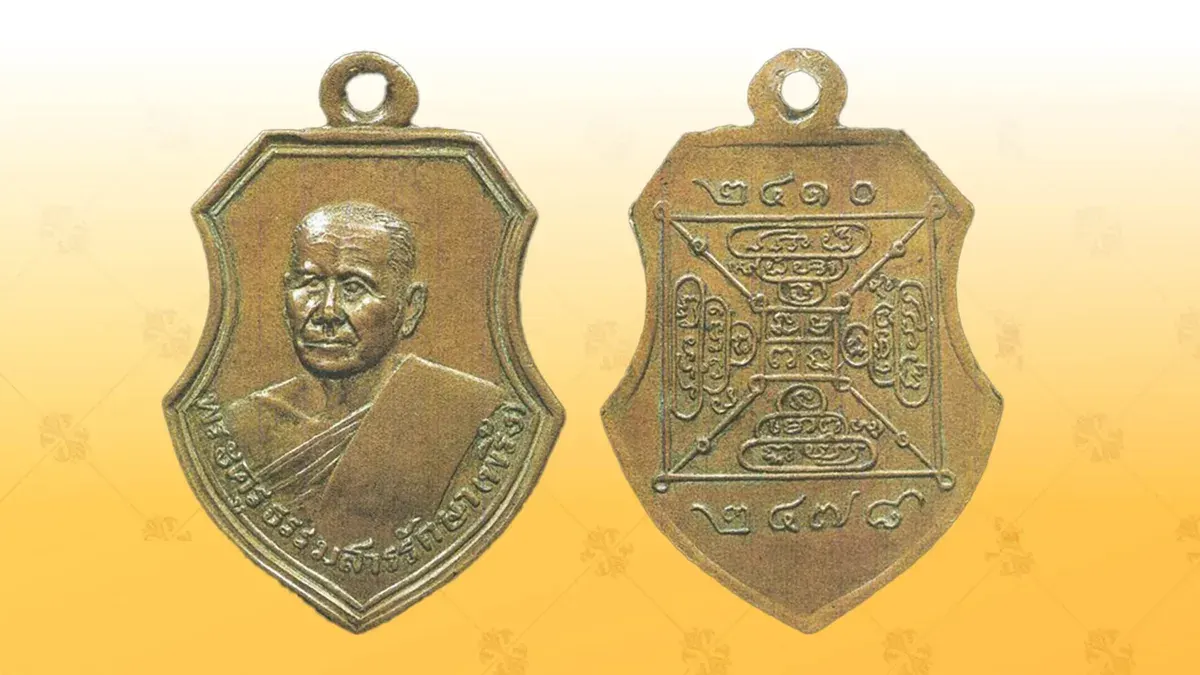
Revered Buddhist Monk Luang Pho Pring Honored in Suphan Buri

Luang Pho Pring, a revered Buddhist scholar and former abbot of Wat Vorajun in Suphan Buri, was honored for his exceptional contributions to Buddhist scholarship and temple development after being ordained in 1888.

Revered Buddhist Monk Luang Pho Pring Honored in Suphan Buri
21 Jul Khaosod

Phra Kru Tham Sarn Raksa, also known as Luang Pho Pring Wachira Suwanno, was the former abbot of Wat Vorajun in Phothipraya subdistrict, Muang district, Suphan Buri province, and served as deputy sangha leader of the province. A renowned and respected Buddhist scholar, he was originally named Pring and was born in 1866 (B.E. 2409) in a house south of Wat Phrao's western water gate. His parents, Nai Tiap and Nang Riean, sent him to study at Wat Phrao at age twelve, where he proved to be an exceptionally intelligent student, quickly mastering Thai script, Khmer script, and Buddhist chants. As a young man, he assisted his parents with rice farming while establishing a secure household with servants. In 1888 (B.E. 2431), at age twenty-one, he was ordained at Wat Phrao's ordination hall, with Luang Pho Kaew serving as his preceptor, Phra Kru Pluem as his instructor in precepts, and Phra Kru In, the provincial sangha leader, as his ceremonial witness. He studied under Phra Kru In at Wat Phrao for one year, then was sent to study at the seminary at Wat Mahathat Yuwarat Rangsrit in Thonburi for approximately seven years before returning to Wat Phrao with expertise in Buddhist scriptural studies.

When ten years had passed since his ordination, a severe drought struck Phothipraya, leaving residents without rice and in great hardship. Because many monks at Wat Phrao received insufficient alms, they moved elsewhere. Luang Pho Pring spent one rainy season studying at Wat Nong Phak Nak in Samchuk district before returning to Wat Phrao for five more years, bringing his total ordination to sixteen years. Subsequently, when Wat Vorajun needed an abbot, the community unanimously requested him to assume the position.

Wat Vorajun, located in northern Phothipraya subdistrict, was established over a hundred years prior to 1834 (B.E. 2377), originally consisting only of two or three wooden and bamboo huts with thatched roofs near an old reservoir under a mango tree. In 1933 (B.E. 2476), the temple was renamed from Wat Chan to Wat Vorajun, with the prefix "Vor" meaning excellent and supreme, at the direction of Phra Ubaligunaupamacharn (Pheuan Tissadatto) of Wat Phra Chetuphonawimaolmankalataram, who held the rank of Phra Thammapit and served as provincial sangha leader of Ratchaburi. He observed that the original name Wat Chan conflicted with Wat Chanyai in Sri Prachuap district, about eight or nine kilometers away, causing frequent government correspondence errors. Upon assuming the position of abbot, Luang Pho Pring undertook major temple restoration work. Before his arrival, the temple had only one well-maintained wooden hall with a thatched roof; he subsequently added and renovated many kutis (monks' residences), a chanting hall, a riverboat pavilion, and other structures.

According to the chedi records, during the reign of King Chulalongkorn (Rama V), the king had ordered Chao Phraya Yommaraj, then serving as Phraya Sukhumnaywinit, provincial commissioner of Nakhon Si Thammarat, to represent Thailand in traveling to India to receive a Buddha relic. Upon its return, the king selected a portion to enshrine at the summit of Khao Thong at Wat Saket. However, a remaining fragment of the relic remained in its container, which the king presented to Chao Phraya Yommaraj, who subsequently presented it to the temple.

No. 08 of Read at source → Next
Tourism

Mazda 6e EV Impresses With Smooth Ride, Tight Handling

Mazda has begun delivering its first fully electric vehicle, the 6e, to over 4,000 Thai customers, with test drives confirming its smooth ride, responsive handling, and up to 654 km driving range on a single charge.

Mazda 6e EV Impresses With Smooth Ride, Tight Handling
21 Jul Khaosod

Mazda Sales Thailand has begun delivering the Mazda 6e, the company's first fully electric vehicle to arrive in Thailand, to over 4,000 reserved customers while providing test drives to journalists on the Bangkok-Khao Yai route. The vehicle's distinctive NeoFastback design combines sedan and hatchback elements with a premium Japanese sports feel, confirmed by its 2026 World Car Design award. The front features a Flying Signature LED design resembling a bird in flight, while the rear extends across with continuous LED taillights and an automatic rear spoiler that activates above 90 km/h and retracts below 40 km/h.

The tested Exclusive trim features a luxurious light-brown interior with Nappa Suede leather seats and trim, a 14.6-inch central screen, 10.1-inch driver information display, and a 50-inch head-up display. The rear seats include charging ports and air conditioning controls with panoramic sunroof and adjustable front seat to maximize legroom. The powertrain delivers 258 horsepower and 290 newton-meters of torque, with a 77.9 kWh battery providing up to 654 km of range and 30-80% fast charging in 15 minutes.

During testing through Bangkok's heavy traffic, the 6e delivered smooth acceleration and braking without motion sickness, with responsive steering and balanced 50:50 weight distribution offering confident cornering. The suspension transmits substantial road feedback while maintaining sedan-like comfort, though the rear seat cushion is slightly short and the backrest could be more reclined. Through Khao Yai's winding mountain roads, the tight chassis composition kept body roll minimal, and regenerative braking during descent was gentle when coasting downhill.

No. 09 of Read at source → Next
Police

Police Bust Illegal Cross-Border Internet Cable Network

Police raided three locations in Aranyaprathet on July 21 and discovered over 1.5 kilometers of illegal internet cables illegally transmitting signals across the border to Cambodia. The suspect faces charges of unauthorized telecommunicatio

Police Bust Illegal Cross-Border Internet Cable Network
21 Jul Khaosod

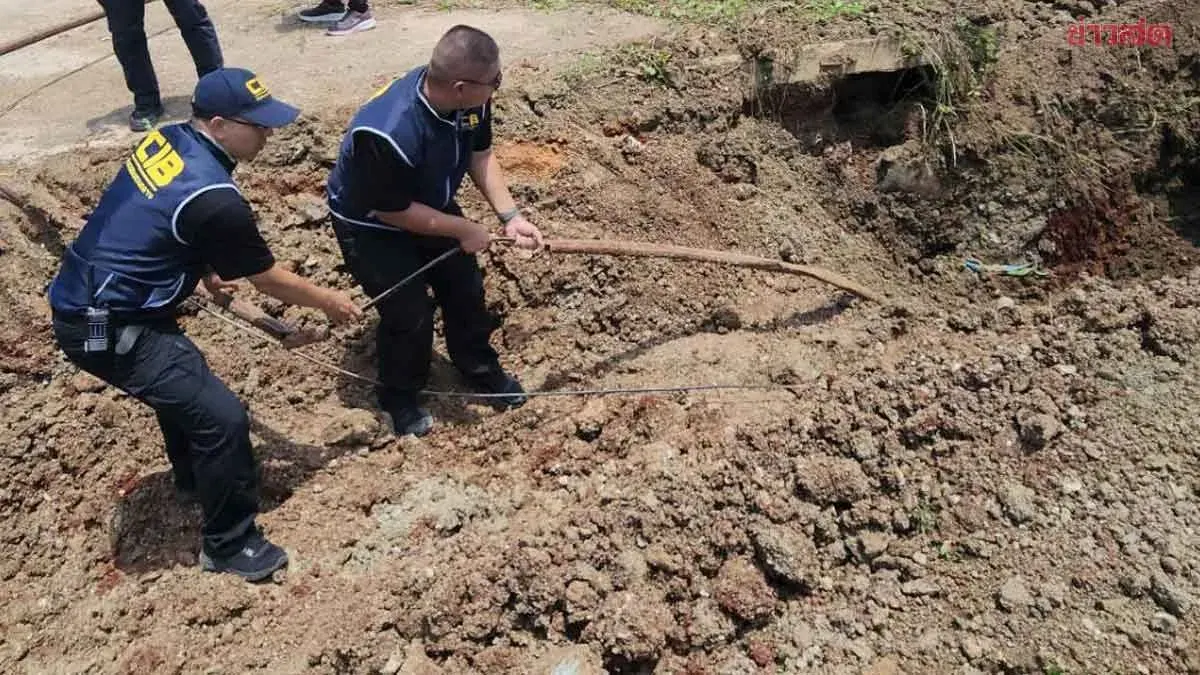
On July 21, 2025, Police Lieutenant General Chanannutt Saratvalleyphaet, commander of the Police Technology Crime Suppression Division, ordered a team including Police Colonel Phanthulaan Patomprawiwat and other officers, along with National Broadcasting and Telecommunications Commission (NBTC) staff, to execute a search warrant from Sakaew provincial court at three locations in Aranyaprathet district. The operation targeted evidence of illegal cross-border internet signal transmission.

At the first location, a residence belonging to Rattanathon, officers found one router connected to a high-speed internet line transmitting signals to Cambodia. At the second site, authorities discovered approximately 850 meters of high-speed internet cable illegally running across the border to Cambodia without authorization. Testing with optical fiber examination equipment confirmed it was the same line connected from the first location.

The third location contained an internet management node (Node) operated by a licensed internet service provider (ISP) installed on the second floor of a commercial building, which was found to be legally compliant. However, the overall investigation revealed over 1.5 kilometers of internet cables illegally crossing the border. NBTC officials filed a complaint against Rattanathon with Khlong Luek police station. He faces charges of operating a Type 3 telecommunications business without authorization under the Telecommunications Act of 2001, Section 14(3), punishable by up to five years imprisonment, a fine not exceeding 10 million baht, or both.

No. 10 of Read at source → Next
National

Chiang Rai Market Becomes Hub for Thai Tropical Fruit Season

Lan Mueang Market in Chiang Rai hosted a Thailand tropical fruit promotion campaign on July 18–19, featuring durian, mangosteen, and seasonal produce at competitive prices with shopping rewards and activities.

Chiang Rai Market Becomes Hub for Thai Tropical Fruit Season
21 Jul Khaosod

Lan Mueang Market in Chiang Rai province is one of the busiest and most popular shopping destinations, attracting both locals and tourists with its diverse range of goods, local cuisine, and quality agricultural products. The market transcends being merely a place to buy and sell—it authentically reflects the lifestyle and charm of Lanna people.

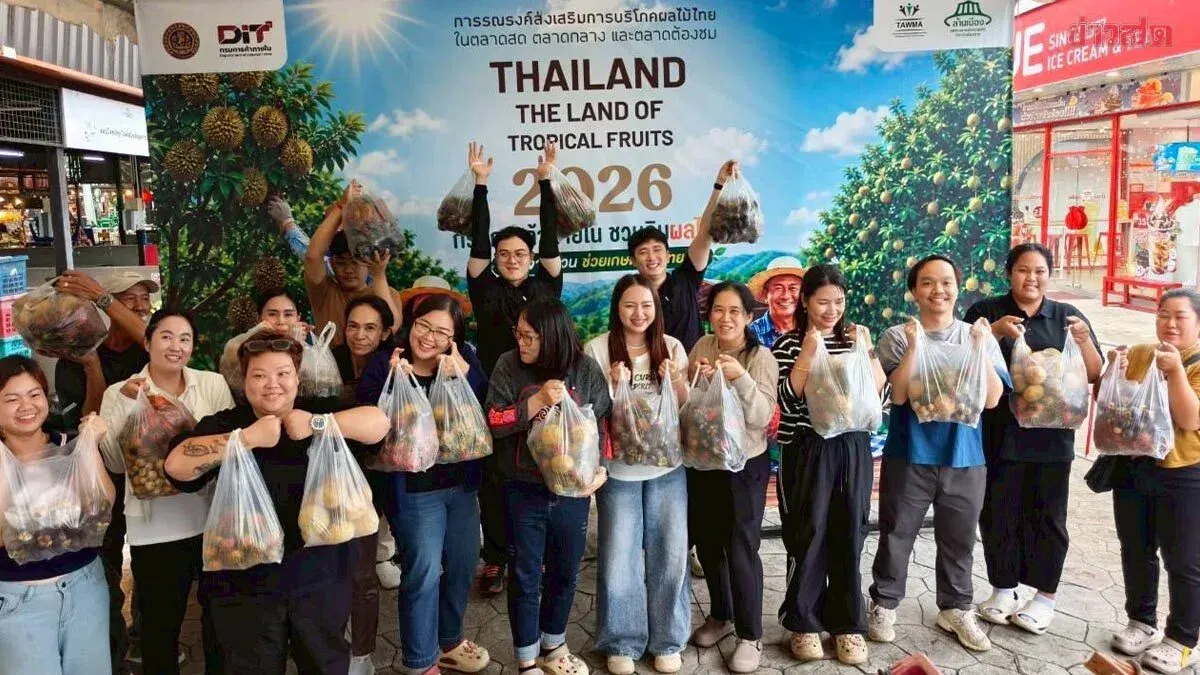
On July 18–19, 2026, Lan Mueang Market became a key venue for the "Thailand: The Land of Tropical Fruits 2026" campaign, organized by the Department of Internal Trade under the Ministry of Commerce. The initiative aims to promote Thai fruit consumption during peak season while connecting quality produce directly from growers to consumers in the northern region.

During the event, residents and tourists can purchase a wide variety of quality Thai fruits including durian, mangosteen, rambutan, longkong, and seasonal fruits sourced from production areas across the country at competitive prices. Visitors can also participate in the promotional campaign "Smart Shopping, Get Rewards" to maximize value, plus enjoy a special "Golden Minute Fruit Buffet" activity that adds excitement to the event.

These promotional activities serve dual purposes: they energize the market atmosphere and boost consumer spending while implementing the Department of Internal Trade's fruit management strategy. By connecting markets and promoting Thai fruit consumption during periods of high harvest output—particularly as southern durian enters peak production—these sales and marketing efforts expand distribution channels, accelerate the flow of produce directly from orchards to consumers, reduce clustering problems, and create efficient fruit circulation in the market system. This supports stable farmer incomes while delivering value to consumers. For more details and updates, follow the Department of Internal Trade on Facebook (DIT) or call the hotline at 1569.

No. 11 of Read at source → Next
Loading more…
Endless reading Scroll to read. When you reach the bottom, keep scrolling. A bar fills, and the next story slides in when it's full. ↑ ↓ or Space Or use the arrows at the bottom of the screen.