Village Chief Unearths 50 Stone Age Axes in Central Thailand
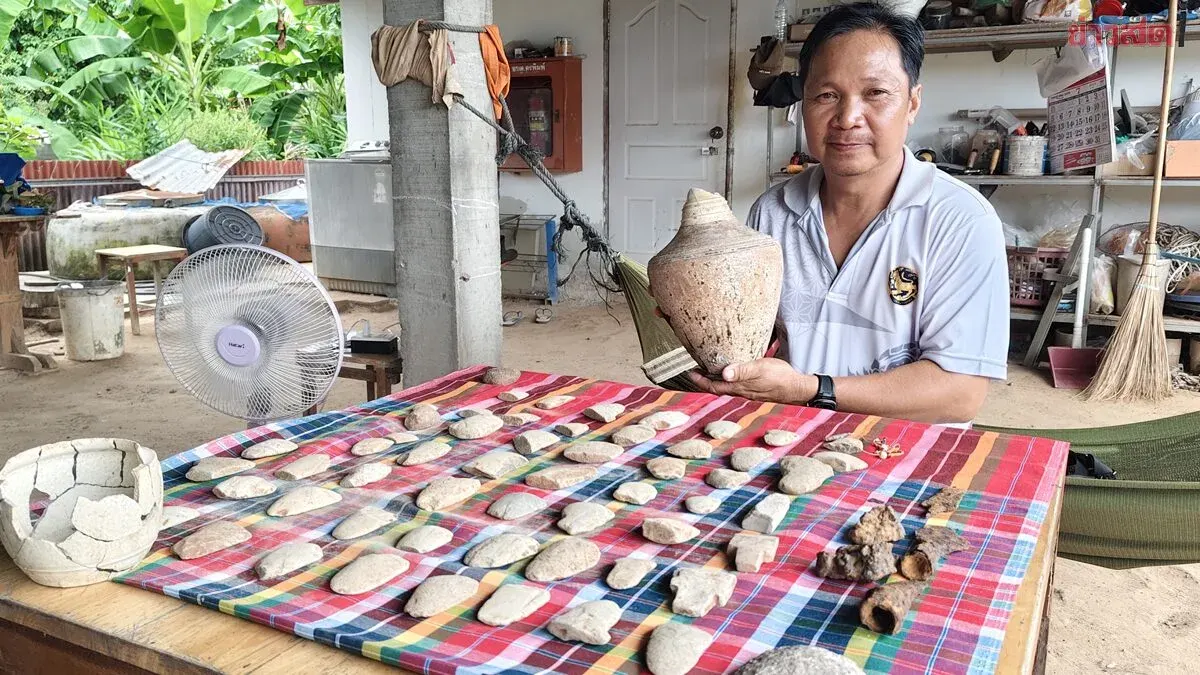
A village chief in Nakhon Ratchasima has amassed over 50 polished stone axes and other artifacts collected while operating bulldozers, hoping to establish a district museum preserving the region's prehistoric heritage.
After archaeologists discovered ancient human skeletal remains and intact black Phimai pottery in Kroburee District, Nakhon Ratchasima Province, officials from the Fine Arts Department's Nakhon Ratchasima office recovered additional artifacts including glass beads, iron tools, and stone axes predating the late Iron Age from the Mun Dam area in Jrakai Stone Subdistrict. Some pieces have been transferred to Maha Veeravongse National Museum for safekeeping.
Most recently, Pairojn Summat, headman of Nong Suea Bong Village, displayed over 50 polished stone axes and other artifacts he collected for more than a decade. The collection also includes iron implements, fused metal, orange glass beads, and ceramic vessels. Summat explained that while working as a hired bulldozer operator for land preparation over the years, he regularly encountered ancient artifacts buried underground and began preserving them out of personal interest.
Around 2010, while leveling farmland, he discovered iron tools, skeletal remains, and ancient pottery near an area called Non Kao at the village edge. Local authorities contacted the Fine Arts Department, which confirmed several pieces were black Phimai pottery and collected samples for study. Summat continued collecting similar items—particularly the stone axes found frequently—hoping that one day experts could authenticate them and help establish a district museum. He aims to preserve these artifacts so future generations can study this region's ancient past.