Why Roundworms Came Out Of Toddler's Mouth
A 2-year-old with a severe roundworm infection vomited up a 15-centimeter adult worm after heavy vomiting and stomach contractions forced the parasite from the intestines upward through the esophagus.
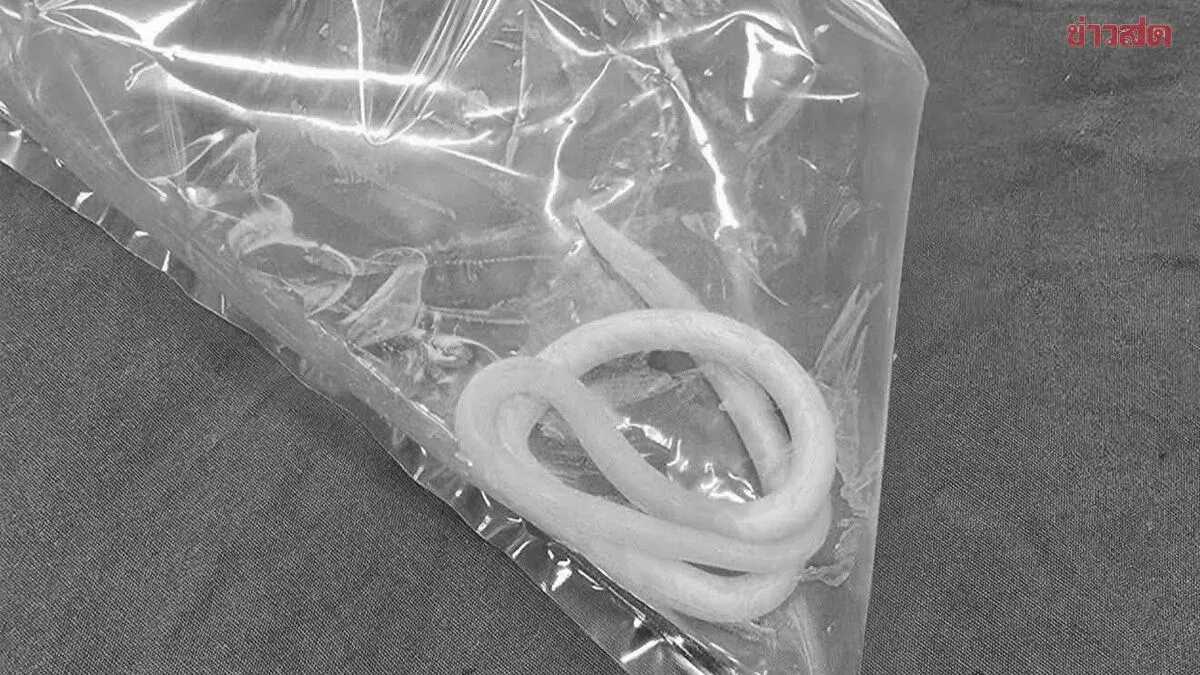
On July 12, 2025, the Parasite Stories page shared an educational post about roundworm infections after Dr. Sirinthon Homnak reported a case involving a 2-year-old admitted to hospital with over 10 episodes of vomiting, fatigue, and pallor. While preparing intravenous fluids, the child vomited again and medical staff discovered a worm-like object in the mouth. Upon extraction, it was identified as a roundworm (Ascaris lumbricoides) measuring approximately 15 centimeters. Another worm was expelled during observation.
Many people questioned how a roundworm could exit through the mouth. Based on its appearance, the parasite was likely Ascaris lumbricoides, which normally inhabits the small intestine. However, when the body experiences fever, severe illness, certain medications, or severe vomiting, the parasite may migrate abnormally—traveling backward from the intestine through the stomach and esophagus to exit via the mouth.
In children with heavy infections, this occurrence is more likely due to multiple parasites inhabiting the intestines. This case suggests the child had a heavy roundworm infection, with vomiting and stomach contractions triggering the parasites to climb upward.
The 15-centimeter worm observed was a mature adult, and finding more than one parasite indicates multiple worms likely remain in the intestines. Once the patient stabilizes, doctors typically prescribe appropriate antiparasitic medication such as Albendazole and monitor for complications like intestinal obstruction or parasites migrating into bile ducts—conditions found in heavily infected patients.
Roundworms are not transmitted directly between people but spread through ingestion of contaminated eggs from soil, water, food, or unwashed hands. Eggs exit infected individuals' feces and require 2-4 weeks in soil to become infectious. Once ingested, larvae hatch in the intestine, migrate through the liver and lungs, before returning to mature in the small intestine.
Therefore, handwashing before meals, thoroughly cleaning vegetables and fruits, using proper sanitation facilities, and regular deworming in high-risk areas remain the most important prevention measures.