Work and Social Activity Key to Thai Elder Health
Thailand's elderly population has grown to 14 million, with new research showing that continued employment and social engagement significantly improve their health outcomes and reduce chronic disease risk.
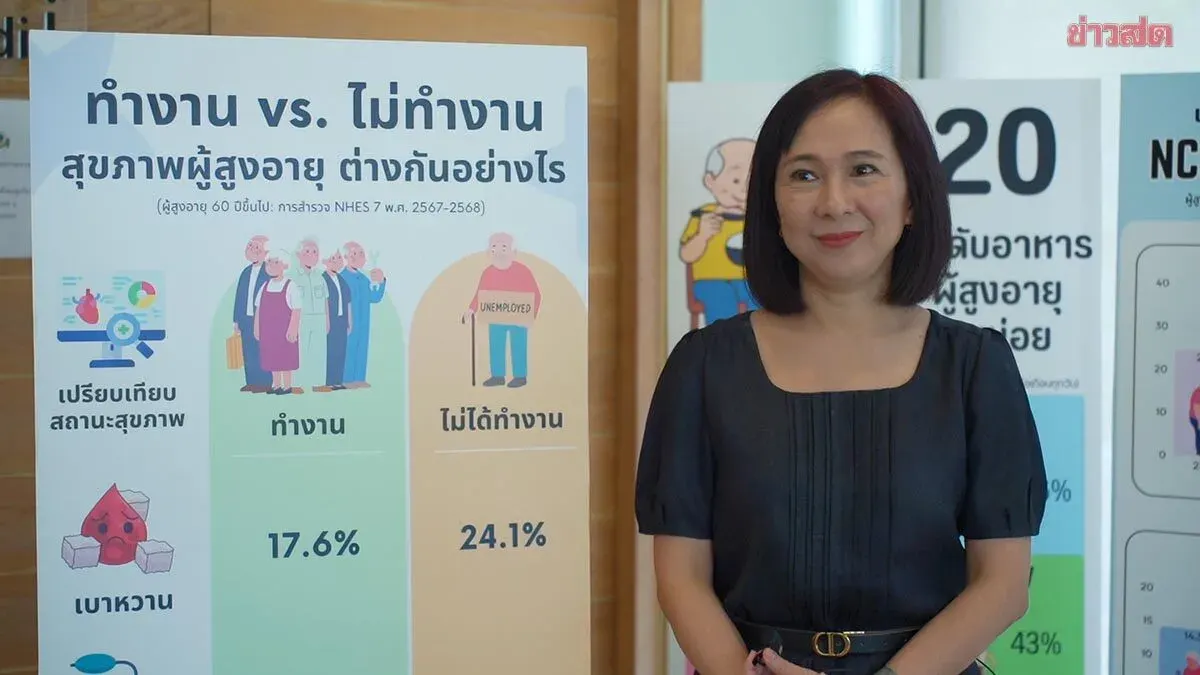
On July 20, 2025, Ramathidbi Hospital's Faculty of Medicine at Mahidol University released findings from the seventh National Health Examination Survey (NHES 7) conducted in 2024–2025, presenting "Unlocking Thai Elderly Health: Data for an Aging Society's Future" at the Abroom Hotel in Bangkok. Assistant Professor Dr. Rerngrudee Pathanavanitchakul, head of the survey project, reported that Thailand's elderly population has tripled over 30 years and now stands at 21 percent, approximately 14 million people. The lifestyles of Thai elders have changed significantly—they have higher education levels, greater access to the internet and technology, and have shifted from extended family living to living with spouses or alone, with 1.4 million elderly living solo (1 million of them women). Elderly employment rates have risen 1.5-fold over two decades, with 52 percent currently working, particularly those aged 60–65, of whom 70 percent remain employed. However, income adequacy has declined sharply, dropping from 69 percent to 39 percent between 2004 and 2025.
In terms of health, dependency in daily living activities nearly doubled between 2009 and 2025, rising from 15.5 percent to 28 percent, affecting approximately 4 million elderly. The Northeastern region shows the highest proportion of dependent elderly at 36 percent. Only 12 percent of all elderly require caregivers—about 1.8 million people—yet 55 percent of those who need care lack a caregiver, roughly 1 million individuals. Currently, over 95 percent of elderly caregivers are family members. Regionally, the Northeast faces the greatest challenges, with higher rates of dependency, falls, inadequate income, unmet caregiver needs, and chronic diseases including anemia, chronic kidney disease, and metabolic syndrome compared to other regions.
Dr. Rerngrudee noted that survey data clearly shows elderly who continue working have better health than those who do not, with lower rates of chronic diseases such as diabetes, high blood pressure, metabolic syndrome, obesity, and cognitive decline. Working elderly also show higher levels of physical activity, lower depression risk, and fewer falls. Beyond employment, social participation also correlates with better elderly health. "Given these changing lifestyles and the positive health effects of work and social engagement," she stated, "society should shift its perspective, move beyond the label 'elderly,' and redefine old age as beginning at 65 rather than 60. Alongside this, policies should support elderly employment, adjust retirement ages, and reform benefits and protections. We must also promote social activity spaces for the elderly and prioritize preventive health policies that view elderly health positively rather than treating seniors as a burden." Assistant Professor Dr. Chalubla Chalemsri, a geriatric medicine specialist at Siriraj Hospital, provided additional information on dementia among Thai elderly, identifying cognitive decline as a critical public health issue in Thailand's aging population.