Exotic Food Aims for Global Sauce Leadership with New Factory
Exotic Food (XO) plans to become a global leader in sauce markets over the next three to five years, focusing on Europe and the Middle East while investing 1.3 billion baht in a new factory set to open in 2028. The company aims to increase its Sriracha market share from 7.9% by launching 5‑7 new SKUs yearly and expanding product listings in existing European chains. XO forecasts sales of nearly 2.4 billion baht in 2026, a 10% rise from current levels.
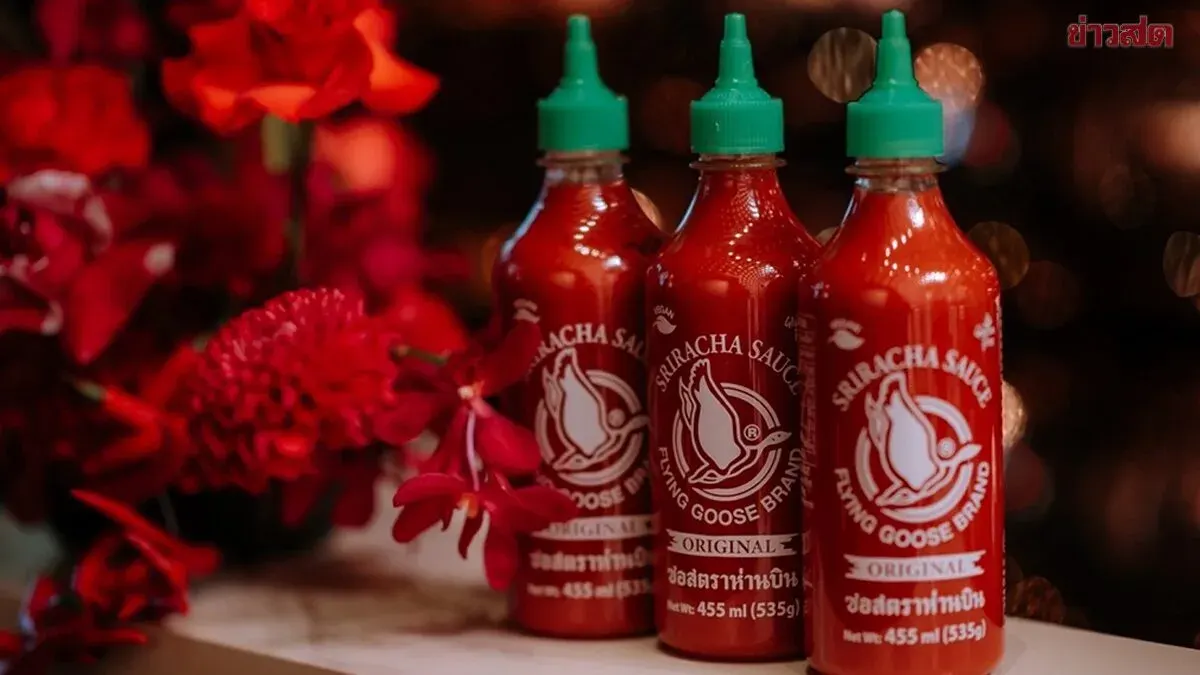
Exotic Food Public Company Limited (XO), producer and exporter of Sriracha chili sauce, curry paste, and Thai cooking ingredients, has outlined a 3‑5‑year business plan to expand overseas markets and position the company as a leader in the sauce industry, using Europe as its primary market to support a new factory investment worth 1.3 billion baht for long‑term growth.
XO CEO Jittipon Chanratch said the global seasoning sauce market continues to grow, especially the hot sauce and Sriracha segments, which the company sees as an opportunity for expansion over the next three to five years. Currently XO’s growth rate clearly exceeds the market average. According to 2025 data, the global hot sauce market is valued at approximately 120 billion baht and is expected to grow at an average annual rate of 7.7‑7.8%, reaching around 200 billion baht by 2032. The Sriracha sauce market is worth about 19.3 billion baht in 2025 and is projected to exceed 30 billion baht by 2032.
XO holds roughly 7.9% of the global Sriracha market. From 2014 to 2025, the hot sauce market grew at a compound annual growth rate (CAGR) of 6.5%, the Sriracha market at 7.5%, while XO’s products grew at an average of 14.6%, reflecting opportunities to increase market share going forward.
Europe remains the core base, accounting for 82% of export revenue, followed by Asia at 7%, Oceania at 6%, Africa at 1%, and North and South America combined at about 3%. Growth in Europe will focus not only on entering new countries but also on increasing product listings in existing markets, adding more store locations and expanding the number of SKUs per store. For example, in Germany a major supermarket chain has about 11,000 outlets; XO currently supplies around 5,000‑6,000 of them and aims to reach 8,000 outlets. Some outlets carry only 2‑3 XO items, while best‑selling products can appear in 5‑6 SKUs and up to 15 in certain stores, so increasing both outlet count and SKU count offers significant sales growth from the existing customer base.
The company also plans to expand into Eastern Europe, where consumption habits resemble those of Western Europe, and to accelerate entry into the Middle East after seeing promising orders from new customers.
XO intends to launch 5‑7 new SKUs each year to broaden consumer choice and create more listing opportunities with partners, although details of upcoming products are not disclosed to preserve competitive advantage.
Meanwhile, XO is investing approximately 1.3 billion baht in a new factory, financing about 70% through bank loans and 30% with internal cash. Machinery orders and construction have begun, with completion expected in Q2 2028 and first exports from the new plant slated for Q3 2028. The facility will provide essential infrastructure to support the 3‑5‑year expansion plan, boosting production capacity, enabling more listings, and driving international market growth.
XO targets sales of nearly 2.4 billion baht in 2026, representing a 10% increase.