Thailand Uses 16 Billion Baht to Cut Power Bills, Expands Solar Program
Thailand's government will spend 16 billion baht to reduce electricity bills for four months while expanding its solar program from 500 to 10,000 megawatts, allowing citizens to install rooftop panels and sell excess power back to the grid
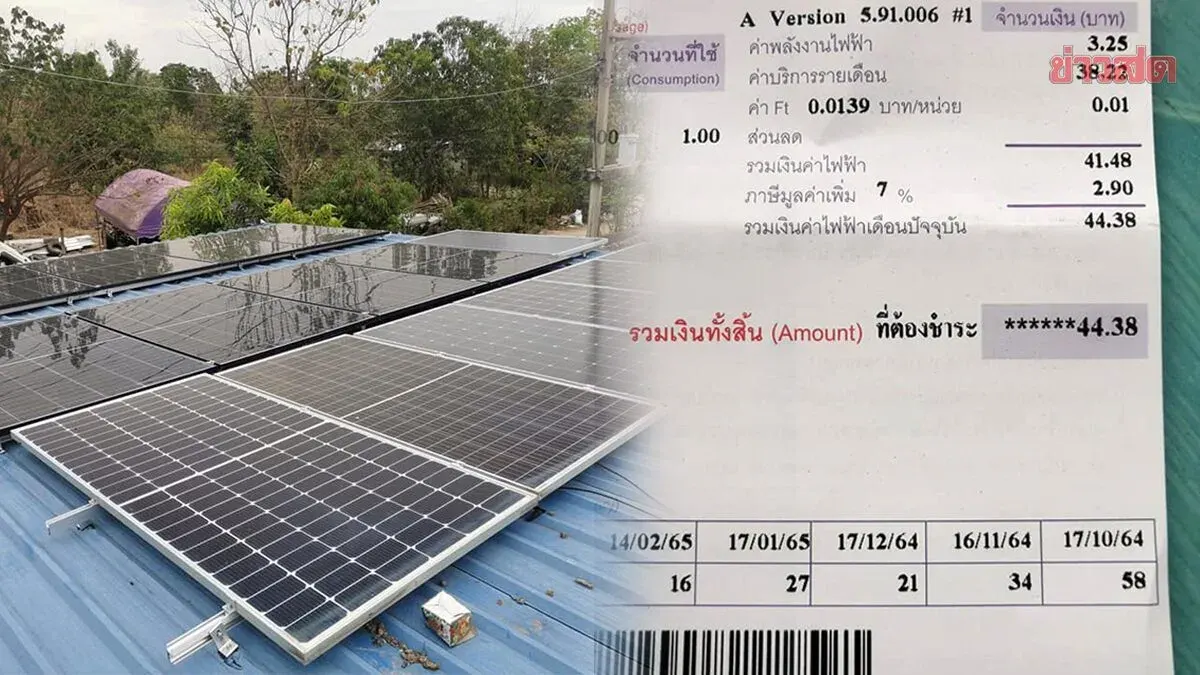
Energy Minister Eknath Prompan announced that the National Energy Policy Committee has approved measures to ease the financial burden of rising power costs for the next four months. The government will use 16.127 billion baht in surplus funds collected by state power utilities to reduce the variable electricity rate, which has been set at 16.23 satang per unit. Additionally, the committee has expanded its community solar power initiative from the original 500 megawatts to 10,000 megawatts, allowing citizens to install rooftop, ground-level, and floating solar panels to generate electricity for personal use and sell excess power back to the grid.
Under the new Net Billing framework, participants can sell surplus electricity at a fixed rate of 2.20 baht per unit for 20 years, with a maximum output of 5 kilowatts per meter. Existing participants from previous solar programmes will also have their purchase agreements extended from 10 years to 20 years. The government is also working to streamline the application and grid connection process through a single-window service system to make participation easier for citizens.
Natural gas pricing for power plants will be capped at an average of 363.53 baht per million BTU to reduce fuel cost pressures on consumers. The committee has tasked energy regulators with updating rules and regulations to support the expanded programme, while requiring distribution utilities to provide real-time data on renewable energy sales and purchases to ensure grid stability and efficiency.