Apple Warns Thai Opposition Leaders of Pegasus Spyware Attacks
Apple has warned two Thai opposition leaders — Natthaphong Ruengpanyawut and Abhisit Vejjajiva — that their iPhones were targeted by Pegasus spyware, a sophisticated surveillance tool typically used by state actors. The alerts come amid heated political tensions ahead of a no-confidence debate, prompting calls for an independent investigation. The government denies involvement but says it will coordinate with security agencies to examine the claims.
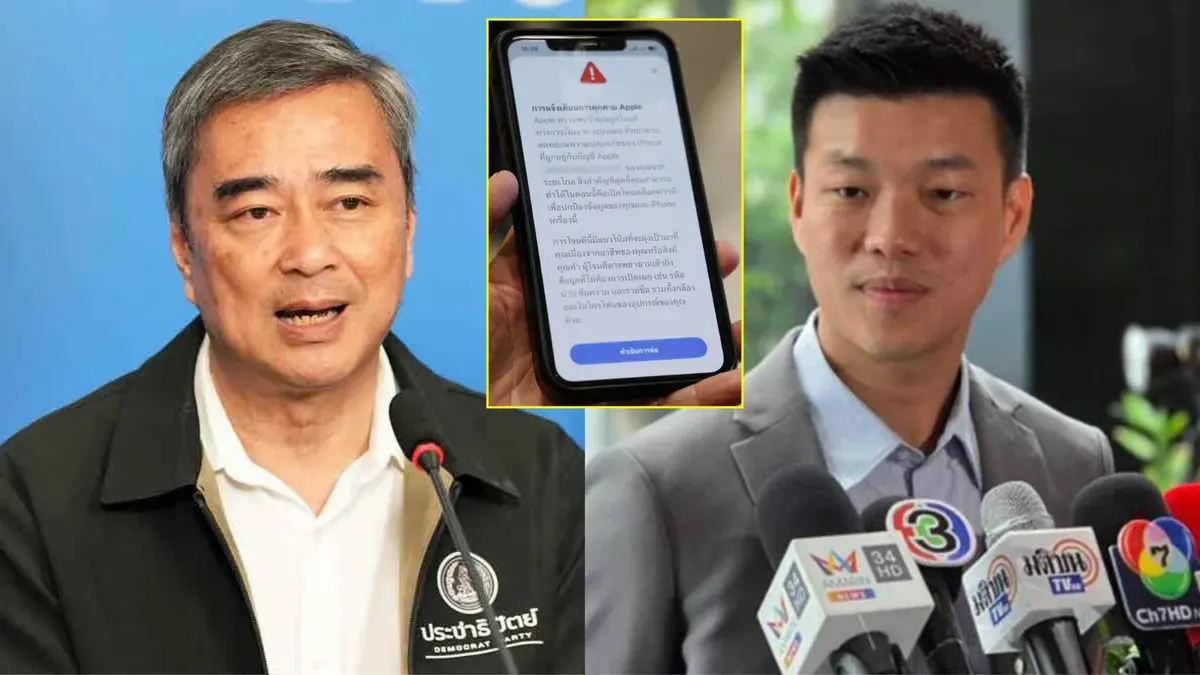
Apple's warning that opposition politicians' iPhones were targeted by high-grade Pegasus spyware has reignited a political firestorm, especially after two opposition party leaders — Natthaphong Ruengpanyawut, leader of the People's Party, and Abhisit Vejjajiva, leader of the Democrat Party — received cyber threat alerts.
On November 2, Abhisit stated Apple warned of an attempted Pegasus spyware attack on his phone, noting such tools are typically used by state agencies. Though the attack appeared unsuccessful, he urged vigilance and suggested a possible link to the upcoming December no-confidence debate or to Sirichok Sopha's push to investigate a government MP's husband over alleged ties to scammers and gambling websites.
The following day, Natthaphong posted a screenshot of an identical Apple alert, highlighting the curious timing during a period of intense political heat.
The government has not confirmed any Pegasus use in this case. Deputy Minister Nan Bunyathida Somchai said Apple issued warnings in multiple countries and asked recipients to submit data for verification. Digital Economy and Society Minister Chaiwut Thanakamanusorn stressed there is no concrete evidence yet but said the matter will be discussed with security agencies and cyber police.
Pegasus, developed by an Israeli firm, is a cyberweapon that can infiltrate phones without the user clicking a link or downloading a file. Once inside, it can read messages, chats, and emails; extract personal data; track location; and remotely activate cameras and microphones — effectively putting the victim's phone in someone else's hands.
Thailand has a history with this technology dating back to 2014. A joint investigation by iLaw, Digital Reach, and Citizen Lab in 2022 found at least 35 victims, mostly activists, academics, politicians, and civil society members involved in the 2020-2021 pro-democracy movement. The issue was debated in parliament in 2022, but the government's explanations left key questions unanswered: who procured it, who operated it, and against whom it was deployed.
Now that the targets are two opposition party leaders, the government cannot simply deny and let the matter fade. It should allow an independent investigation to establish the facts and restore public trust. The use of surveillance tools against citizens and politicians violates fundamental rights and is unacceptable. Any inquiry must be direct and transparent, not left to linger. With the government's credibility already low, this affair only adds fuel to the political fire.