Bangkok Governor Urges Borrowing to Complete Drainage Tunnels
The user wants a short summary (1-2 sentences, 120-220 characters max 240) in English only. The article is about Bangkok Governor Chadchart urging borrowing to complete drainage tunnels instead of paying annual flood compensation. Key point
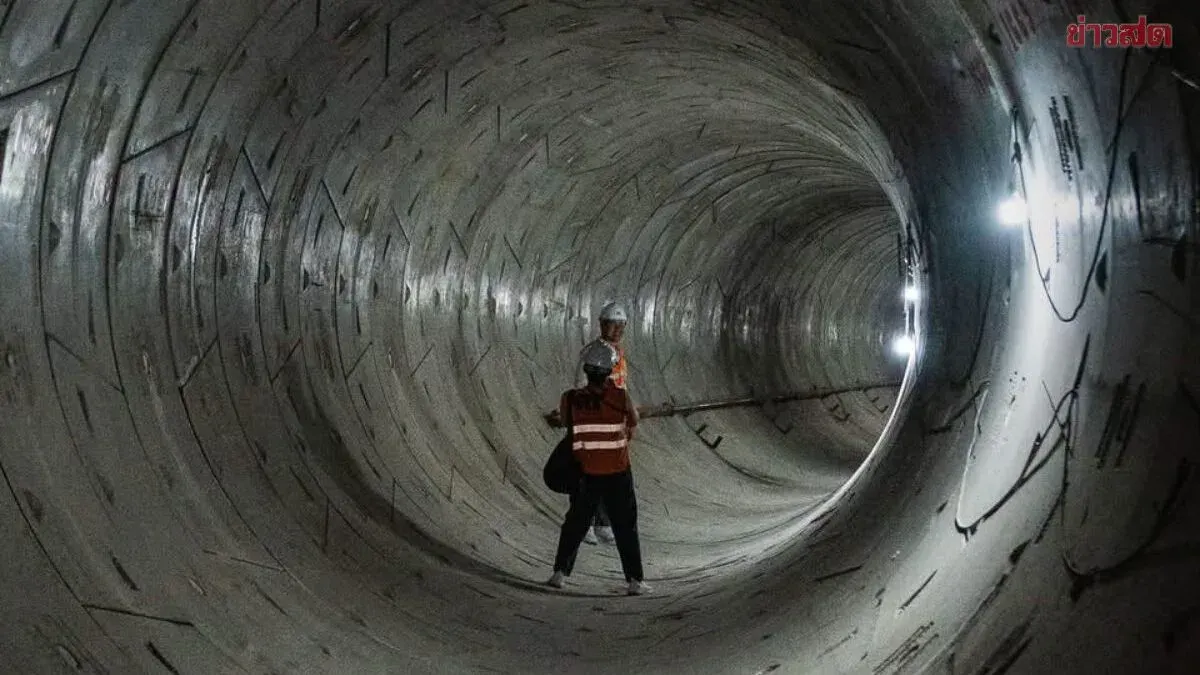
Bangkok Governor Chadchart Sittipunt affirmed his commitment to fighting for Bangkok residents, stating that authorities must be bold enough to borrow funds to accelerate drainage tunnel construction rather than paying flood compensation annually.
On October 28, 2026, Governor Chadchart addressed the Bangkok Metropolitan Council regarding the city's flood compensation payments made jointly with the central government. He revealed that Bangkok has contributed 310 million baht and informed the government that any additional contributions would require releasing future funds owed to the city, such as 20 billion baht in land and building taxes or 5 billion baht in transfer fee reductions.
To date, 3.768 billion baht in compensation has reached 518,039 households, which Chadchart called the fastest payout in history. Funds secured through the council were sufficiently reserved, and any remainder will be reviewed for management. "I try to do my duty as best as possible. I believe the public received money quickly — never before has the government paid compensation this fast," he said, adding that repair cost issues must follow uniform national standards.
Regarding the remaining central budget, Chadchart noted that some projects may be brought forward this year to prevent next year's flooding, including drainage pipes, equipment, and urgent projects. Additional funding may be needed for garbage truck contracts, potentially 600 million baht more.
On drainage infrastructure, Bangkok previously maintained a balanced budget — not spending beyond revenue. The city has 11 drainage tunnel projects with a 27-year construction timeline; six are complete so far, with gradual progress. Chadchart suggested future thinking must be bold enough to borrow for these projects, as loan interest would be less than recurring compensation costs, requiring careful calculation due to long-term implications.