Banpu Posts $61M Profit in First Half of 2025
Banpu reported $61 million net profit in the first half of 2025, boosted by higher US natural gas sales and rising coal prices, as the energy company completed a major merger and shifted focus toward renewable energy and emerging technologi
Banpu Chief Executive Officer Sinnont Wongkusulgkij announced the company's first-half 2025 results, reporting total sales revenue of $2.778 billion (approximately 89.222 billion baht), EBITDA of $596 million (19.168 billion baht), and net operating profit of $61 million (1.979 billion baht). The performance was supported by increased natural gas sales volumes in the United States and rising global coal prices, alongside efficient asset and cost management.
These results emerged during a critical transition following the completion of the merger between Banpu and Banpu Power on July 31, 2025, with the restructured Banpu beginning official trading on the Stock Exchange of Thailand on August 4, 2025. The first-half performance reflects Banpu's strengths in its integrated infrastructure and energy solutions portfolio and effective cost management. The post-merger restructuring will help consolidate business synergies, enhance financial flexibility, and strengthen the balance sheet.
"We will continue to responsibly expand our energy capabilities to enhance energy security and meet growing demand, particularly from the expansion of AI and data centers," Sinnont said.
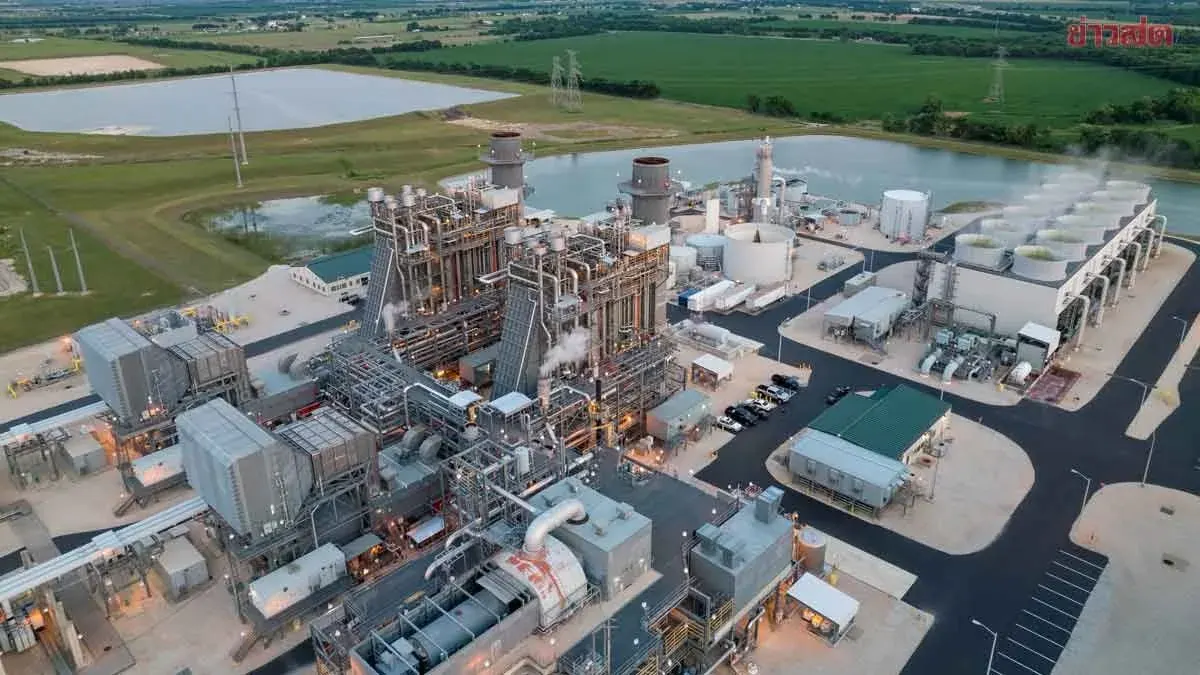
The integrated natural gas business in the United States sold 172 billion cubic feet of gas, up from the same period last year. The Temple I and II natural gas power plants maintained availability rates as high as 90%, supporting increased electricity demand.
The CCS Barnett Zero project stored 64,200 tons of carbon dioxide equivalent, while the Cotton Cove and Eagle Ford projects commenced commercial operations.
The modern mining business segment sold a combined 18 million tons of coal, with Indonesian and Mongolian mines showing increased volumes. Banpu is also pursuing investment opportunities in strategic minerals such as nickel and bauxite to support future energy technology and energy storage value chains.
The electricity and related business segment operates 1,011 megawatts of renewable energy generation capacity and is accelerating low-carbon energy expansion. The company operates 10 battery energy storage system (BESS) projects across Japan, Australia, China, and the United States with a combined 692 megawatts of capacity and 2,340 megawatt-hours of energy storage. Japan's electricity trading business sold 3,045 gigawatt-hours.
The future technology business segment is expanding Net Zero Solutions services, providing Net Zero consulting to AOTGA, and has invested through its Corporate Venture Capital arm in 16 funds and six direct companies, focusing on high-growth potential technologies including AI value chain opportunities.
The company declared an interim dividend of 0.40 baht per share, reflecting shareholder returns while maintaining financial strength and pursuing strategic business expansion under its Energy Symphonics strategy.