A revered senior monk and former provincial sangha leader of Nakhon Phanom, Luang Pu Chan Khemyo rose from childhood hardship to become an influential figure in Thai Buddhism, founding the first school teaching the modern curriculum at his
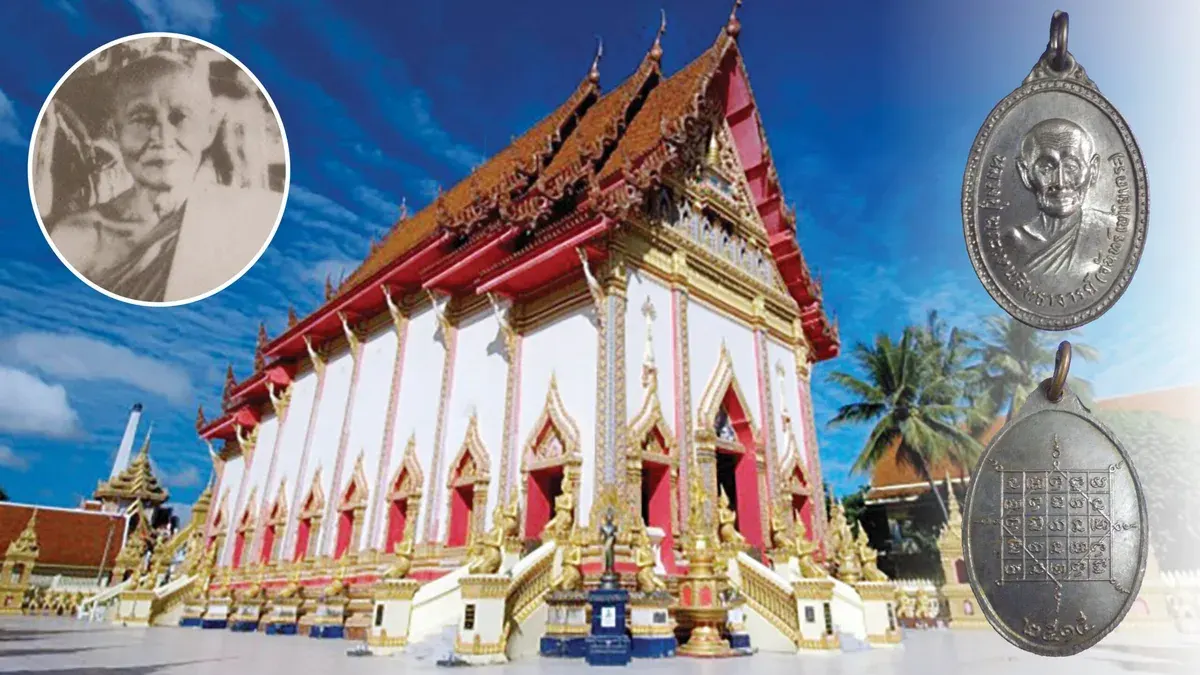
Luang Pu Chan Khemyo, also known as Phra Thep Sitthacharya, was a highly revered senior monk who served as the former provincial sangha leader of Nakhon Phanom Province (Thammayut tradition) and former abbot of Wat Sri Thep Praditsaram in Muang District, Nakhon Phanom. His lay name was Chan Suwannamajo, and he was born on Monday, December 5, 1981 (Year of the Goat) in Ban Tha Uten, Muang District, Nakhon Phanom, to parents Nai Wong Senao and Nang Khai Suwannamajo.
During his youth, his health was fragile due to asthma, so his father arranged for him to live in a countryside shelter. When he was ten years old, his father fell ill and passed away, after which the boy was ordained as a young novice. At Wat Phon Kaew, he studied Khmer and Dharmic scripts and learned to recite short, medium, and long chants. At age 19 he temporarily left the sangha to work as a merchant, but at age 20 in B.E. 2445 he resolved to return to monastic life at Wat Phon Kaew's ordination hall under Phra Lao Panyavaro as his preceptor, Phra Khene Uttamo as his dharma instructor, and Phra Nu as his attendant, receiving the monastic name Khemyo.
After two months at the monastery, he left to practice Buddhism during the rainy season at Wat In Plaeng in Muang District, Nakhon Phanom. In B.E. 2445, Phra Ajarn Sao Kantasilo from Wat Liab in Ubon Ratchathani, a renowned vipassana meditation teacher and instructor of the famous forest monks, passed through the area and selected four intelligent bhikkhus, including Phra Chan, to be his disciples. They traveled through forests practicing meditation before heading to Ubon Ratchathani. After four months at this monastery for studying chants, Phra Ajarn Sao conducted Luang Pu Chan's formal ordination into the Thammayut tradition at Wat Sri Ubon Rattanarama in Ubon Ratchathani, with Phra Panyapitsal Thera as his preceptor.
In B.E. 2449 he returned to spend the rainy season at Wat Sri Thep Praditsaram, a dilapidated former temple called Wat Sri Khun Muang. In B.E. 2453 he traveled to Bangkok to study advanced Buddhist teachings and became a disciple of Somdet Phra Phutthakosat Acharya (formerly known as Phra Thep Kawi) at Wat Thepsirintravas, where he studied at the certificate, degree, and three-verse specialist levels.
During this period, Wat Sri Thep Praditsaram lacked a senior abbot, so Luang Pu Chan was appointed as abbot and district sangha leader of Nong Bua District (now Muang District). In B.E. 2459 he established the first school teaching the new Thai language curriculum and Pali studies based on King Rama V's educational plan. He served as abbot of Wat Sri Thep Praditsaram from B.E. 2459, became a preceptor in B.E. 2460, and served as provincial sangha leader of Nakhon Phanom from B.E. 2502.
He was elevated to the rank of Phra Kru Sancharabat (Phra Kru Sarabhannaphon Phanom Khet) in B.E. 2474, to Phra Rajakhana ordinary rank (Phra Sarphanmuni) in B.E. 2480, to Phra Rajakhana royal rank (Phra Rajasarphanmuni) in B.E. 2496, and finally to Phra Rajakhana divine rank (Phra Thep Sitthacharya) in B.E. 2502. He passed away peacefully on February 2, 2516 at 8:00 a.m., at the age of 92, having maintained 72 Buddhist Lenten periods.
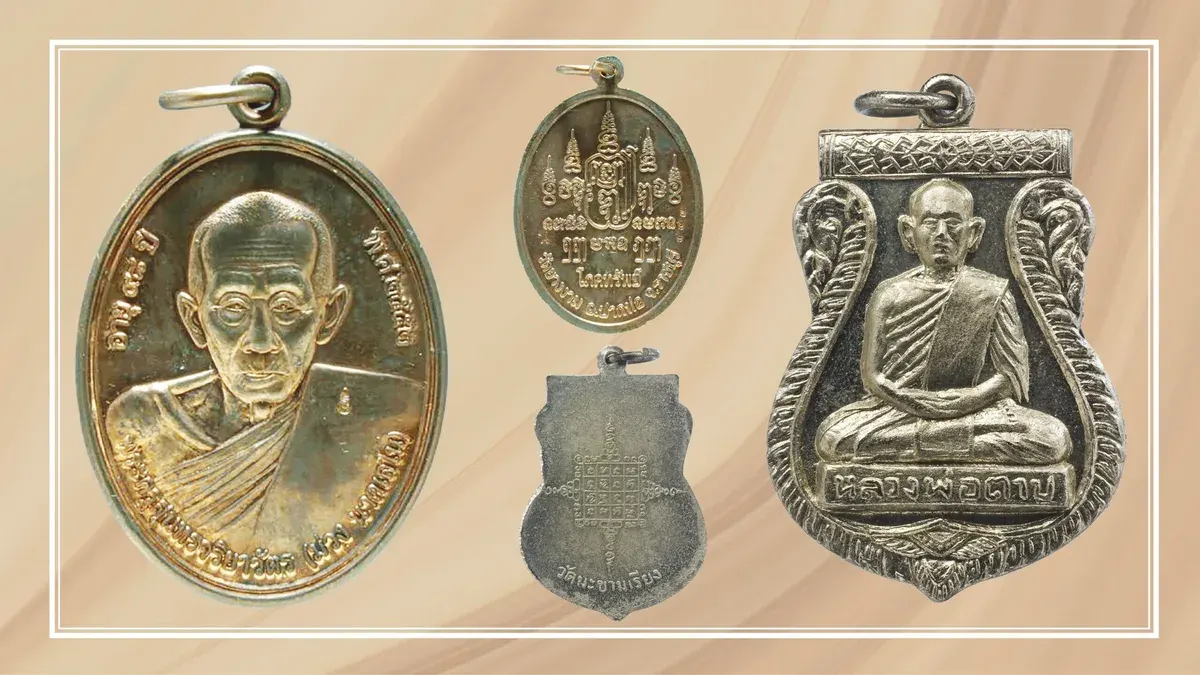
The Luang Pu Chan Khemyo broken amulet medal is one of the most celebrated amulets, being his final series before his death in B.E. 2516. He assigned Phra Thammabandit (Sila Sitthadhamma) from Wat Nornathasunthigarama in Bangkok's Thewes District to oversee its production.