Silpakorn Music Faculty Opens Doctoral Programme in Creative Economy
Silpakorn University's Faculty of Music opened its CEMIS doctoral programme in creative economy, music, innovation, and soft power at an open house event in Bangkok on September 26. The faculty has redesigned its curricula to blend performance training with business management and research, responding to employer feedback and evolving industry needs. The doctoral programme spans three years with coursework and original research requirements totaling at least 51 credits.
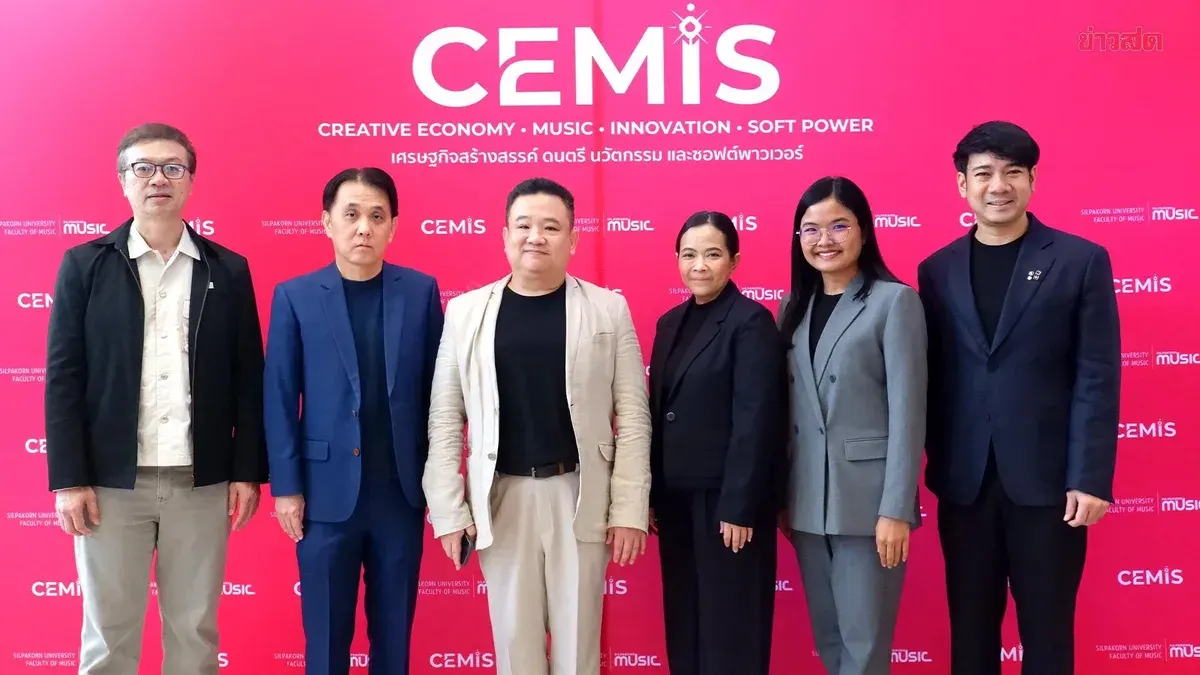
The Faculty of Music at Silpakorn University hosted CEMIS Open House 2026 on September 26, 2026, at The Next Tech on the fourth floor of Siam Paragon to welcome executives, entrepreneurs, professionals, artists, creators, researchers, and those interested in doctoral studies in the Arts (PhD) programme specializing in creative economy, music, innovation, and soft power. The event illustrated how professionals can advance real-world experience into research knowledge, innovation, and results that create real-world impact.
The programme began with a vision talk titled "The Next Wave of Music & Art" by Dr. Nalin Petchinthon, Dean of the Faculty of Music at Silpakorn University, followed by a panel discussion on "Inside CEMIS: From Expertise to New Value" led by Dr. Nathapol Prathitphollert, founder and programme director of CEMIS, alongside representatives from the first and second cohorts of CEMIS doctoral students who shared their direct experience transitioning into research roles.
Dean Nalin explained that Silpakorn University historically carried the identity of a music performance school—training musicians and singers with strong instrumental and vocal skills. However, as technology, society, and economics undergo rapid disruption, the faculty has evolved to address these changes. He emphasized that the curriculum now reflects ecosystem dynamics and economic systems, integrating business and collaborative networks at the music school level.
The Dean noted that many graduates struggled to adapt in the workforce, prompting a major curriculum overhaul in 2022. The Faculty now offers two undergraduate programmes: the Bachelor of Music (emphasizing performance across five specializations: classical music, jazz, commercial music, musical theatre, and music with creative media) and the Bachelor of Arts (focused on music business and entertainment management, covering music business and idol and influencer management).
These programmes aim to develop independent, courageous thinkers with analytical perspectives. The results show improved student flexibility and adaptability, informed by feedback from private sector employers.
In the 2026 academic year, the faculty launched the Master of Arts programme (CMIS) combining music, technology, and creativity to create business value over two years (minimum 36 credits) and the Doctor of Philosophy in Arts (CEMIS) over three years. Doctoral students complete five core courses in the first year, then conduct original research leading to at least 51 total credits.