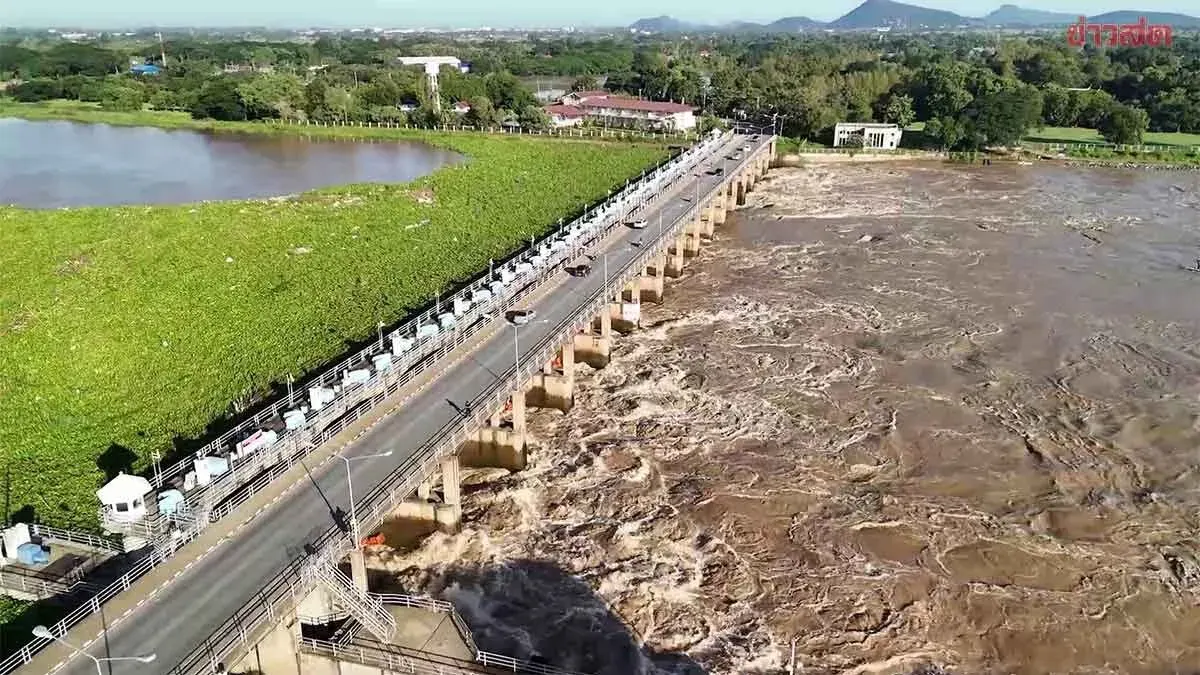
Chao Phraya Dam Boosts Discharge Amid Rising Northern Runoff
CHAI NAT — The Chao Phraya Dam has increased its discharge to 2,300 cubic metres per second to accommodate rising northern runoff, with authorities urging riverside residents in Ayutthaya, Nonthaburi and Pathum Thani to move belongings to higher ground and prepare to evacuate if ordered. Government spokesperson Ekkaphop Pianpises said on Thursday that Prime Minister […]
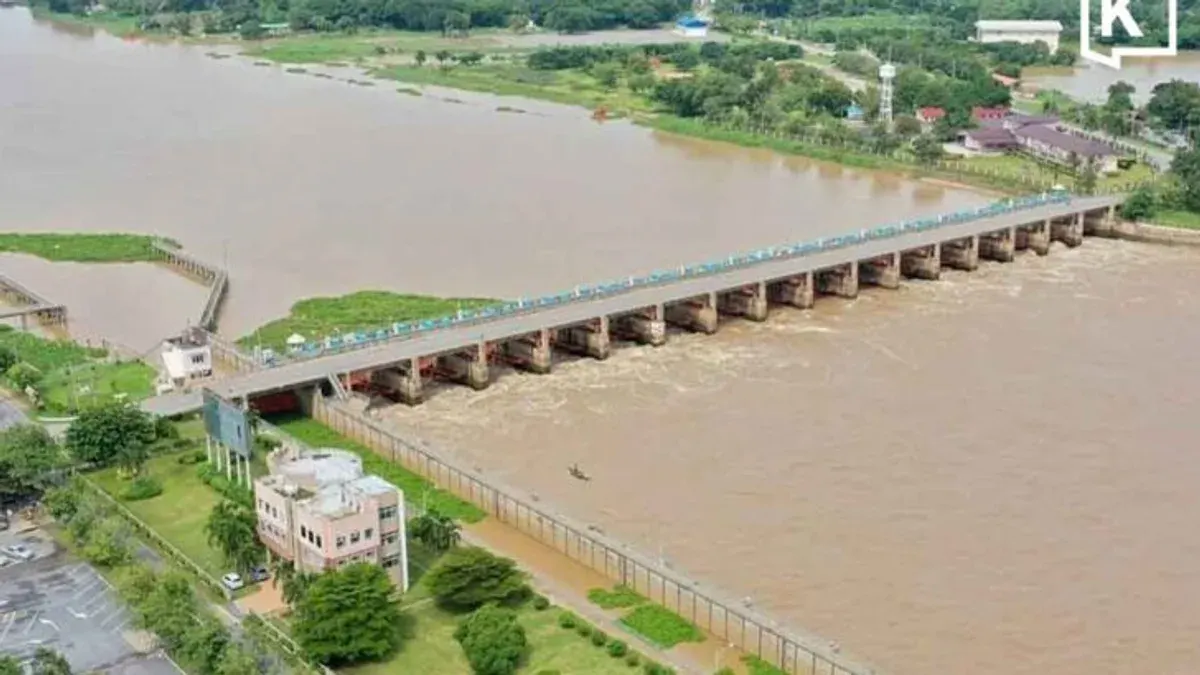
CHAI NAT — The Chao Phraya Dam has increased its discharge to 2,300 cubic metres per second to accommodate rising northern runoff, with authorities urging riverside residents in Ayutthaya, Nonthaburi and Pathum Thani to move belongings to higher ground and prepare to evacuate if ordered. Government spokesperson Ekkaphop Pianpises said on Thursday that Prime Minister and Interior Minister Anutin Charnvirakul had instructed agencies to prioritise assistance for flood-hit communities, particularly areas difficult to reach because of deep water. Teams have been told to ensure food, drinking water and medicine reach affected residents, while provinces prepare for another round of rain forecast for 4–6 October using satellite data from the Geo-Informatics and Space Technology Development Agency. Provincial governors along both banks of the Chao Phraya and Tha Chin rivers, as well as Bangkok authorities, have been instructed to issue warnings, remain in their areas and continue pumping water from places where flooding has begun to recede. The National Water Command has approved a gradual increase in Chao Phraya Dam discharge, in increments of 100 cubic metres per second. If conditions allow, the release could rise further but will not exceed 2,500 cubic metres per second. Water currently near Nakhon Sawan is expected to reach the dam within a day, then move downstream to Ayutthaya on 3 October. Authorities said the water level upstream of the dam may rise slightly but should remain below flood-protection barriers. With Pa Sak Dam holding more than 100% of its storage capacity, residents along the river and in low-lying areas of Ayutthaya have been urged to prepare to move belongings and evacuate. Nonthaburi and Pathum Thani are also expected to receive the flow. Water released from Pa Sak Dam has been reduced to 100 cubic metres per second and will be kept below 300 cubic metres per second, officials said. The flows are expected to meet at Ayutthaya, where the combined volume should remain below 3,000 cubic metres per second before moving through Pathum Thani, Nonthaburi, Bangkok and Samut Prakan into the Gulf of Thailand. Authorities said water levels in Bangkok are expected to remain about 40 centimetres below flood barriers. In the west, Vajiralongkorn Dam in Kanchanaburi will begin releasing water at 500 cubic metres per second on Thursday after recent rainfall eased. Mae Klong Dam is discharging 2,200 cubic metres per second, with riverside residents in Ratchaburi and Samut Songkhram advised to move possessions to higher ground and monitor conditions closely. In the east, floodwaters in Prachin Buri, which receives runoff from Nakhon Nayok, have passed their peak. Low-lying areas in Bang Khla and Bang Nam Priao districts are next in the water’s path before it reaches the Bang Pakong River. Residents have been advised to move belongings, patients and vulnerable people to designated shelters. The Finance Ministry has set up a flood-assistance coordin