Egg Prices Jump 20 Baht per Tray After Flood
Egg prices have jumped by 20 baht per tray after floods killed over a million chickens in central Thailand, with wholesale costs rising daily. Retail prices in Bangkok now reach about 6.50 baht per egg, and the owner expects the increase to last until next year as farm recovery takes months.
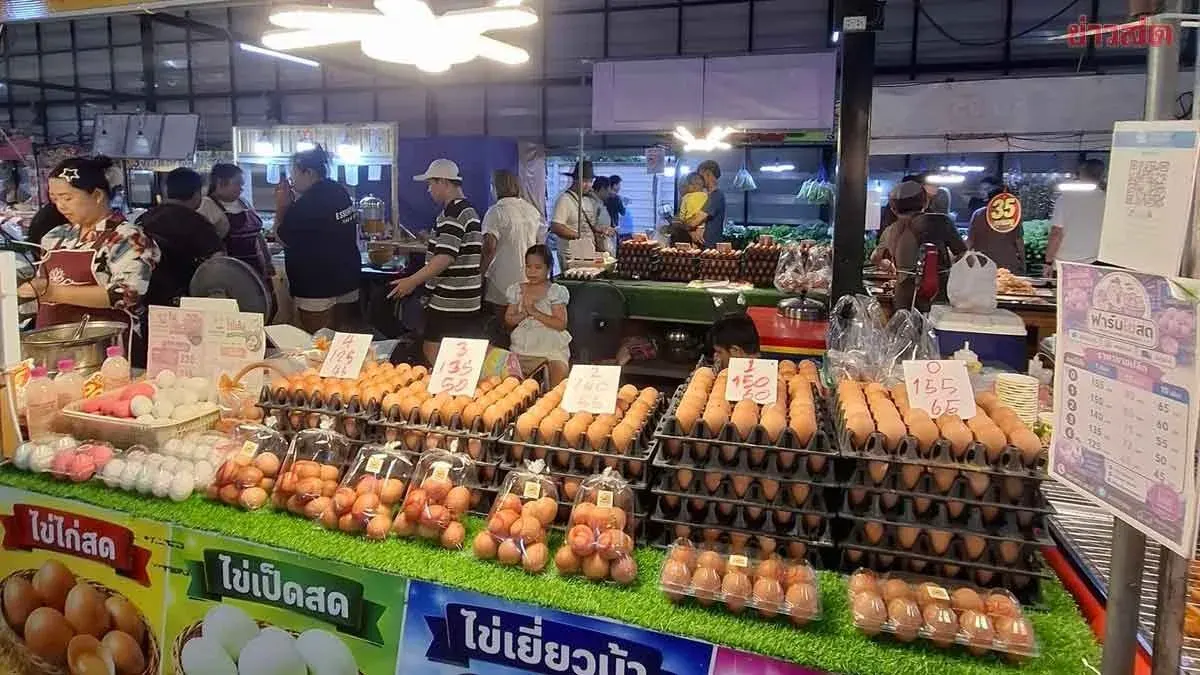
A reporter from Khao Sod interviewed the owner of a fresh egg farm at Bang Chong 18 Market, Khlong 2, Khlong Luang, Pathum Thani. The owner said flood damage has hit chicken farms around Bangkok, especially in Chonburi, Rayong, Prachinburi, Nakhon Nayok, Nakhon Pathom and Ayutthaya, killing more than a million birds and cutting egg supplies. As a result, wholesale prices have risen every day. On October 1, the wholesale price for size‑0 eggs was 155 baht per tray, size‑1 145 baht, size‑2 140 baht and size‑3 135 baht, up an average of 5‑10 baht per tray compared with September 30.
Retail markup differs by location. Shops near wholesale distributors add 10‑15 baht per tray, while those farther from the source, such as in Bangkok, add 20 baht per tray. This brings the latest Bangkok retail price to 175 baht per tray for size‑0 eggs, 165 baht for size‑1, 160 baht for size‑2 and 155 baht for size‑3. When sold individually, size‑0 eggs retail for about 6.50 baht each, size‑1 for 6 baht, size‑2 for 5.50 baht and size‑3 for 4.50 baht.
The shop owner explained that before the flood, size‑0 wholesale eggs were 135 baht per tray. After one week of flooding, the price rose by 20 baht to 155 baht per tray. The increase stems from three factors: panic buying that raised daily sales from 30 to 100 trays, the loss of over a million chickens due to flooded farms, and transport difficulties that require hiring large trucks to move eggs from inundated areas.
He forecasts that egg prices will keep climbing until next year, because restoring the farms will take time—some sites still have standing water, and once the water recedes it will take additional days to clear dead birds, clean and disinfect the facilities before new flocks can be started. Given the typical three‑month rearing cycle, new egg supplies are unlikely to reach the market for at least three months.