Thailand Urges IMF Accountability For 1997 Financial Crisis Damages
This is the second article in a series by Kheetanat Wannaboworn and Walden Bello. Read the first here. This guest article has been edited to correct some factual errors and clarify certain historical details. The authors’ analysis, arguments and opinions remain unchanged, their own, and do not necessarily reflect those of Khaosod English. In the […]
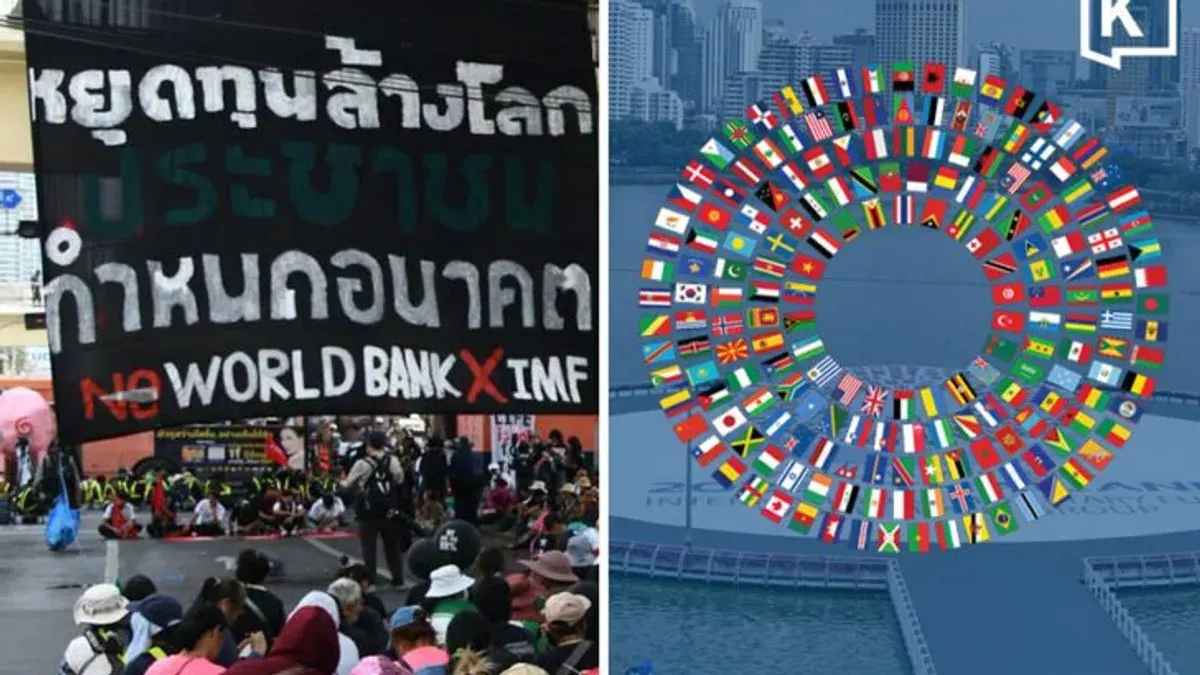
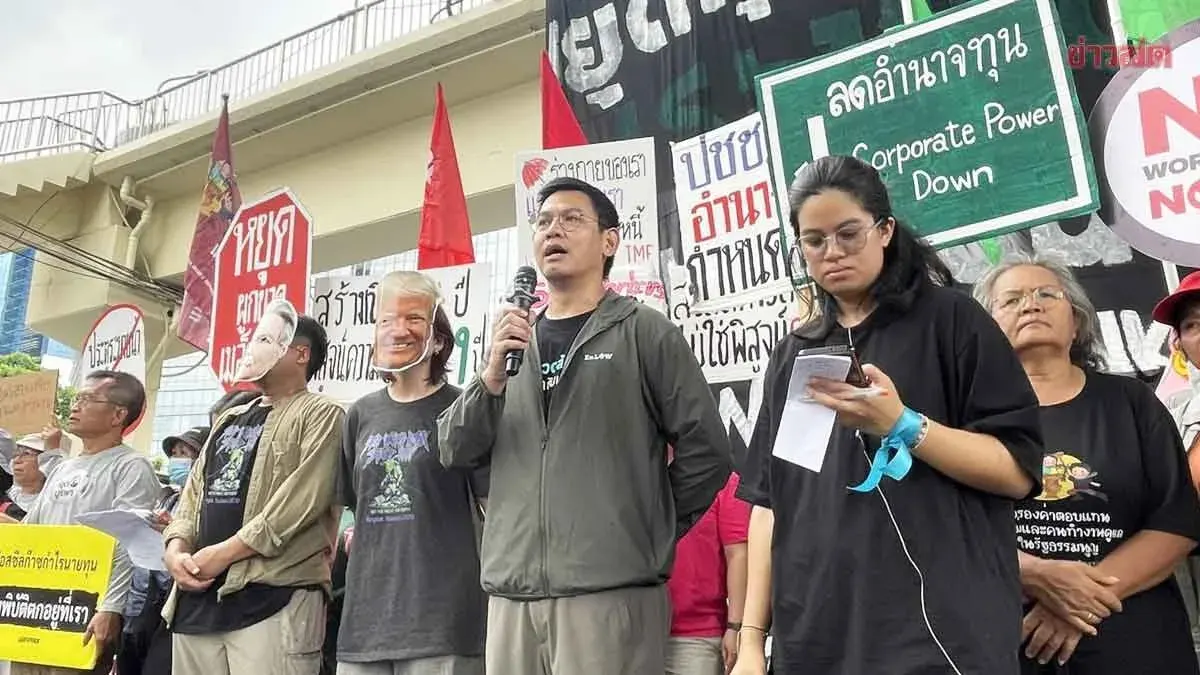
This is the second article in a series by Kheetanat Wannaboworn and Walden Bello. Read the first here. This guest article has been edited to correct some factual errors and clarify certain historical details. The authors’ analysis, arguments and opinions remain unchanged, their own, and do not necessarily reflect those of Khaosod English. In the decade 1987 to 1997, Thailand’s economy was red hot, leading the pack of the so-called Southeast Asian "tiger cubs" with an average GDP growth rate of 8 per cent. Then came the apocalypse. On July 2, 1997, the Thai baht collapsed, as the Bank of Thailand ended efforts to prop it up. This triggered a regional chain reaction known as the Asian Financial Crisis. A key cause of Thailand’s downward economic spiral was the International Monetary Fund, which will be holding its 2026 fall meeting in Bangkok, along with its sister agency, the World Bank, from October 12 to 18. Instead of rolling out the red carpet, the government of Thailand should be suing the IMF for reparations for the damage to Thailand caused by its policies. How the IMF Triggered the Asian Financial Crisis In the 1980s and 1990s, in addition to its role of disciplining developing countries, the IMF took on a new role of promoting the liberalizing of global capital flows, and a big reason for this was that the US and other leading developed economic powers that dominate decision-making at the IMF wanted their financial institutions and corporations to have greater access to the booming economies of East and Southeast Asia. The IMF pressured the financial authorities of Thailand, Malaysia, the Philippines, and Indonesia, as well as South Korea, to remove the barriers to the inflow and outflow of capital, and they gave in. With the liberalization of their capital accounts, foreign funds flowed into these countries, with net private capital flows to these countries shooting up from $37.9 billion in 1994 to $79.2 billion in 1995 to $97.1 billion in 1996. The problem was that these capital flows went mainly to very profitable sectors like real estate and the stock market. There was overinvestment in these two sectors, meaning profits dropped, leading investors to move their money out of the country. The problem was that there were no exit barriers, since the government had acceded to the IMF’s pressure and removed these. In Thailand, with investors panicking and seeking to exchange baht for dollars so their money could leave the country, the oversupply of baht seeking scarce dollars led to a drop in the value of the baht. And when the Bank of Thailand tried to prop up the value of the baht by using its dollars to buy baht, it lost practically all of its $38.7 billion in reserves in six months. The exchange rate fell from 25 baht to the dollar to 50 baht. Bangkok was ground zero of the Asian Financial Crisis of 1997. Hundreds of office buildings and condos were left unfinished, businesses folded, unemployment soared, and over one million Thais