Government Denies False Claim IMF Officials Criticized Thailand
The Thai government denied claims that an IMF official had criticized Thailand, calling the reports false and intended to discredit the ongoing IMF‑World Bank annual meeting in Bangkok. Government spokesman Ekaphop Pianspes said the misinformation had been referred to the anti‑fake news centre and urged the public to verify before sharing. He highlighted that the meeting was proceeding successfully, with Thai leaders taking part and the official actually praising Thailand’s AI and trade opportunities.
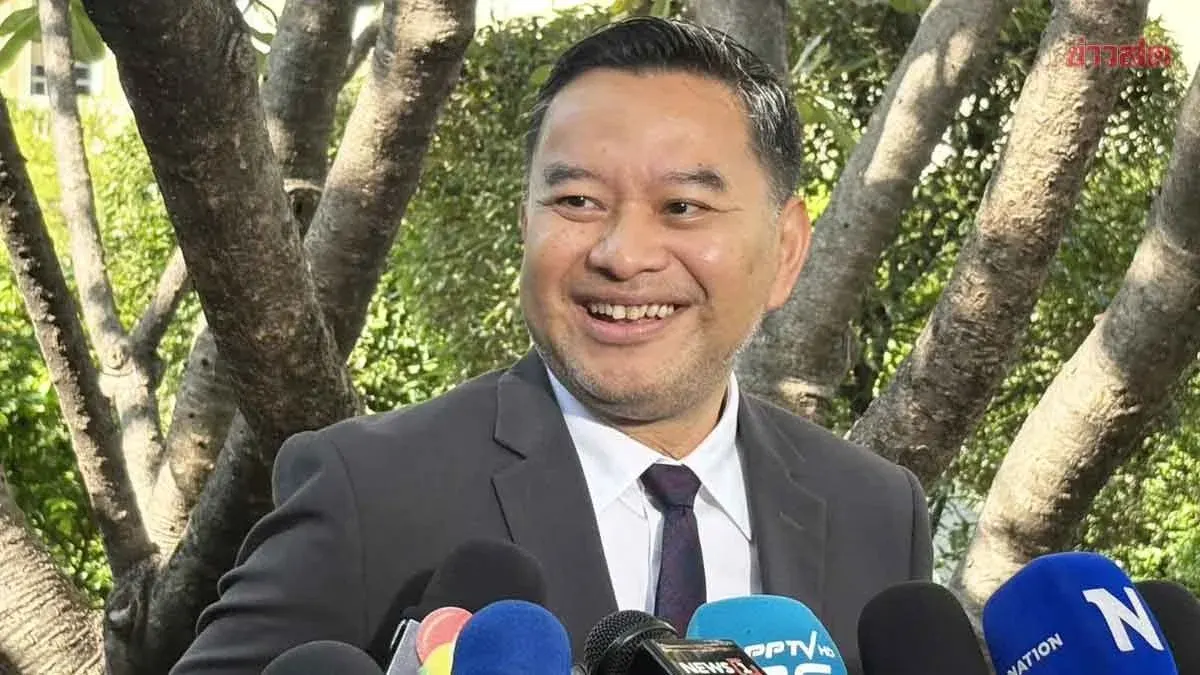
The government reiterated that the news claiming an IMF official had criticized Thailand was false, accusing it of deliberate disinformation and smearing. It said the anti-fake news centre had been sent the information for verification and advised the public to check before sharing, adding that people need not like or view the event as a government achievement but should support it constructively.
At 08:55 on 15 October 2026 at Government House, government spokesman Ekaphop Pianspes discussed the 2026 annual meeting of the IMF’s Board of Governors and the World Bank Group, held from 12 to 18 October at the Queen Sirikit National Convention Centre, with Thailand as host. He said the meeting was halfway through and that participants had praised the organization and the substantive content.
He highlighted that Thai leaders — Prime Minister Anutin Chanvirakul, who also serves as Minister of Interior, Deputy Prime Minister Ekarniti Nitithamprasart, who also holds the Finance portfolio, and various sectors — had taken the stage to present interesting perspectives on finance and fiscal policy.
Ekaphop said he wanted the public to watch out for negative news that seemed deliberately released to discredit the meeting, suggesting Thailand had not been given a chance or was being attacked. He noted that checks on some media outlets reporting that an IMF official had criticized Thailand showed the remarks were actually about global problems, not a criticism of Thailand.
Conversely, the official had praised Thailand for benefiting from AI development and its strategic location offering high opportunities for international trade. However, a well‑known news page had distorted his comments and spread false information, prompting the government to submit the material to the anti‑fake news centre of the Public Relations Department for verification.
Ekaphop added that clips of the prime minister’s remarks at the CNN Global Perspectives: In Bangkok forum — arranged as a parallel event to the World Bank meeting to present Thailand’s view to the world — had been edited to remove his mention of “oleang” (iced coffee) as inappropriate, while the broader message about opening Thailand to the world, linking the Thai economy, and showcasing the country’s efforts to become visible on the global stage was ignored. He stressed that making Thailand a leader in international finance was an important outcome.
He said that although Thais should be proud of hosting the World Bank meeting, some people were using the occasion to tarnish what should be a point of pride, merely to attack the government. He recalled that 35 years earlier the World Bank had met in Thailand when the country was poor, and today Thailand had made a leap‑forward growth.
Ekaphop warned that those spreading false images or statements were undermining the goodwill of participants, and urged everyone in the second half of the event to act as good hosts, not necessarily to cheer the government, but to view the meeting impartially and consider how its benefits could serve the public, not as a government achievement or the prime minister’s image, but as the nation’s collective face and work.
He concluded by inviting people to create positive outcomes together, noting that the source of the dubious news — whether from a media outlet or a self‑styled outlet using social media accounts — had been referred to the fake‑news centre for fact‑checking, and the public should follow up, because sharing unverified false information is worrying. The government does not intend to sue or prosecute, but hopes for responsible reporting.