Buriram Local Agencies Launch Provincial Community Health Drive
Buriram’s local administrative organizations are launching a provincial-level community health initiative guided by royal teachings and supported by ThaiHealth. The program builds on a village health network covering 65 sub‑districts across 20 districts, focusing on areas such as participatory management, disaster response, sustainable agriculture, and health promotion. A recent workshop brought together seventeen local organizations to consolidate lessons and design future activities.
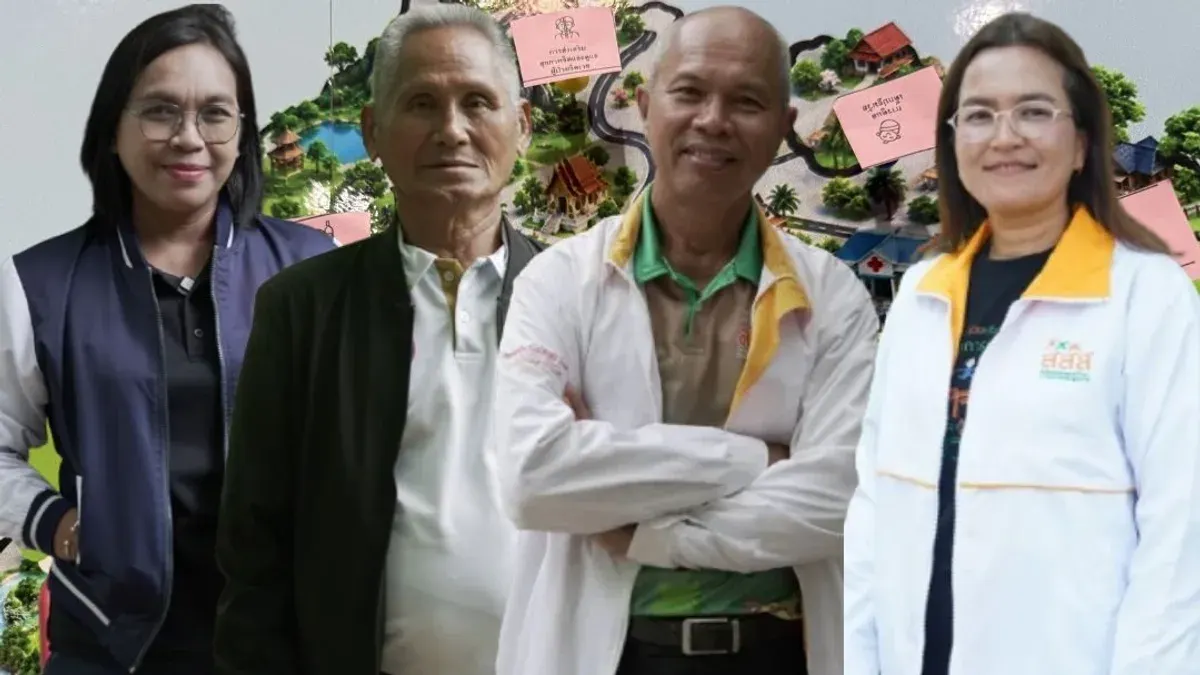
Local administrative organizations in Buriram Province are preparing to advance community health at the provincial level, drawing on royal teachings as a practice guideline alongside the development of a village-level data system. Since 2010, the village health network has been supported by the Health Promotion Fund's Office (ThaiHealth) Office 3, with local administrative organizations as the main driving mechanism covering all areas nationwide.
In Buriram, this effort has continued in collaboration with ThaiHealth, while the village health network has expanded to cover 65 sub-districts in 20 districts, representing 30 percent of the province's local administrative organizations. There are seven village health network management centers and 21 local administrative organizations still actively working, especially in Lamplai Mat District which hosts six active networks.
Over the past decade, the Buriram village health network has operated through flexible guiding principles and strategies that adapt to changing contexts, beginning with public policy initiatives in eight key areas such as participatory management, disaster response, sustainable agriculture, and others. The network later expanded its approach by adopting the S2I strategy—Systematization of area management, Innovation creation, and Integration and collaboration within the local community and with external supporting agencies—to implement initiatives systematically while integrating sustainable development directions.
Royal teachings continue to guide practice alongside the development of the TCNAP and RECAP village data systems, which serve as databases for designing interventions and responding to crises such as the COVID-19 pandemic.
Starting in 2022, the network elevated its work to the “Triple Power” strategy, comprising intellectual power, policy power, and social power, to comprehensively address 14 fundamental community issues linked to ThaiHealth’s eight priority areas. These include reducing tobacco and e‑cigarette use, lowering alcohol consumption, decreasing accidents and promoting helmet use, reducing salt intake, increasing physical activity, combating obesity, and promoting mental health.
Tangible results are evident in various localities: for example, Tambon Thung Kra Ten has seen a rise in organic farming households alongside declining alcohol and tobacco consumption; Tambon Khok Khamin stands out for its adaptability and development of a community fund; Tambon Bu Krasang has implemented a “Safe Traffic Sub‑district” model with 100 percent helmet usage; and Tambon Khok Klang operates a revolving fund exceeding 100 million baht and has developed an elderly school as a local model.
Building on these achievements and lessons, the Northeastern Academic Support Center (ISAN) together with the Community Health System Research and Development Center, the Faculty of Nursing at Khon Kaen University, and ThaiHealth Office 3 organized a workshop on September 17, 2026, at the Dome Welu-samut Building, Mae Chai Phatthana School, Tambon Khok Klang, Lamplai Mat District. Seventeen local administrative organizations from the network participated to review lessons and design future community health promotion activities in the province.