Irrigation Dept Cuts Chao Phraya Dam Release to Aid Public
The Royal Irrigation Department is cutting water releases from the Chao Phraya Dam to ease flooding caused by prolonged rain. It is also pumping out floodwaters in the Bang Pakong and Rangsit areas and preparing for more rain in the south. Nationwide reservoir levels remain high but still have spare capacity.
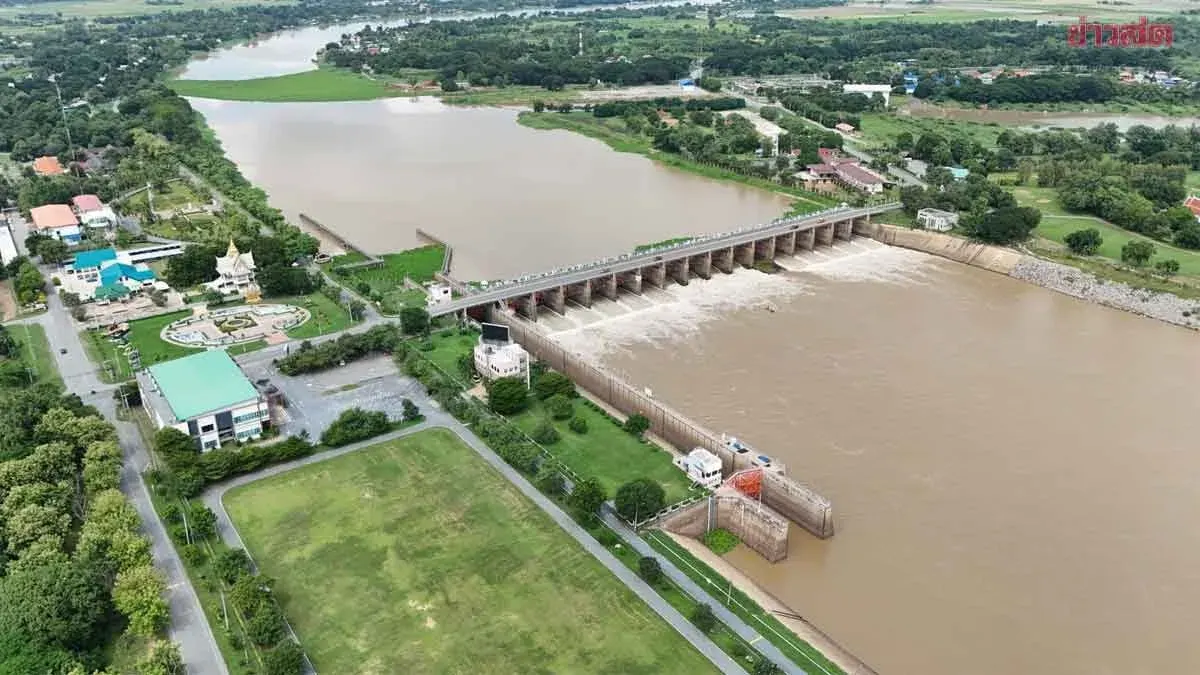
The Royal Irrigation Department announced it will lower the outflow from the Chao Phraya Dam to 1,800 cubic meters per second by 7:00 p.m. on October 14, 2024, down from 1,900 cubic meters per second earlier that day, to reduce water flowing downstream. Deputy Director-General Witthaya Kaemee said water conditions are improving as upstream rainfall has decreased, with flow at the C.2 station in Nakhon Sawan measuring 1,762 cubic meters per second at 6:00 a.m. and continuing to fall. The department is also draining floodwaters from the Bang Pakong and Rangsit basins, deploying pumps and pushers around the clock and preparing for heavy rain in the south. Similar reductions are being made at the Pasak Jolasid and Phra Ram 6 dams, helping to ease water levels downstream. Nationwide, large and medium reservoirs hold 63.735 billion cubic meters, 83% of capacity, with room for another 12.955 billion cubic meters. In the Bang Pakong basin, the agency works with the navy and local authorities to boost pumping in Nakhon Nayok, Prachin Buri and Chachoengsao provinces, especially in Ongkharak district, using the Rangsit canal system to move water to pumping stations for release into the Chao Phraya and Bang Pakong rivers. In Bangkok, additional Hydroflow pumps have been installed at the Rangsit Canal and Chulalongkorn stations to improve drainage. Meanwhile, the Tha Chin and Mae Klong basins continue to use twenty pushers to speed water out to sea.