Constitutional Court to Rule on Thailand Election Ballot Codes
Thailand's Constitutional Court will rule September 28 on whether barcodes and QR codes on February 2026 election ballots violated ballot secrecy protections, a decision that could invalidate the entire election if constitutional violations
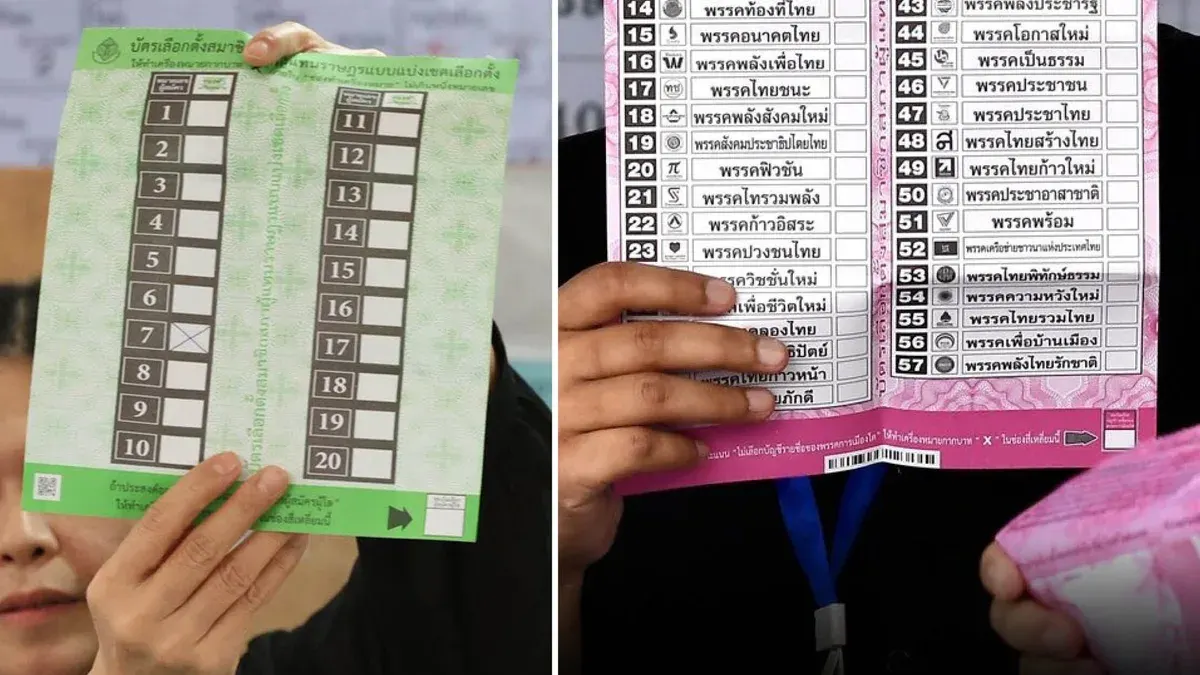
September 28, 2026 is another critical day for Thai politics, as the Constitutional Court is set to read its ruling on the barcode and QR code case affecting the February 8, 2026 election ballots, after conducting witness examinations and on-site inspections of actual ballot materials.
The issue centers on the Election Commission's ballot design, which includes printed barcodes and QR codes, raising concerns about whether these codes could be linked back to individual voters. This goes beyond a technical problem—the heart of elections lies in the "secrecy" of voting. Citizens enter polling booths to exercise their rights freely, confident that no one can trace back their choice.
If the ballot technology allows for connections to individual voters, it directly undermines a core principle of democratic elections. Under this principle, the Election Commission must provide clear and reasoned explanations for why the Constitutional Court felt compelled to investigate thoroughly, including witness testimony, storage locations, printing sources, and ballot handling processes.
If the court finds these processes violate the constitution, questions will inevitably extend to the validity of the February 8 election results. Historical precedent makes this matter worthy of close attention. In 2006, the Constitutional Court annulled the April 2 election due to violations of ballot secrecy and electoral legitimacy. Later, in 2014, the February 2 election was annulled because voting could not be completed simultaneously nationwide in a single day. Both events were followed by political vacuums, conflict, and severe crises that eventually led to major political upheaval.
Nevertheless, the barcode-QR code case should not be hastily assumed to produce similar results. Everything depends on the Constitutional Court's reasoning and the scope of its ruling. However, all parties must be prepared: if the ruling affects fundamental election principles, it will shake the Election Commission, government, parliament, political parties, and raise questions about new elections. September 28 thus becomes a day testing the standards of Thai democracy.
For the Election Commission, this serves as a critical lesson that ballot design must balance both technical accuracy and public confidence in the voting process. Citizens must therefore pay close attention, because regardless of the court's direction on September 28, the ruling will determine how Thai politics moves forward and what political fallout the country must manage.