CP Group Empowers 300 Scholarship Students with Leadership Skills for AI Era
CP Group trained 300 scholarship students in leadership using the "6+6" concept, stressing real-world wisdom and adaptability for the AI era.
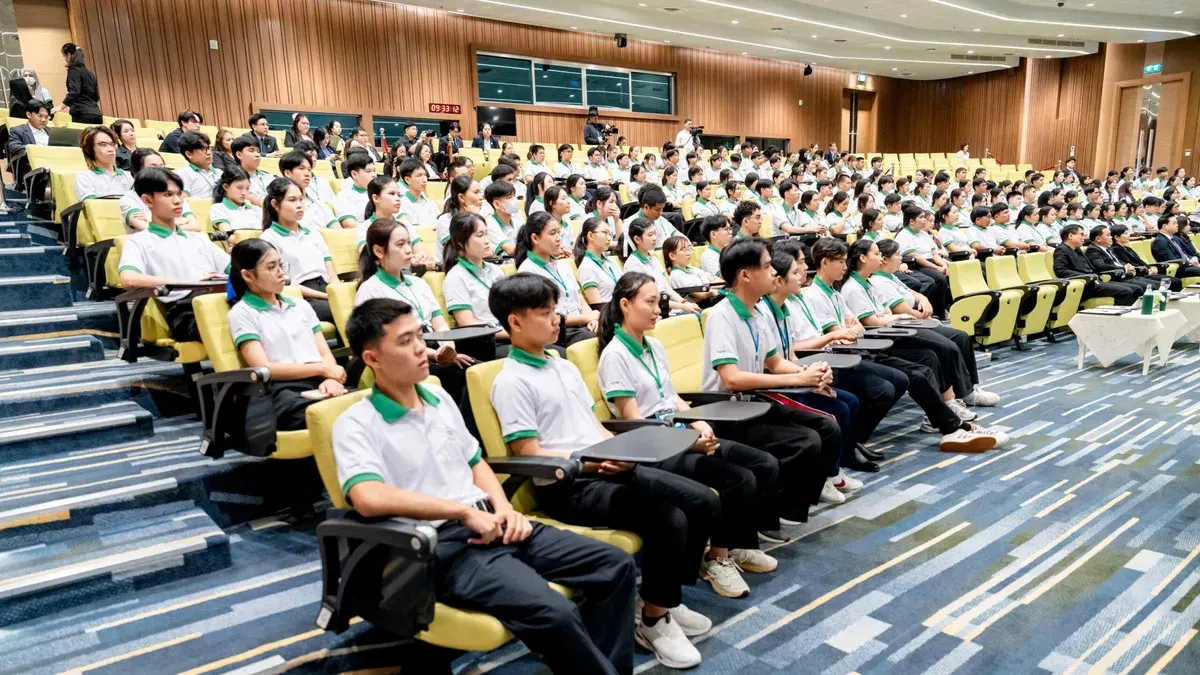
Charoen Pokphand Group (CP) encourages its scholarship recipients to learn from real-world experience alongside classroom knowledge, preparing work skills and leadership for a rapidly changing world. Dr. Thiraphat Thanomsakayuth, Dean of CP Leadership Institute and Chairman of the Corporate Sustainability and Strategic Development Committee, shared the "6+6" concept with 300 scholarship students at the CP Leadership Institute, emphasizing capability development alongside ethics, lifelong learning, and social responsibility.
Dr. Thiraphat said that in an era where AI and technology are changing how we learn and work, youth have more opportunities to access knowledge and create output. At the same time, existing knowledge can quickly become obsolete. Preparing the new generation must therefore emphasize the ability to learn new things, adapt, and solve problems hands-on. He applied Senior Chairman Dhanin Chearavanont's concept of building "wisdom" alongside "degrees" as a self-development guideline. Scholarships thus mean more than financial support — they open opportunities for youth to maximize potential through education, internships, and learning from real work, helping them understand job challenges, teamwork, and accountability for outcomes.
"When we actually do the work, encounter problems, and solve them ourselves, what we learn becomes wisdom that stays with us. We want the younger generation to gain wisdom alongside their degrees and use the opportunities received to build a good future for themselves, their families, and others," Dr. Thiraphat said.
Regarding leadership development, Dr. Thiraphat noted it can start from student days without waiting for a position or authority, through discipline, responsibility, and overcoming self-limitations before progressing to leading others, teams, organizations, and creating social benefit. The greater the role, the more one must consider the impact of decisions on stakeholders' lives.
The "6+6" concept shared with youth comprises six leadership traits: sacrifice, generosity, forgiveness, empathy, diligence and perseverance, and gratitude — paired with six corporate values: the Three Benefits to nation, people, and organization; speed and quality; making difficult things simple; embracing change; innovation; and integrity — for youth to apply as guiding principles in both study and work.
Dr. Thiraphat also discussed the leader's role in the AI era: though technology can complete certain tasks quickly, leaders must still invest time in developing people, giving teams opportunities to think and act hands-on, because long-term success relies on teams capable of responsibility and independent problem-solving. Using technology for efficiency should go hand-in-hand with knowledge transfer and new skill-building for personnel.
Meanwhile, work that embraces new thinking requires leaders who listen and create opportunities, especially when mistakes arise from experimentation. Leaders should help teams find lessons and improve methods, recognize each person's strengths, share credit, and value collective success — the foundation of trust and teamwork.
On personal readiness, Dr. Thiraphat emphasized financial literacy, from goal-setting and income-expense management to disciplined saving.