Pollution Officials Find Hydrogen Sulfide at Bangkok Data Center
Pollution officials detected hydrogen sulfide and fuel odors at Bangkok's Rama 9 Data Center during a September 3rd inspection prompted by resident complaints near the hospital. Lab analysis is pending to determine if contamination levels e
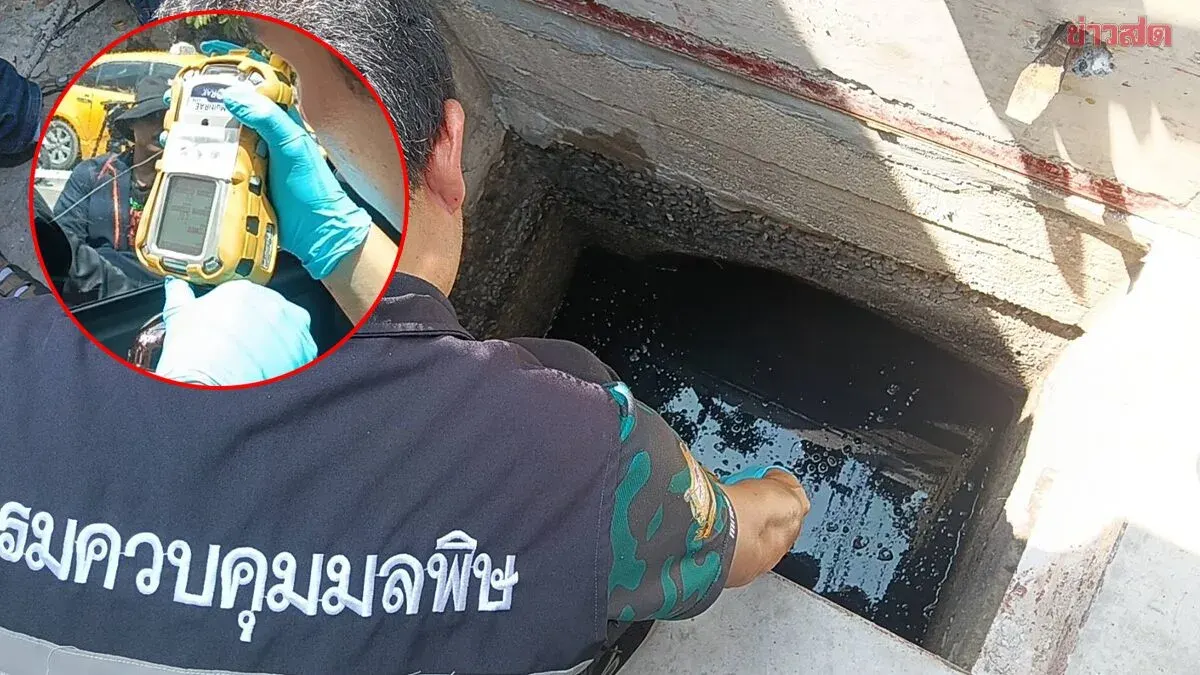
Officials from the Pollution Control Department, Ministry of Natural Resources and Environment, inspected the Rama 9 Data Center on September 3rd to investigate pollution concerns and environmental impact. One team examined the oil storage tanks and related systems inside the facility, while another team interviewed nearby residents and tested water sources in the surrounding community.
When officials opened the drainage cover in front of the data center, reporters immediately detected a strong fuel odor. Staff collected water samples and performed preliminary chemical vapor measurements before sending them to the laboratory for detailed analysis, spending over three hours on-site. According to Jaturongk Asvasovarn, senior environmental specialist, the inspection was prompted by residents living near Rama 9 Hospital who complained of fuel odors. The team collected samples from a settling basin inside the data center believed to hold water before discharge.
Preliminary testing using headspace technique detected hydrogen sulfide and volatile organic compounds consistent with the reported fuel smell, with concentrations measuring 3 PPM—detectable to the human nose. However, officials must conduct further analysis to determine whether levels exceed health safety standards set by the ministry. Oxygen measurements in the water showed levels insufficient to cause explosions or fire, though the odor remains a nuisance to residents.
The data center cooperated fully with inspectors. Officials noted that data centers typically generate noise, heat, and smoke from generators. Senior specialist Jaturongk explained that cooling water at the facility is recycled internally and not discharged into community water sources, and the facility operates its own wastewater treatment system. The exact source of the oil contamination remains unclear pending confirmation of drainage connections, and lab results are expected within 2–3 weeks.