A 65-year-old Trang farmer overcame her fear of bees to build a thriving honey business, now harvesting 500–700 bottles monthly during peak season from 140 hive boxes of native cavity bees. Her premium May honey and fresh honeycomb generate
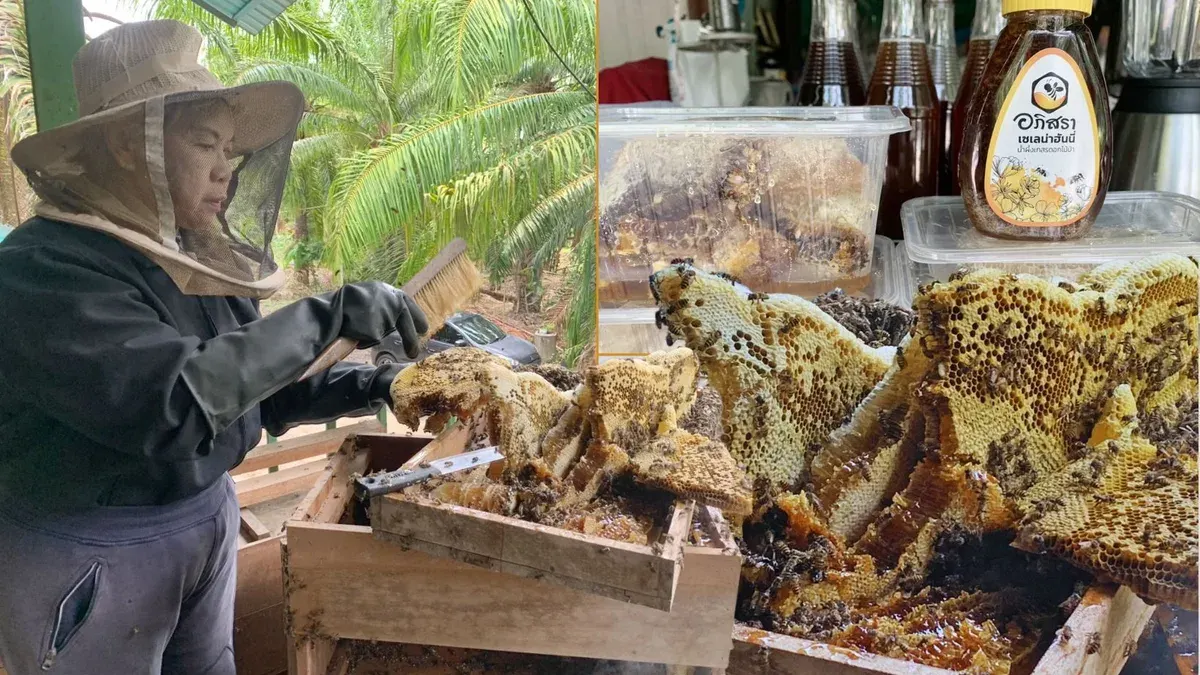
After years of fearing bees following multiple stings, 65-year-old Pathumchat Damkong—known locally as Pa Thum—from Ban Ta Chin Nuea in Muang District, Trang Province, has turned cavity bee keeping into a thriving supplementary livelihood. She now sells honey in bottles and fresh honeycomb, generating tens of thousands of baht weekly during peak season.
The cavity bees she raises, called "min to" in the South, are native Thai bees smaller than giant honey bees that produce high-quality honey with distinctive aroma and flavor.
Pa Thum began keeping cavity bees in 2009, overcoming her deep fear of them after witnessing another farmer's success. She recalled her turning point: "I wanted to try, but bees still stung me just walking past them. I had to be brave and do it myself, because I realized that if no one helps me, I have to manage on my own." Starting with just three wooden hive boxes, she harvested honey from only one. Undeterred, she studied continuously—learning from other beekeepers, local extension workers, and agricultural organizations. After 17 years, she expanded to a maximum of 140 hive boxes placed around her home, in palm oil groves, and on relatives' land.
Yield varies by hive. Some produce only half a bottle due to less industrious colonies or missed timing, while others yield old combs she doesn't catch in time. Overall, during April alone she collects 3-13 bottles per hive, totaling 500-700 bottles, which mature into May honey—her farm's premium product and signature offering.
April's dry conditions concentrate forest flower pollen, creating honey with low moisture, thick sweet taste, attractive golden color, and strong floral fragrance ideal for traditional throat lozenges and herbal medicine blends. After training with community development programs, she created a brand and bottled in multiple sizes: 200-milliliter bottles for 180 baht and 750-milliliter bottles for 500 baht.
She expanded beyond bottled honey to fresh honeycomb with larvae, mature bees, or pure honeycomb without larvae, cut into pieces and boxed at 100–500 baht depending on weight. Fresh honeycomb became her bestseller because some customers want the richness of larvae while others seek the assurance of 100 percent authentic comb, and fresh comb outsells bottled honey significantly while offering identical medicinal benefits.
May honey carries the highest therapeutic value: antioxidants, skin nourishment, energy boosting, cough and sore throat relief, wound healing, improved sleep through gentle sedative compounds, stress relief, and a reputation as a top anti-aging remedy. Pa Thum's customers—both online and regular repeat buyers—order bottles and fresh comb whenever she announces harvest, selling out daily. Since she harvests only once yearly, May's harvest week generates tens of thousands of baht in income.