Power Plant Launches Rayong Zero Food Waste Initiative
BLCP Power Plant launched the Rayong Zero Food Waste 2026 initiative using black soldier fly larvae to convert organic waste into fertilizer and animal feed, advancing the province toward a circular economy.
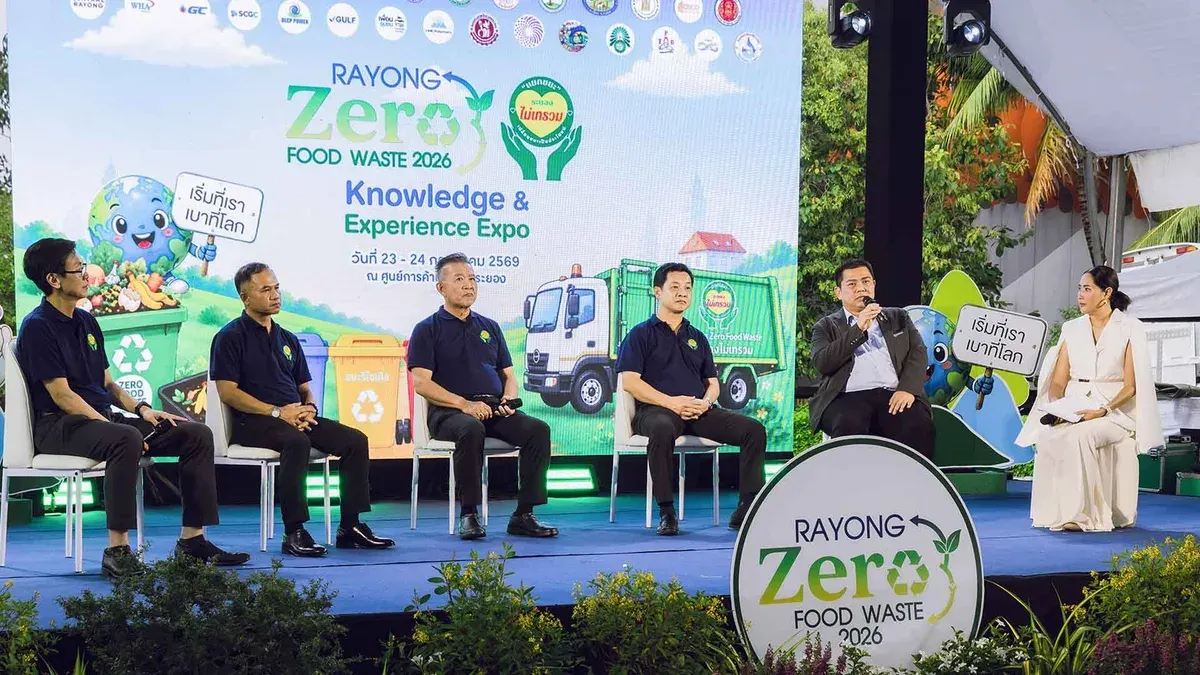
BLCP Power Plant is spearheading the Rayong Zero Food Waste 2026 project at the Knowledge & Experience Expo, joining forces with government agencies, local authorities, and communities to transition Rayong toward a low-carbon economy. The initiative showcases innovative waste management techniques, including the use of black soldier fly larvae (BSF) to process food waste and converting leaf scraps into soil to reduce municipal landfill burdens. The goal is to advance the province toward a low-carbon, circular economy through knowledge-sharing seminars titled "Rayong Without Waste: Transforming Garbage into Resources for Sustainable Environment."
The event was presided over by Deputy Governor Kalachai Thepwarchai, alongside representatives from government, private sector, and community members. Adisor Wangmoon, BLCP Power's Director of Administration and Corporate Relations, explained that the initiative began as a solution to manage leaf waste from the power plant's grounds. The team then expanded into food waste management after the plant's cafeteria, which serves 300–1,000 employees daily during maintenance periods, generated significant organic waste. After studying waste management centers in Bangkok for over a year, they discovered black soldier fly larvae, which are five times more efficient than earthworms at decomposing organic matter, processing up to 2.5 kilograms of food waste in just 12 hours while eliminating odor and producing no disease risk.
The BSF larvae produce valuable byproducts: their manure is processed into organic fertilizer for agriculture, while the larvae themselves serve as protein sources for animal feed including chickens and fish, and are being developed into dog treats. With support from Mab Tapud municipality, the team has expanded to produce feed for dogs, chickens, and cats, and plans to open a learning center for public visits. This circular economy approach transforms waste into economically, socially, and environmentally valuable resources, with the environmental expertise now being shared across government and local agencies.