Rayong Waste Model Powers Clean Province Initiative Nationwide
The Sustainability Expo 2026 highlighted the "Rayong Model," a province-wide waste management system linking 67 local administrations to convert household waste into energy through source separation and inter-municipal cooperation. The Ministry of Interior's "Clean Province" policy stresses that technology alone cannot solve the waste crisis; systematic management from households to final disposal requires active public participation and transparency. Officials presented Rayong as a template for other provinces to adapt under the national framework.
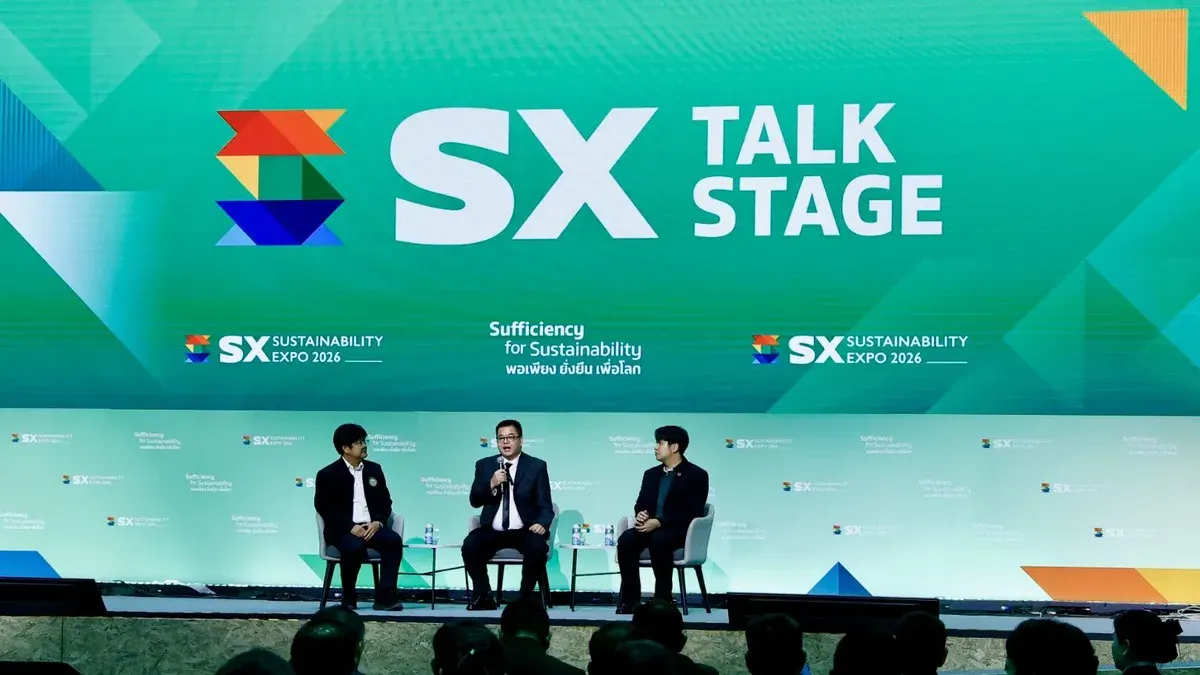
The opening panel of Sustainability Expo 2026 (SX2026) unpacked lessons from the "Rayong Model" of waste management, which connects all 67 local administrations in the province — from household sorting to energy production. Speakers emphasized that end-point technology must go hand-in-hand with public cooperation and transparency.
A single bag of trash left at the curb may seem like the end of a resident's responsibility, but for local authorities it marks the start of a multi-step process: collection, transport, sorting, and disposal. When everything from food scraps to hazardous waste is mixed in one bag, the resulting problems go beyond filth to include odors, leachate, soaring management costs, and a lower quality of life for the whole community.
Solving Thailand's waste crisis cannot stop at buying more trucks or finding new dump sites; it requires a systematic chain from households to final disposal, with citizens as active participants rather than passive recipients of state services.
This is the mission of the Ministry of Interior's Department of Local Administration, which is driving the "Clean Province" action plan to help provinces and local governments adapt a policy framework covering source reduction and separation, mid-stream collection and transport, and appropriate final disposal.
Rayong Province stands out as a success story, managing waste through inter-municipal cooperation while promoting household separation under the "Rayong Model."
SX2026 Opens Local Sustainability Learning Space, Reducing Waste for the Planet The Sustainability Expo 2026, or SX2026, runs from November 6–15, 2026, at the Sirikit National Convention Center. It opens a space for the public to learn about sustainability across multiple dimensions — environment, health, food, and urban development. Highlights include disaster-resilience innovations, health technology, clean energy concepts, sustainable living, as well as art, chef-crafted food, and learning spaces for children. Exhibitions, workshops, markets, and knowledge-exchange stages run throughout the 10 days, allowing visitors to take ideas back to daily life, communities, and organizations for sustainable application.
Within the fair, daily panel stages are held. A highlight of day one at the SX Talk Stage Hall 4 was the panel "Driving the Clean Province," which invited listeners to view the waste problem through the eyes of frontline practitioners — from policy translation to local disposal-center management and building concrete public cooperation.
Panelists included Sirichai Chalongnanchai, Director of the Public Services and Local Coordination Group, Rayong Province, and Suriya Sirawat, Director of the Public Health Division, Rayong Provincial Administrative Organization. The session was moderated by Phumi Patisanthaworn, Head of the Local Environment Division, Department of Local Administration.
'Clean Province' Must Start at Home, Not Wait for the Landfill Phumi Patisanthaworn explained the Department of Local Administration's role: the Clean Province plan is a central framework passed down for provinces to adapt. Each area can add activities, projects, and cross-sector cooperation to fit its own context, making waste management more effective.
"The crucial heart is not to make every province do exactly the same activities...