Disaster Agency Details 72-Hour Emergency Bag Essentials
The Department of Disaster Prevention and Mitigation outlined six essential supply categories for 72-hour emergency bags, including water, food, medicine, documents, hygiene items, and tools to survive until aid arrives.
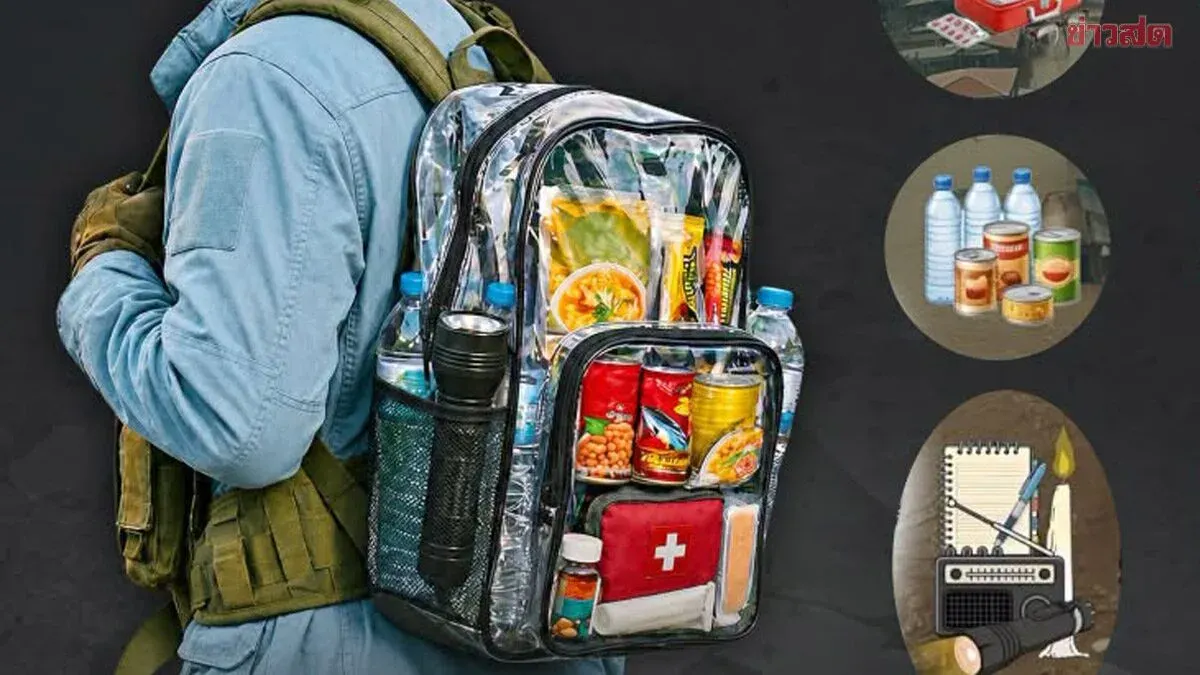
The Department of Disaster Prevention and Mitigation (DDPM) has unveiled details of the 72-hour survival rule — the critical three-day window after a disaster occurs when survival is most precarious and before government assistance can be distributed to affected areas. The key message: "We must survive."
How? Prepare an "Emergency Bag" stocked with essential supplies for the first 72 hours after a disaster hits.
What are the six essential categories?
1. Medicine and Health: First aid kit, common household medications, personal prescription drugs, medical history records. 2. Food and Water: 3 liters of drinking water per person per day, ready-to-eat meals, energy snacks, food for infants, elderly, and patients. 3. Communication and Tools: Mobile phone, power bank, flashlight, spare batteries, transistor radio, whistle, candles, lighter, notebook, pen, pocket knife, scissors, rope. 4. Documents and Cash: Copies of ID card, house registration, driver's license, bank book, land title deed, spare keys, and cash in waterproof zip-lock bags. 5. Personal Hygiene: Tissues, toothbrush, toothpaste, bathing supplies, garbage bags. 6. Clothing and Bedding: Spare clothes, raincoat, hat, blanket/sleeping bag.
Key Reminders: - Use when evacuating from risk areas. - Use when sheltering in place at home awaiting rescue. - Keep it sufficient, lightweight, and grab-and-go ready. - Minimum: 3 liters of water and 3 meals per person. - Must last 72 hours; store as a household mini-stockpile.
Don't forget! Regularly check emergency bag contents to prevent expiration and deterioration that could render items unusable when disaster strikes.
DDPM Director-General Nirawit Pongsitthaworn stated that regarding disaster preparedness and other emergencies, the DDPM has readied disaster management machinery, crisis response personnel, early warning systems via Cell Broadcast and other comprehensive channels, as well as appropriate response and relief operations tailored to each disaster situation. The DDPM and relevant agencies stand ready to coordinate emergency contingency plans to instill public confidence and safety.