Doctor Warns: Bone Pain May Signal Advanced Lung Cancer
A 64-year-old woman diagnosed with advanced lung cancer initially presented with hip and lower back pain, highlighting that bone pain without injury can signal cancer spread to bones rather than a primary bone disorder.
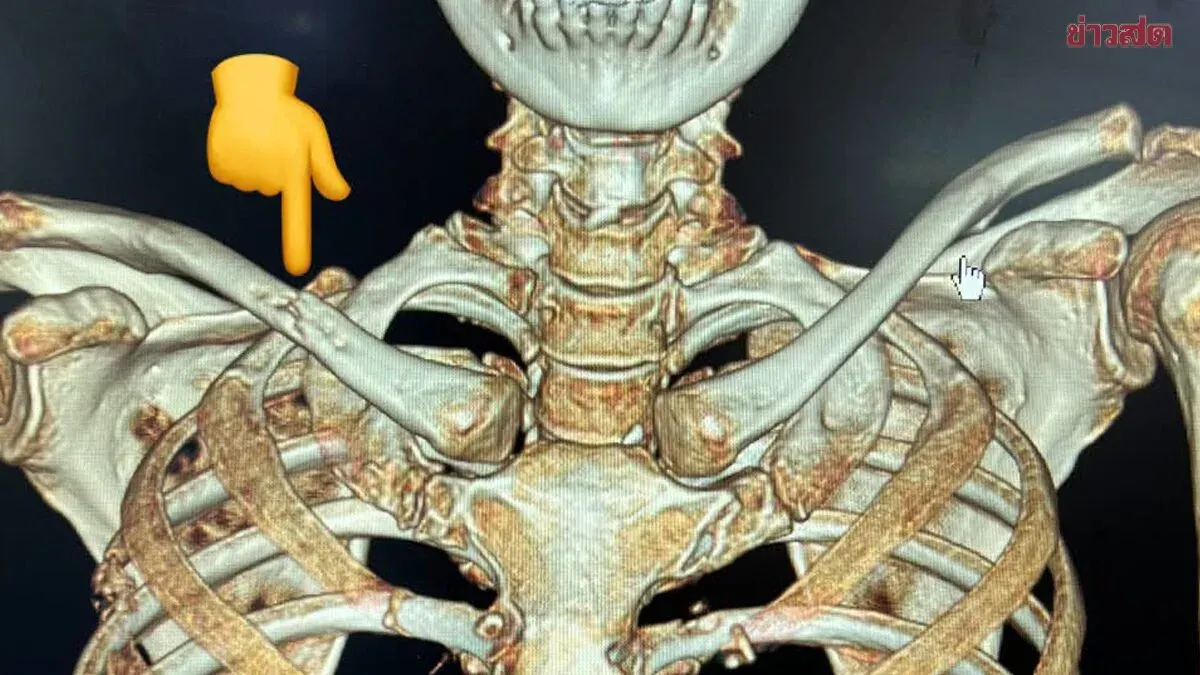
On September 15, 2024, Dr. Phurin Harprasert from the Pulmonary and Respiratory Clinic at Maha Chai Hospital posted an interesting case: "She did not come to see a doctor because of a cough... she did not come because of shortness of breath... but she came because of hip and lower back pain, and ultimately we discovered that the source of her pain was in the lungs."
A 64-year-old woman presented with pain, tenderness, and swelling in her right hip area for only three days, with no accident or trauma involved. On the surface, many might suspect a bone or muscle disorder, but deeper history-taking revealed additional symptoms: poor appetite, weight loss of 4 kilograms in one month, and a persistent dry cough for one month.
Chest X-rays of the hip area showed abnormal findings resembling bone destruction. This raised an important question: was this simply bone pain, or was cancer destroying the bone?
CT scans of the chest and abdomen provided clearer answers. A mass was found in the posterior chest near the heart, enlarged lymph nodes in multiple locations within the chest, a mass near the left adrenal gland, and most importantly, bone destruction at multiple sites including the hip, ribs, and lumbar spine at L2.
All these findings strongly suggested advanced lung cancer spreading to the bones. Lung cancer does not only cause cough, bloody cough, or shortness of breath. When the disease spreads to bone, it can cause bone pain, bone destruction, and even fractures without any trauma. Some patients may experience severe complications such as spinal collapse or spinal cord compression.
Therefore, new-onset bone pain, especially in elderly patients without trauma and accompanied by weight loss, poor appetite, or other abnormal symptoms, should not be dismissed as simple bone pain. What hurts at the hip may not be the source of the disease. What appears to be merely a painful bone could be a signal that the body has harbored serious disease elsewhere for a long time.
For this patient, the next step is tissue biopsy to confirm the cancer type and molecular pathology testing to plan appropriate treatment. Modern lung cancer treatment is no longer limited to chemotherapy alone; treatment selection depends on cancer type and molecular characteristics.
This case teaches us not to focus only on the body part the patient says hurts, but to search for the underlying cause. Sometimes the lungs may be the origin, but the bones may be the first to send a distress signal.
Source: Phurin Harprasert