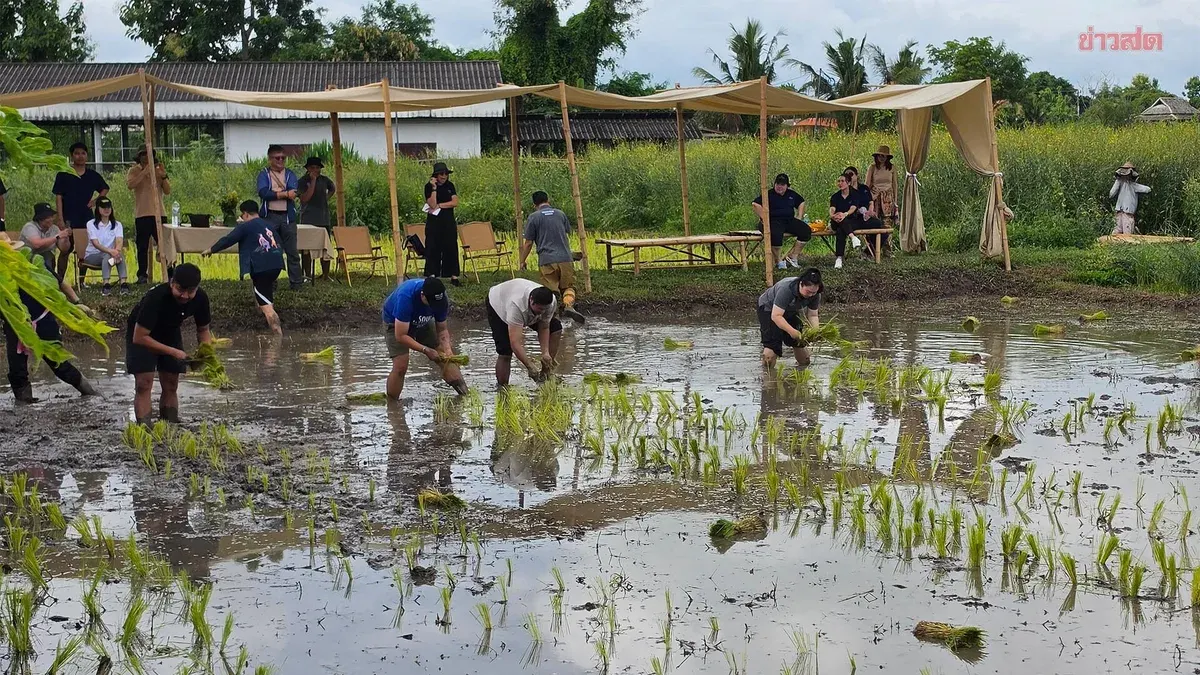
Over 50 chefs from Chiang Mai hotels and restaurants visited a local vegetable farm to learn sustainable food production and build direct relationships with farmers, strengthening the farm-to-table supply chain across the region.
Chiang Mai Chefs Charity organized the "Chef to Farm" event, bringing together more than 50 chefs and food industry professionals from over 17 hotels, restaurants, and networks to visit Hak Rong Khum vegetable garden in San Pa Tong district, Chiang Mai. The initiative aims to educate chefs about safe food production sources, strengthen relationships between chefs and farmers, and build a network for using local and organic ingredients from farm to kitchen to consumer. The activity is part of a food security agroecology program under the Healthy Lifestyle Bureau, promoting healthy food consumption in the Chiang Mai region.
The Chef to Farm program allows chefs to learn the entire food production process, from seedling extraction and rice planting to growing and harvesting traditional vegetables, as well as beekeeping and raising ducks and chickens. Chefs exchange knowledge with farmers about production seasons, ingredient quality, and how to use local products to create innovative menu items for restaurants and hotels.
Chef Supreechar Tansingchai said the Chiang Mai chef community began discussing ways to organize socially beneficial activities and wanted chefs to leave the kitchen and directly learn food production processes. Chef to Farm marks the beginning of chefs from multiple hotels and restaurants coming together to create initiatives that can benefit consumers and communities in the future. "We learned what the real starting point is, from sowing to seedling extraction to planting. When we see it firsthand, we can tell consumers where our ingredients come from and what processes they go through," she said.
Chef Supreechar noted that personally working in the rice field helped chefs better understand the labor and rice production process, which requires planning, patience, and teamwork—principles that can be applied back in the kitchen.
Chef Billy Suksan Chutinadharatip, Executive Chef at Amelia Chiang Mai hotel, said that Chiang Mai chefs and restaurants had been discussing ways to unite for community activities before developing the Chef to Farm program, which gives chefs the opportunity to meet farmers and producers directly. "Today we brought chefs to put down their utensils and plant rice, but behind rice planting is the conversation with farmers and producers, learning about food sources and vegetables we use, and understanding how production processes differ," he said.
Chef Billy noted that connecting chefs with farmers creates benefits in three areas: economy, as income from purchasing raw materials goes directly to farmers; tourism, as visitors are interested in learning the stories behind dishes; and health, as restaurants and hotels can choose ingredients from known sources for consumers.
The field visit also helps chefs learn details about ingredients that cannot be seen once products reach the kitchen, such as planting seasons, optimal quality periods, and planning menus to align with seasonal production. "If we know the seasons of different vegetables, we can create menus that match those seasons and choose ingredients at peak quality. This kind of knowledge requires direct exchange and questions with farmers," Chef Billy said.
Associate Professor Puanrat Kaewloum, instructor at the Environmental Engineering Department, Faculty of Engineering at Chiang Mai University and manager of the Chiang Mai Greentopia project, said the activity originated from some chefs who had previously worked with farmers at Hak Rong Khum garden and wanted to invite fellow chefs to learn together, eventually expanding into a broader collective effort.