Election Commission to Rule Individual Cases in Parliamentary Vote-Buying Scandal
The Election Commission will rule on 229 vote-buying suspects individually by August, likely resulting in mixed convictions and acquittals rather than wholesale charges, raising concerns about whether the broader conspiracy network will be
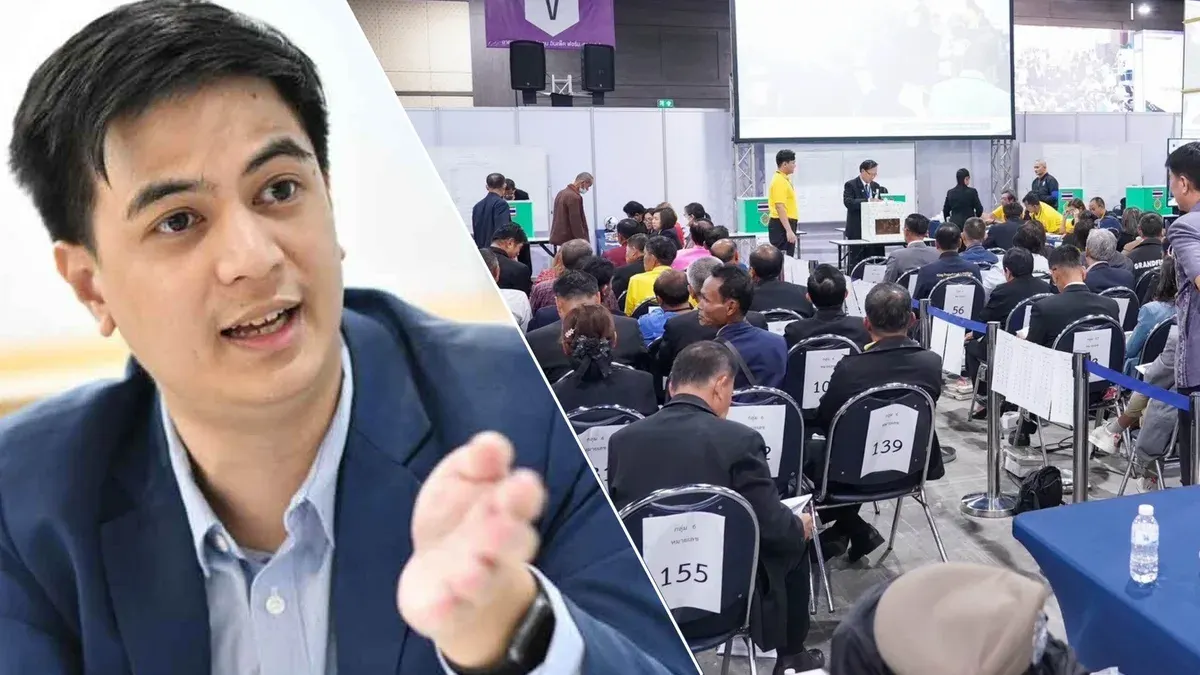
The parliamentary vote-buying case against 229 alleged suspects has reached a crucial turning point. Election Commission member Sittichote Intrawiseth stated that the investigation will focus on documented evidence and render decisions on an individual, per-charge basis, with conclusions expected by August.
This approach, while legally consistent with examining case-specific evidence, immediately raises a major political question: how will the broader conspiracy network be assessed? The Central Investigation Committee, comprising Election Commission and Department of Special Investigation officials, found the allegations against all 229 suspects to be substantiated. However, a separate subcommittee voted 5-2 to dismiss all charges—a stark contradiction.
When the Election Commission rules per-case and per-person, the likely outcome is neither wholesale convictions nor full acquittals, but rather partial guilt and partial exoneration, with only some cases advancing to the Supreme Court. The chances of prosecuting all 229 are virtually nonexistent, but dismissing all is equally unlikely if some individuals have sufficient corroborating evidence.
The critical factor is witness testimony. If allegations rest solely on witness accounts without supporting evidence, their evidentiary weight diminishes significantly. The Election Commission emphasizes that cases forwarded to court must be backed by sufficient evidence, not mere accusation, and that evidence must come from the official record alone.
This distinction is pivotal. If decisions are handed down per-person and per-charge without linking conduct to show the broader network, proving a coordinated conspiracy becomes far more difficult. This echoes concerns raised by analyst Prithat Watchrasindhul about the possibility of selective prosecution—penalizing lower-level operatives while allowing those closest to power to escape.
These remain observations, not conclusions, but they highlight the stakes. The vote-buying case is not merely about who faces conviction or acquittal; it must answer the public about how the parliamentary election system was manipulated, who executed the scheme, who ordered it, and who stood behind it. If only minor figures are convicted while major figures escape, the damage extends beyond 229 individuals to the credibility of the entire justice system.