Flooding Hits 21 Provinces, Over 27,000 Households Affected
Heavy flooding across 21 provinces has affected over 27,000 households, prompting Thailand's Prime Minister to order governors and disaster agencies to intensify monitoring, accelerate evacuations, and pre-position emergency resources.
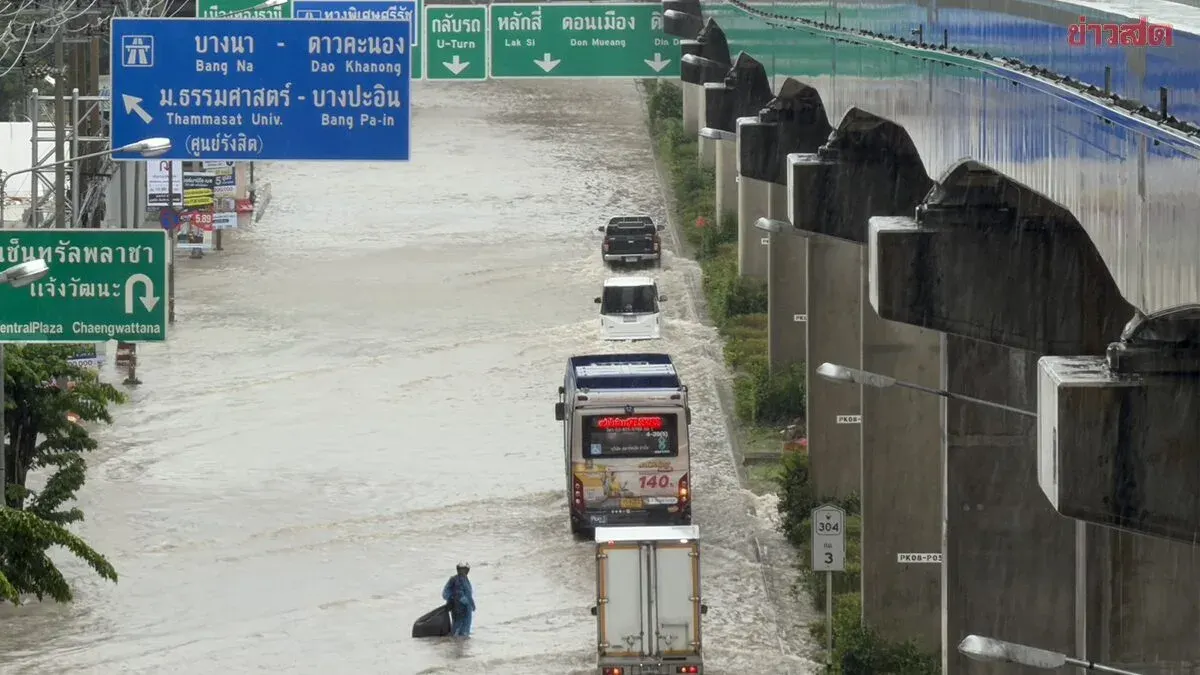
Flooding Hits 21 Provinces, Over 27,000 Households Affected. Prime Minister Orders Provincial Governors and Disaster Agency to Monitor Situation Closely, Accelerate Warnings and Evacuations, Pre-position Resources.
On September 26, 2025, at the National Disaster Prevention and Mitigation Command, the Deputy Permanent Secretary of the Interior, Nirat Pongsithathaworn, chaired the 32nd 2025 Situation Awareness Team meeting of the Central Disaster Prevention and Mitigation Operations Center to track flooding developments, address issues, and assist affected people in central and eastern regions, while preparing all regions for potential flooding. Present were Theeraphatthanat Kachmatthai, Director-General of the Disaster Prevention and Mitigation Department, Chairat Kaewpienphen, Deputy Director-General, and other agency representatives joining electronically.
Nirat reported that weather monitoring for September 26–27 indicates many areas remain at risk of heavy to very heavy rain from a strong low-pressure system and monsoon influence, requiring vigilance for flash floods, flash flooding, landslides, and bank overflow, particularly in foothill areas, low-lying zones, and flood-prone regions, with close monitoring to alert the public promptly.
Prime Minister Anutin Charnvirakul has expressed concern about potential impacts on residents and directed all provincial governors to ensure public safety comprehensively, monitor their areas closely themselves, track data to the district and village level, assess risk zones in advance, and implement prevention and assistance measures without waiting for worsening conditions. He has mobilized support from the Interior Ministry, provincial administration, volunteers, charities, military, police, and local government organizations.
Nirat stated the Prime Minister has instructed the Interior Ministry and Disaster Prevention and Mitigation Department to work closely for continuous disaster management and assistance, particularly in areas with pumping stations or disaster equipment. Provincial governors must communicate government preparedness to the public to build confidence. All provinces must establish 24-hour War Rooms linking rainfall, water level, upstream, and neighboring province data to forecast trends and speed multi-channel alerts through community leaders, radio, social media, and Cell Broadcast systems. Shelters, evacuation routes, parking areas, safe zones, and vulnerable group care must be verified, with staff and equipment pre-positioned in high-risk areas.
"Provincial governors must know all risk points and situation changes, adjusting response plans if risks increase or decrease. They must understand severity levels in each area and prioritize assistance, with life-saving as the top priority," Nirat emphasized.