Floods Drive Up Thai Living Costs by 13 Billion Baht
Flooding across 31 provinces and Bangkok from September 24‑30, 2026 has driven up Thailand’s cost of living by 13 billion baht, mainly through higher food and transport prices. The agricultural supply chain suffered about 69.1 billion baht in damage, with farmers bearing the largest share at 25 billion baht. Consumers face extra expenses of 6.5 billion baht on rice, 2 billion on meat and 1.7 billion on chicken.
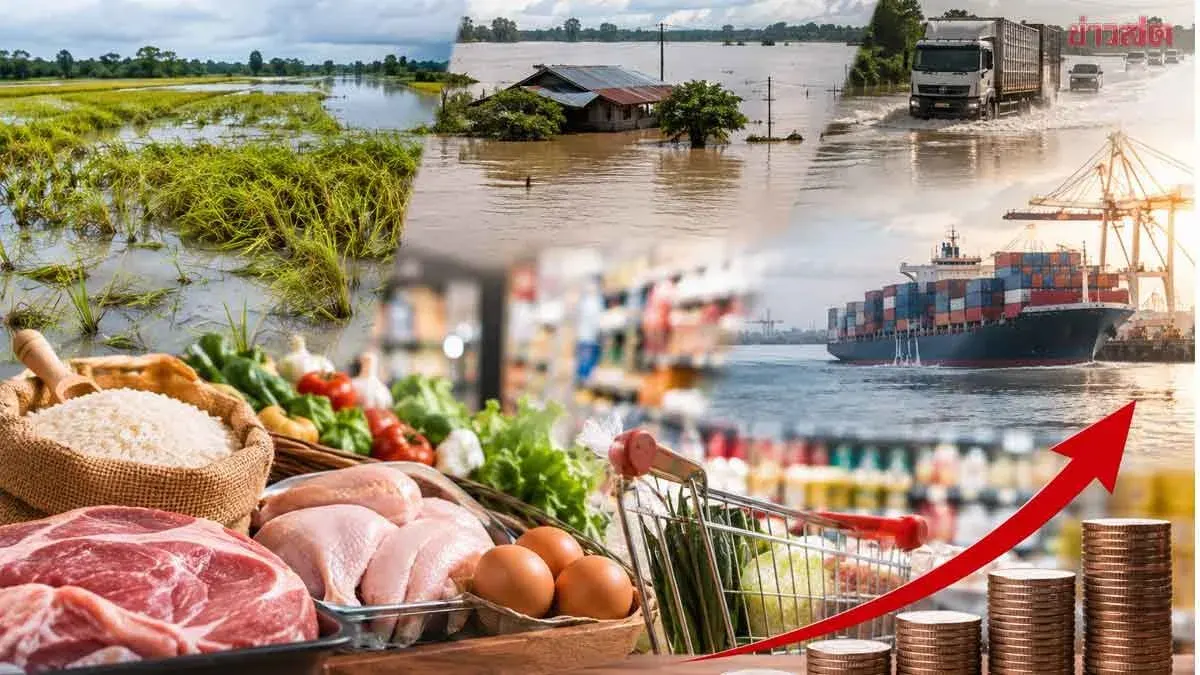
Floods have driven up Thailand's cost of living by 13 billion baht, with food and transport costs surging. Assoc. Prof. Atth Pisanawanich from Rangsit University's Faculty of Economics said the flooding from September 24–30, 2026 affected 31 provinces and Bangkok, a total of 32 areas across the North, Northeast, Central and Eastern regions. The impact reached agriculture, processing, wholesale and retail, restaurants, transportation and exports.
The flood is estimated to have damaged the entire agricultural supply chain by about 69.1 billion baht, or 0.36% of GDP. Farmers bore the brunt, losing around 25 billion baht; processors lost about 18 billion baht; and exporters lost approximately 5.4 billion baht due to shortages and higher prices.
Looking at damage by agricultural product, rice accounted for the largest loss at 11 billion baht, followed by cassava at 2.7 billion baht. In the livestock sector, cattle and buffalo farming suffered the most, with losses of 3.5 billion baht.
Consumers faced higher expenses because of scarce goods and rising prices. They had to spend an extra 6.5 billion baht on rice, 2 billion baht on meat, and 1.7 billion baht on chicken, bringing the total additional consumer burden to 13 billion baht.
Restaurant businesses saw costs rise by 3.4 billion baht due to higher ingredient prices and transportation fees.
Export value fell as shipments of rice and cassava dropped by 2.3 billion baht and 2.1 billion baht respectively.
Wholesale and retail traders incurred extra costs of 2.2 billion baht from difficult transportation, forcing them to raise freight charges.
To address these impacts, the following measures are urged for the government:
1. Quickly restore farmland and help farmers resume production by draining water from fields, assessing damage per area, and providing seeds, soil improvement, and funding in time for the next planting cycle. For livestock, secure animal feed, conduct health checks, and repair barns before restocking to prevent further losses after waters recede.
2. Provide financial assistance based on actual losses, including prompt relief payments, debt moratoriums, and recovery loans for affected farmers and businesses, covering both asset repairs and working capital so they can return to work.
3. Link inputs from unaffected areas to factories by coordinating alternative sources for rice mills, animal feed plants, cassava starch plants, and slaughterhouses to keep production running while waiting for output from recovering areas, and plan to resume purchases from affected farmers once they can supply again.
4. Reduce food shortages and consumer burden by monitoring rice, meat and egg volumes and prices, distributing goods from other regions to shortage areas, and assisting low‑income households with food costs to ease the cost‑of‑living impact during recovery.
5. Preserve export orders and continuity by evaluating delayed shipments, coordinating with buyers to adjust delivery schedules, sourcing alternative producers, and inspecting quality of goods that have passed through flooded areas to maintain confidence and avoid losing markets.