Four Historic Thai Buddhist Amulets Detailed for Collectors
This article profiles four historically significant Thai Buddhist amulet series coveted by collectors: Luang Por Phit's 1919 mango-leaf coin from Phichit, the Poh Teck Tung Foundation's 1937 Tai Hong Kong amulet, the 1995 Luang Por Nai Vihara coin from Uthai Thani, and the 1978 Luang Pu Rian Worapho oval amulet from Nong Khai. Each entry details the monk's background, the amulet's physical characteristics, inscriptions, and consecration history, reflecting Thailand's deep amulet-collecting culture.
"Things that should be let go, just keep letting them go, no need to doubt" — a teaching from Luang Por Cha Supatto of Wat Nong Pa Phong, Ubon Ratchathani.
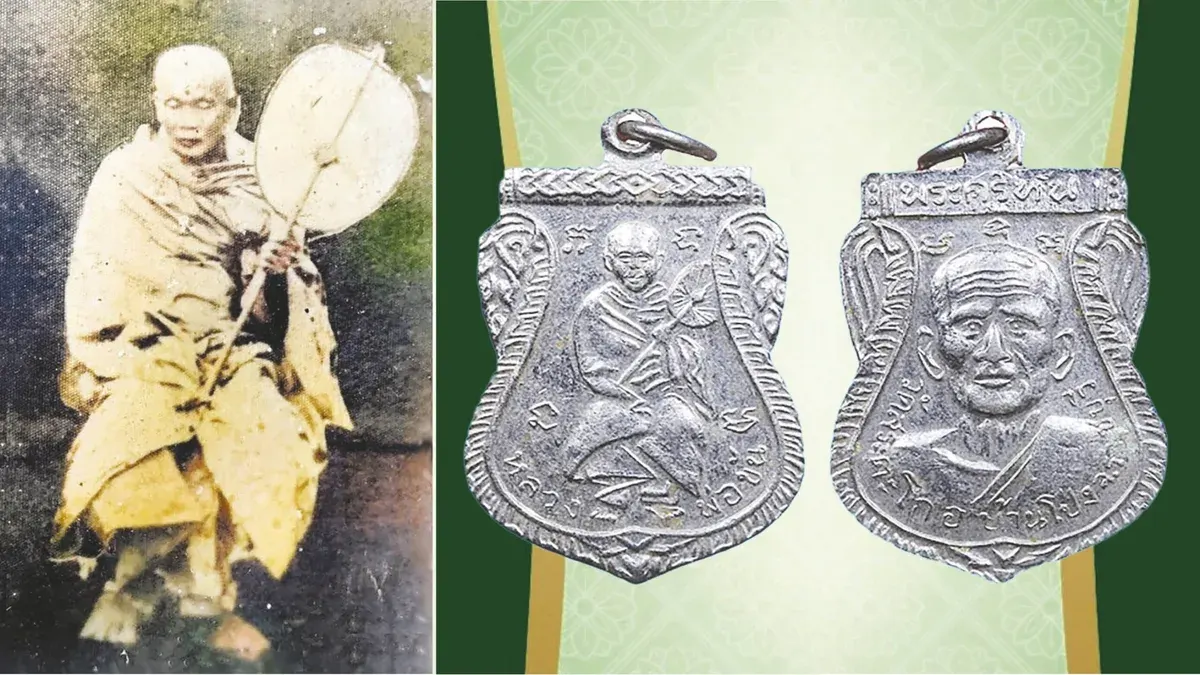
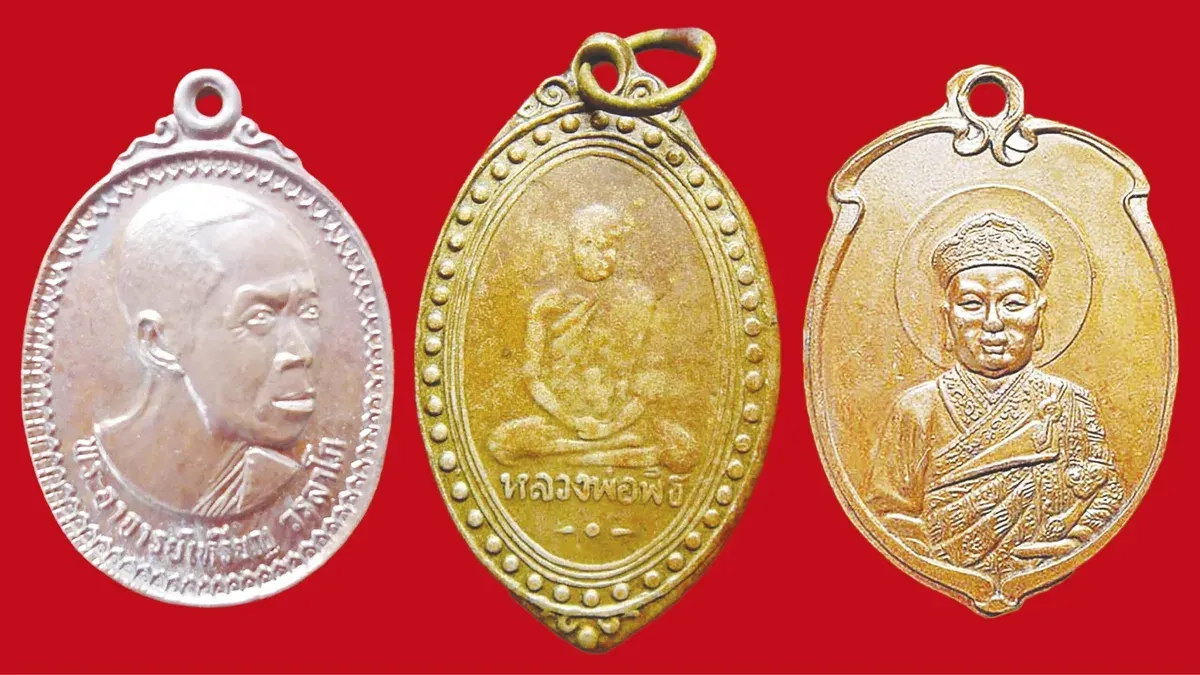
"Luang Por Phit" was a renowned guru monk of Wat Khamang, Tambon Khamang, Mueang District, Phichit Province. Historical research reveals no record of his monastic title. He was a dharma-lineage disciple of Luang Por Ngoen of Wat Bang Klan, Phichit. He created several series of sacred amulets, but the most popular among collectors is his first series, the Luang Por Phit BE 2462 (1919) coin.
Luang Por Phit Coin Features: Shaped like a mango leaf with a suspension loop, made of bronze. The obverse has a border of fish-egg dots surrounding a full-body image of Luang Por Phit seated in meditation, with "Luang Por Phit" inscribed below. The reverse has no border, featuring ancient yantra script at center. This is considered one of the rare coins.
Luang Pu Tai Hong Kong was a Chinese monk well-known among Thai-Chinese Mahayana Buddhists, who lived about 1,000 years ago. His sanctity has been continuously revered by Buddhists to the present. The Poh Teck Tung Foundation created the "First Tai Hong Kong Image Coin," presumed around BE 2480 (1937) for the foundation's registration of the Hokkien Poh Teck Sia Tung. A Buddhist consecration ceremony was held for both Theravada and Mahayana traditions, after which the coins were distributed to Thai and Chinese devotees alike.
Tai Hong Kong Chao Sue Coin Features: Elongated shape resembling a Chinese persimmon, with an integrated loop, bronze, 2.5 cm high, 2.0 cm wide. The obverse center shows a half-body image of Luang Pu Tai Hong Kong Chao Sue wearing a Chinese monk's robe. Vertically inscribed in five Chinese characters reading top to bottom: "Song Tai Hong Chao Sue," meaning "Luang Pu Tai Hong Kong, Patriarch of the Song Dynasty." This coin is extremely popular.
In BE 2538 (1995), "Luang Pu Ti Yanathamo," former abbot of Wat Luang Rachawas, Mueang District, Uthai Thani Province, a renowned guru of the Sawai Krang lineage, noted the temple's principal Buddha image was as sacred as the temple itself, seated on a lotus and enshrined in the vihara. He therefore created the "Luang Por Nai Vihara" coin to raise funds for vihara restoration.
Luang Por Nai Vihara Coin Features: Round shape. Obverse features a raised Buddha image seated on a lotus in meditation (Luang Por Nai Vihara) with Khmer script, a khor code on the right, and Thai script reading "Luang Por Nai Vihara." To the left of the Buddha image reads "Wat Luang Rachawas." Reverse has a double-raised border. Center features large Khmer letter "Na" surrounded by Khmer script. Lower border section bears Thai script: "Wat Luang Rachawas, Uthai Thani Province." Luang Pu Ti Yanathamo consecrated the "Luang Por Nai Vihara" coin alone for a full three quarters. The amulet community widely recognized it.
"Luang Pu Rian Worapho" of Wat Aranyabornpot, Tambon Ban Mo, Si Chiang Mai District, Nong Khai Province, a famous Vipassana guru, created few sacred objects. In BE 2521 (1978), his disciples produced the first series in brownish bronze, though the exact quantity is unknown.
Luang Pu Rian Worapho Coin Features: Oval shape with suspension loop. Obverse has a raised ridge border, inner border with fish-tooth-like serrations. Center shows a raised half-body image of Luang Pu. Reverse has a thin raised ridge border. Below the upper loop is inscribed with Dhamma script. Center features an engraved image resembling an alms bowl, umbrella, and water kettle. Below reads "First Series BE 2521." Second line reads "Kawi Lueangtrakul" the maker, inscribed along the lower semi-circular curve: "Wat Aranyabornpot, Si Chiang Mai."