Government Mobilizes Against Invasive Black-Chin Barb Fish
Thailand's government is mobilizing against invasive black-chin barb fish that has spread to 21 provinces, establishing rapid-response teams and requesting up to 350 million baht in additional funding to control the outbreak threatening eco
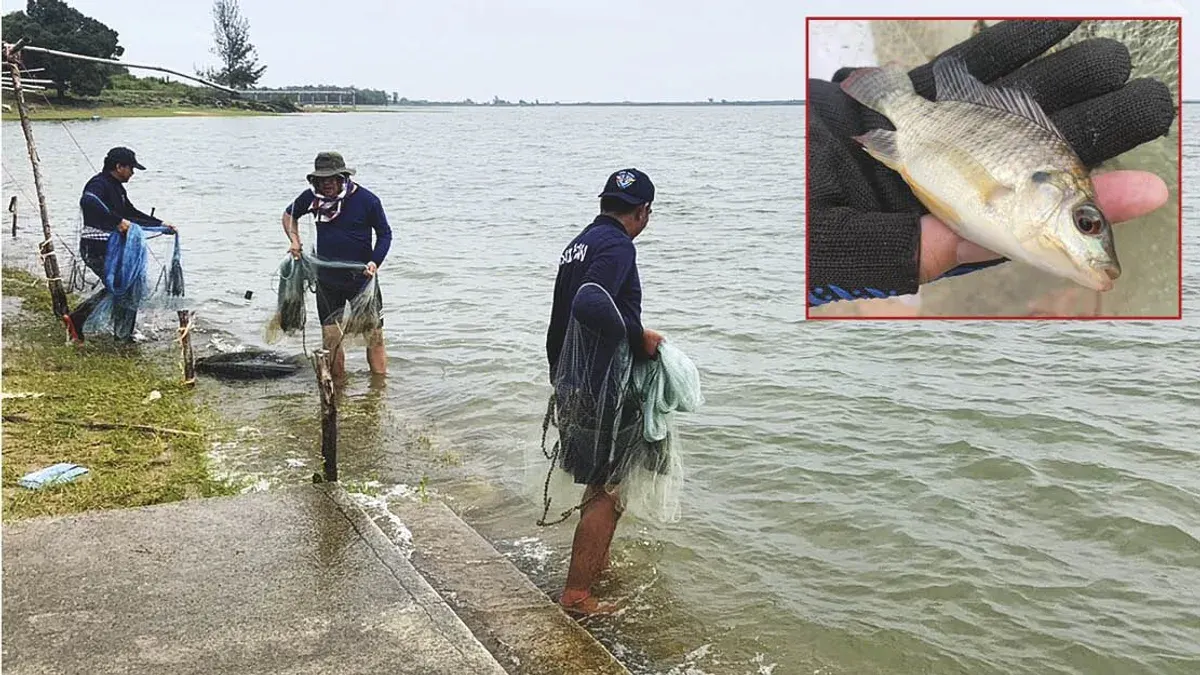
The government, through the Ministry of Agriculture and Cooperatives, has ordered all affiliated agencies to work proactively, swiftly, and decisively to halt the spread of black-chin barb fish, which damages biodiversity and people's livelihoods.
The invasive species has been confirmed in 21 provinces. To streamline operations and target solutions effectively, the ministry is establishing a special committee to oversee the problem directly and setting up rapid-response mobile teams at the provincial level in all 21 affected areas.
Each area will have clear responsibility, enabling coordination across multiple agencies and immediate field operations to capture and control black-chin barb fish, cutting through bureaucratic delays.
The government's plan to stop the black-chin barb spread, an aquatic species dangerous to Thailand's ecosystems, is underway.
The government has allocated approximately 70–90 million baht for fiscal 2027, but given the widening outbreak, this sum may prove insufficient. The ministry has briefed the Prime Minister and may request an additional 350 million baht from the central budget to comprehensively control and address the black-chin barb crisis.
Beyond stepped-up operational directives, the government is providing additional budget support.
The black-chin barb outbreak, a threat to Thailand's natural ecosystems, began in 2023–2024 and remains uncontrolled, affecting 21 provinces as of now.
Previously, the Central Administrative Court ordered the Department of Fisheries to urgently develop a plan to suppress and eliminate black-chin barb fish and to declare Samut Songkhram Province—the hardest-hit source area—a disaster zone.
While these measures are positive, those who brought the case, particularly fishing business owners and people harmed and suffering losses from the black-chin barb invasion, have yet to receive adequate compensation.
Therefore, alongside the government's management plan, addressing relief and compensation for affected communities deserves equal priority.