Government Supporters Blame Bangkok Governor for Flood Response
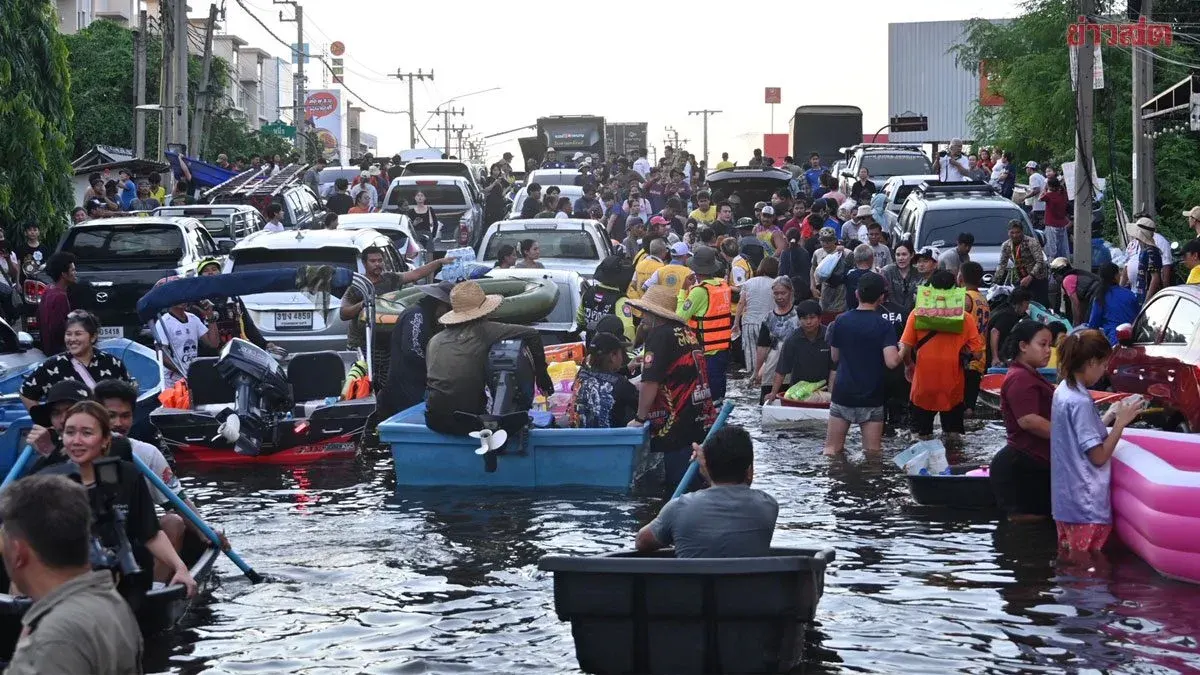
Heavy flooding in Bangkok in late September drew criticism of the city’s response, but public anger shifted toward Prime Minister Anutin Charnvirakul and his government, whose perceived slow and ineffective handling hurt their popularity. Supporters of the administration have since accused Governor Chadchart Sittipunt of mismanaging drainage and other faults, trying to make him a scapegoat. The controversy highlights disputes over responsibility between the Bangkok Metropolitan Administration and national authorities.

Severe flooding submerged Bangkok for several days in late September, hurting the credibility of Governor Chadchart Sittipunt and the Bangkok Metropolitan Administration’s management team, which faced heavy criticism. Yet the governor’s determined, hands‑on style — described as the strongest in the world — still managed to retain some confidence among city residents. Consequently, the negative criticism shifted toward Prime Minister Anutin Charnvirakul and his government, whose popularity slipped away with the floodwaters. Residents said the government lacked sincerity and urgency, appearing slow and ineffective. Moreover, the flooding was not confined to Bangkok; it spread to the surrounding provinces and many others across the country, a situation beyond the governor’s mandate. Therefore, responsibility for the disaster rested fully with the prime minister and the government, making them unavoidable targets of public anger. When assessing the city’s water‑management performance, experts acknowledged that relentless rain created a “soaked‑rain” phenomenon that is hard for humans to control; some districts managed to contain or quickly drain the water, earning praise, but in the hardest‑hit areas residents felt anger and dissatisfaction toward the city administration. Opinions of Governor Chadchart were mixed, yet at the national level the Ministry of Interior’s response — despite its manpower and resources — disappointed many. While the BMA’s efforts were seen as flawed but sincere and competent, the government’s performance drew harsher public judgment. In short, the governor escaped heavy blame, while the prime minister and his administration faced severe criticism. Recently, government supporters and conservative academics have begun attacking Governor Chadchart from many angles, accusing him of mishandling drainage, failing to pump water from canals in advance, and even alleging that he canceled royal‑initiated projects and abolished the “monkey cheek” reservoirs. These claims are easy to check, yet they reveal that the government’s backers are anxious, fearing that their conservative‑leaning administration will lose popular support. They are therefore pushing a strong narrative that blames the governor and the Bangkok Metropolitan Administration for all mistakes, using him as a scapegoat to shield the government from drowning in the flood crisis.