Health Fund Launches Workplace Wellness Program for Thai Police
A health foundation and the Thai National Police launched a workplace wellness program targeting 20 pilot police units nationwide, aiming to combat high rates of stress, alcohol use, and chronic diseases among officers through data-driven i
Overnight shifts, irregular sleep schedules, and constant emergency readiness gradually erode police officers' physical and mental health without their awareness. Statistics show that over 66.6% of investigators in Bangkok police command experience high emotional exhaustion, and 88.2% engage in alcohol consumption. These figures underscore that police health is an organizational priority requiring collective care rather than individual burden.
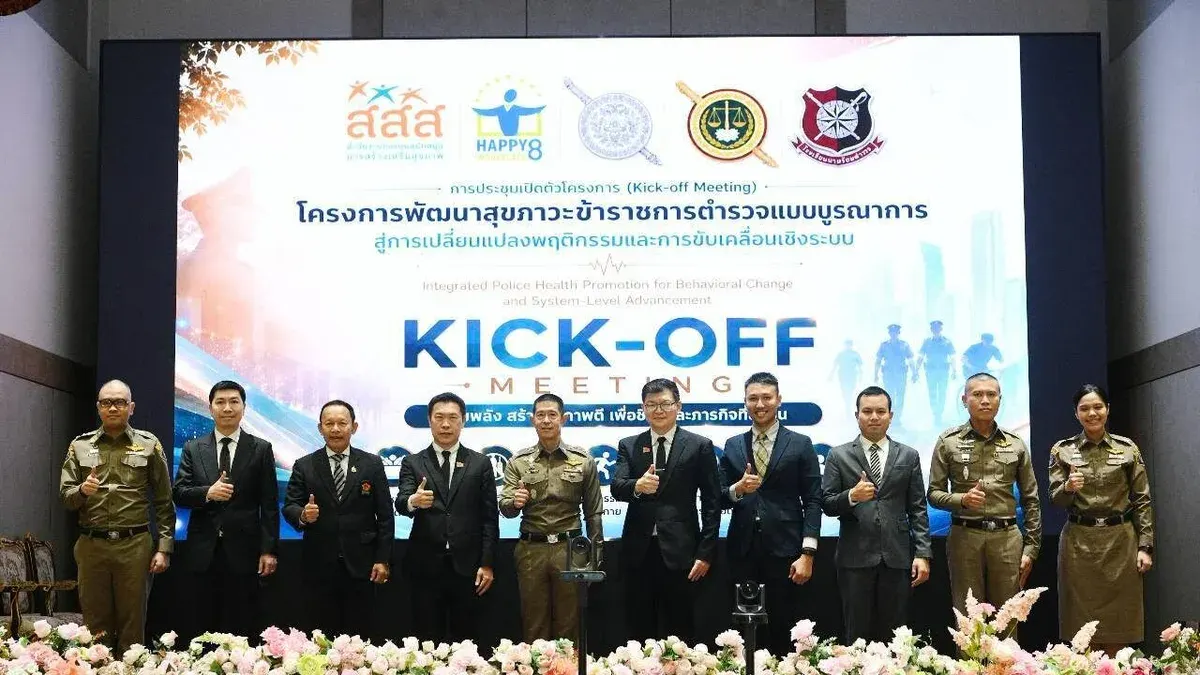
This challenge prompted the Health Promotion Foundation and National Police Office to launch an integrated police wellness development project incorporating the 'Happy Workplace' concept to foster genuine workplace wellbeing. The initiative begins with 20 pilot units nationwide to extract lessons and create a model before nationwide rollout.
Dr. Pongtep Wongwatchraipibul, manager of the Health Promotion Foundation, views the project as aligned with the foundation's 7+1 strategy, providing holistic workforce wellness covering physical, mental, intellectual, and social dimensions using health data-driven mechanisms. Health data will be surveyed across pilot units, analyzed, and synthesized into a 'Smart Police Health Framework' allowing each region to tailor interventions to local health conditions.
Urgent action is clear from 10-year health projections. Without serious prevention measures, diabetes prevalence among police could rise from 10.4% in 2026 to 26.9% in 2036, while hypertension could increase from 17.4% to 33.8%. With intensive prevention, diabetes could drop to 7.4% and hypertension to 11.4%, underscoring the importance of proactive health promotion.
"The program's strength lies in using actual police health data—health data-driven implementation," the statement noted. "Clear data helps organizations identify where problems exist and select appropriate interventions for each area. Accurate health data will improve police quality of life long-term and strengthen readiness for security and public protection missions."
To move beyond theory, unit health advocates work with experts across five dimensions: increasing physical activity and reducing sedentary behavior, improving nutrition, building stress management skills and mental health access, reducing smoking and alcohol use, and promoting organizational policies that genuinely support worker wellbeing.
Pol. Maj. Gen. Thayut Chanthaworn, commander of the Police Personnel Commission Office, offered the organization's perspective on the initiative.