How Business Leaders Must Transform to Keep Pace With AI
Business leaders must accelerate organizational transformation to match AI's rapid evolution, as technology now shapes customer expectations faster than traditional strategy implementation can keep pace. True transformation requires redesig
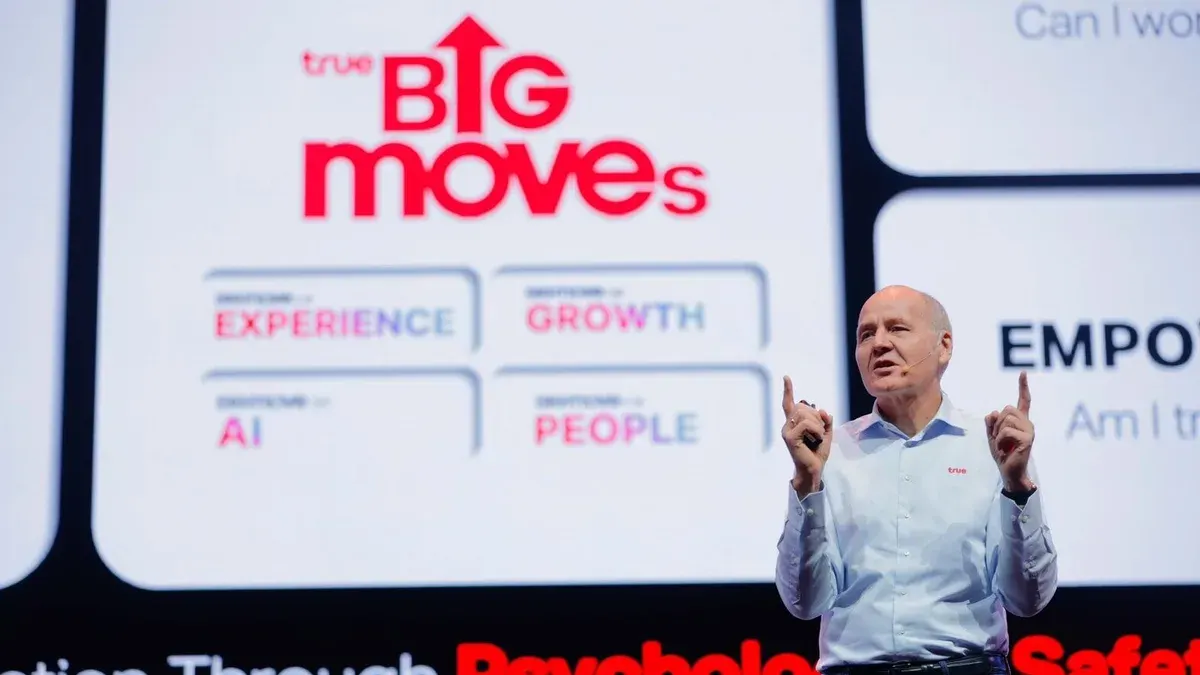
By Sigve Brekke, CEO of True Corporation Group
In recent years, generative AI has advanced dramatically, from systems that answer questions like humans to the launch of OpenAI's GPT-6 Astra and Anthropic's Claude Fable 5.1, which demonstrate exceptional capabilities in coding, computer systems, and scientific research. This rapid technological progress raises a critical question for business leaders: how fast must we move to keep pace with AI development that never stops?
Technologies that appear experimental six months ago can become commercially viable overnight. Meanwhile, organizational transformation remains a step-by-step process: leaders set strategy, employees implement it, which takes years, and the result may be outdated before completion. Given the speed of change, this linear transformation approach is no longer sustainable. The real question is not whether we have the right strategy, but whether we can execute it fast enough before technology leaps forward again.
When Technology Reshapes Customer Value
Consider the wristwatch. It once simply told time, but technology has transformed the wrist into a platform for communication, activity tracking, and health analysis. Customers never asked for these features and may not have imagined them, yet once experienced, they entirely reset what customers value. Technology expanded possibilities and became what customers will demand in the future.
According to BCG's "Consumer for the Future 2026" report on AI's role in consumer purchasing decisions, AI serves as a "decision-making partner." Seventy percent of consumers will buy what AI recommends. AI no longer just helps customers search for information; it understands intent, compares options, filters thousands of choices, assesses lifestyle fit, and delivers recommendations in milliseconds. Technology now mediates between customers and brands, increasingly influencing what customers discover, consider, and decide.
This is why CEOs can no longer study only current customer needs. Technology moves faster. This shift demands that we move beyond understanding customers by broad demographic segments to deep, contextual understanding of individual needs and preferences.
Transforming the Entire System
Many organizations aim to apply AI, and some are piloting tools and building use cases. But adoption and transformation are not the same. Organizations can speed up existing work without changing core business operations—that is automation, which has value. However, in the age of AI, that is not transformation.
The heart of AI-era transformation is designing entirely new operating systems.