IMF Warns GDP to Drop to 4.4%, Urges Thailand Reform
IMF projects Asia's GDP growth will slow to 4.4% by 2027, down from 5% in 2025, citing geopolitical tensions, trade measures, energy price volatility, and rising financing costs. IMF official Krishna Srinivasan urged Thailand to reform its energy sector and restore fiscal discipline to reduce vulnerability, especially given its reliance on imported Middle Eastern energy and high energy intensity. He also called for targeted fiscal support and structural reforms to sustain growth amid debt and budget constraints.
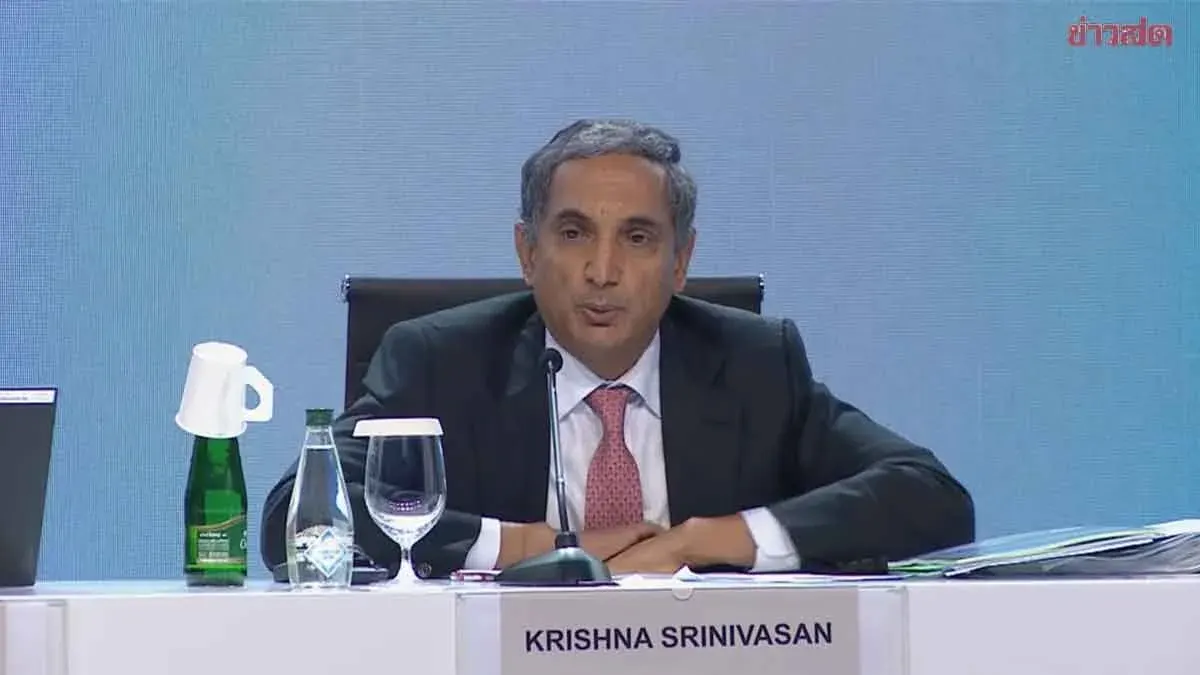
IMF's Asia and Pacific director Krishna Srinivasan spoke at the 81st annual World Bank-IMF meeting in Bangkok on October 15, 2026, presenting the Regional Economic Outlook for Asia and Pacific. He said Asia's economy continues to expand strongly but faces headwinds from geopolitical tensions, trade measures, volatile energy prices, and rising financing costs, causing varied resilience among nations. While AI investment is a new growth engine, its gains remain unevenly spread.
He cited that Asia's growth was 5% in 2025, expected to ease to 4.8% in 2026 and 4.4% in 2027. Although the trend still shows significant expansion, forward momentum is weakening, and Asia accounts for roughly two-thirds of global growth, making its trajectory crucial for worldwide trade and development.
Dependence on imported Middle Eastern energy leaves Asia-Pacific exposed to oil and gas price fluctuations. Prolonged shocks would feed inflation, business costs, and purchasing power, forcing governments to choose between subsidizing energy and preserving fiscal stability. Examples from China, South Korea, and Japan show efforts to cut energy use while expanding renewables, but adjustments must consider existing infrastructure limits and fiscal capacity.
For ASEAN including Thailand, the official noted an energy intensity of 7% of GDP, a figure that needs verification against source definitions. If energy pressures persist, Thailand must diversify supplies, expand renewable options, and design well‑targeted assistance without creating unnecessary budget burdens.
Ongoing shocks from the Ukraine war, trade tariffs, and energy prices are eroding fiscal buffers in many countries. The IMF advises building crisis buffers and adjusting fiscal positions systematically while maintaining aid to severely affected households. Key is shifting from broad relief to targeted support, backed by a registry of eligible recipients, alongside medium‑term fiscal frameworks to keep revenues, expenditures, and debt sustainable.
For Thailand, balancing growth with debt and budget limits requires prioritizing spending, boosting long‑term productivity and incomes. Household debt should not be seen as the direct cause of slowdown; the focus remains on fiscal buffers and well‑targeted assistance.