MHESI Unveils Inclusive Innovation Policy to Boost Thai Competitiveness
Thailand's Ministry of Higher Education, Science, Research and Innovation unveiled a new "Inclusive Innovation" policy framework at the PIX6 conference in Bangkok, aiming to distribute innovation benefits beyond large corporations to SMEs, farmers, and local communities. The strategy seeks to shift the country's competitiveness model toward knowledge-based growth while addressing challenges like AI disruption, climate change, and an aging society through anticipatory governance and participatory policymaking.
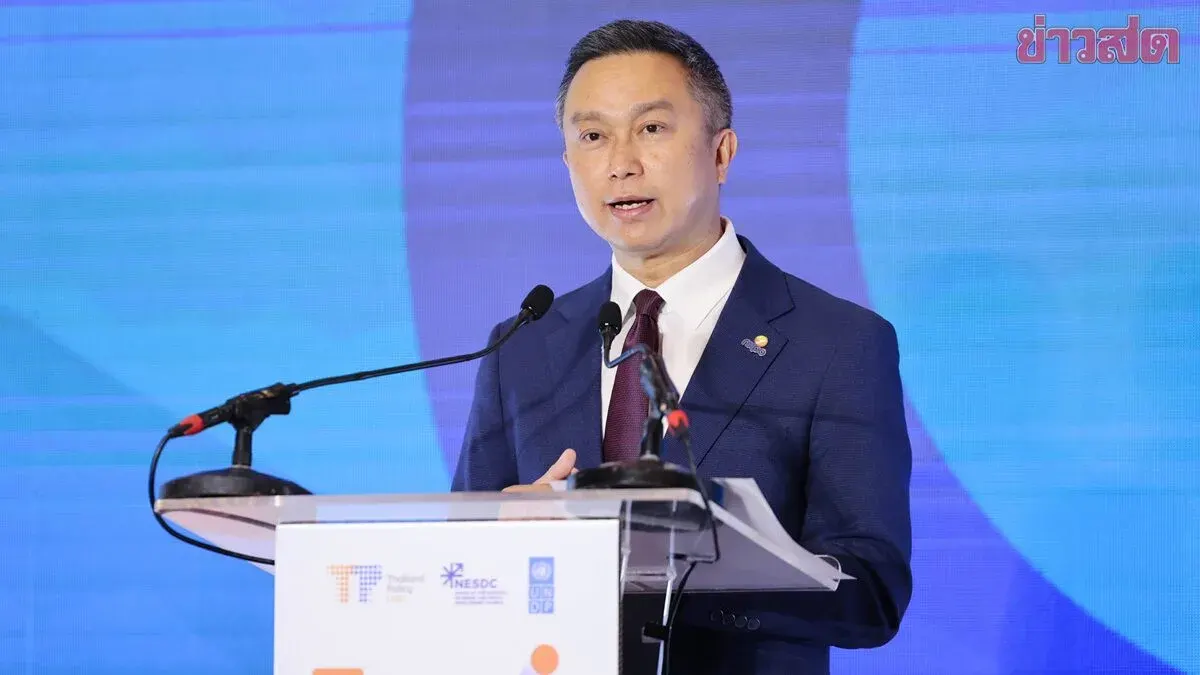
The Ministry of Higher Education, Science, Research and Innovation (MHESI) and the National Higher Education, Science, Research and Innovation Policy Council (NXPO) unveiled a future policy framework built around "Inclusive Innovation" at the Policy Innovation Exchange 6 (PIX6) held at the Conrad Bangkok hotel. The event, themed "Next Level Thailand: Elevating Thailand Through Policy Innovation for the Future," was organized by Thailand Policy Lab (TP Lab), a collaboration between the Office of the National Economic and Social Development Council (NESDC) and the United Nations Development Programme (UNDP).
Dr. Surachai Sathitkunarat, NXPO Secretary-General, delivered the keynote address on behalf of Deputy Prime Minister and MHESI Minister Professor Dr. Supachai Pathumnakul. He emphasized that sustainable growth for Thailand requires shifting the competitiveness paradigm from reliance on investment, infrastructure, and exports toward creating and applying knowledge, technology, and innovation. The core concept is "Inclusive Innovation" — ensuring opportunities reach SMEs, workers, farmers, and local communities rather than remaining concentrated in large corporations or economic centers, thereby unlocking broader productive potential and economic growth.
Dr. Surachai noted Thailand faces global challenges including climate change, AI disruption, geopolitical shifts, an aging society, and energy, health, and cyber security concerns. While emerging technologies such as AI, robotics, semiconductors, biotechnology, and clean energy create major economic opportunities, access to technology does not automatically translate into technological capability. Thailand must therefore pursue frontier research alongside technology diffusion to help SMEs and regional entrepreneurs overcome skill, funding, and infrastructure constraints, boosting productivity and competitiveness.
Technological change is also creating six "Emerging Social Frontiers" with inequality as a common challenge: human-AI relations, security and resilience, longevity and care, new opportunities and inequality, trust and civil society, and sustainable living and climate adaptation.
To address these challenges, NXPO is employing two key approaches in drafting the Higher Education, Science, Research and Innovation (HESRI) Policy Framework for 2028–2032 (BE 2571–2575): 1) Anticipatory Governance, using strategic foresight tools to analyze future signals and scenarios to assess risks and impacts on different population groups in advance; and 2) Participatory Policymaking through Mission-Oriented Innovation Policy (MOIP), creating space for government, private sector, universities, and communities to jointly define missions and design solutions, ensuring those facing problems genuinely participate in policymaking.
The draft HESRI framework comprises five strategic issues and ten missions, with three priority missions identified as central.