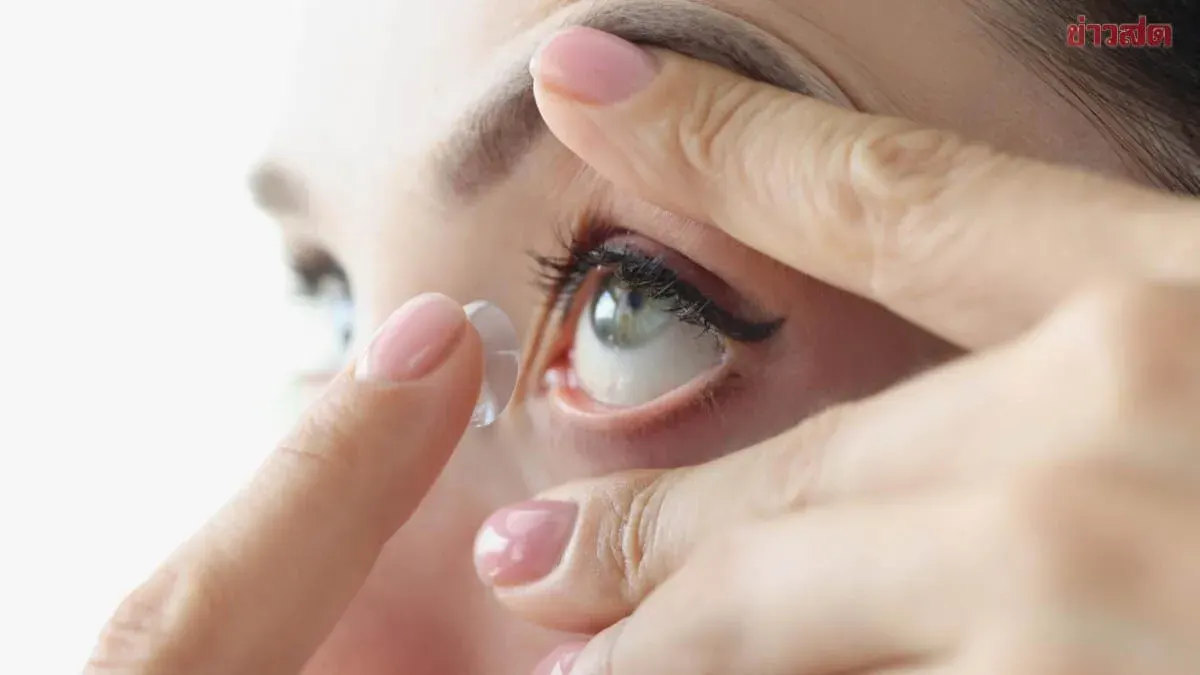
Taiwan researchers discovered that dangerous eye parasites found in contact lens wearers harbor bacteria within their cells, potentially making infections harder to treat with antibiotics.
Contact lens wearers, especially during summer months when water activities are popular, should pay closer attention to lens hygiene following new research from Taiwan showing that certain strains of Acanthamoeba—a microorganism causing corneal inflammation—harbor bacteria within their cells. Foreign experts note that this coexistence of amoeba and bacteria may increase resistance to environmental conditions and antibiotics, making treatment more difficult than before.
Dr. Chi Ta-te, head of tropical medicine at Yangming Chiao Tung University and one of the researchers, explained that Acanthamoeba is commonly found in soil, tap water, and natural water sources. While casual exposure typically causes no disease, wearing contact lenses while swimming, bathing, or showering—as well as rinsing lenses with tap water—can allow the organism to stick to the lens and enter the cornea through microscopic tears, potentially causing Acanthamoeba keratitis.
To study the characteristics of the organism in Taiwan, Yangming Chiao Tung University partnered with Taipei Military Hospital to form a research team that collected samples from 20 suspected Acanthamoeba keratitis patients. Samples from corneas, contact lenses, lens cases, and four environmental bacterial strains underwent culturing, genetic sequencing, and microscopic examination to identify the organism types and detect any resident bacteria.
The study found that all isolated strains were T4 type, the most pathogenic strain both in Taiwan and worldwide. However, within the T4 strain, multiple subtypes were identified, suggesting patients had diverse infection sources rather than a single outbreak source.
The research team made a first-time discovery: Acanthamoeba in Taiwan harbors bacteria living within its cells. Initially, researchers thought this was contamination during culturing, but antibiotics failed to eliminate the bacteria. Further investigation confirmed the bacteria live symbiotically within the amoeba.
Dr. Chi noted that currently there is no evidence confirming whether these resident bacteria make Acanthamoeba more virulent, increase antibiotic resistance, or worsen patient symptoms. However, foreign research suggests such bacteria may enhance the amoeba's survival ability and drug tolerance. The research team plans to study whether the presence of bacteria correlates with disease severity, treatment response, and infection sources.
To prevent infection, Dr. Chi recommends not using tap water, bottled water, or even saliva to rinse contact lenses, and avoiding lens wear while swimming, bathing, or showering. He also advises regularly changing lens cases and never mixing new solution with old solution remaining in the case.
Anyone experiencing eye pain, irritation, light sensitivity, or blurred vision while wearing contacts should remove the lenses immediately and see an ophthalmologist urgently to prevent disease progression and reduce the risk of vision loss.