Lawmaker Urges Bold Leadership to Resolve Southern Border Unrest
A Thai lawmaker urged bold leadership to resolve southern border violence, proposing an ad-hoc committee to recommend solutions by 2027 and warning that hesitation and poor coordination among security agencies are hindering progress.
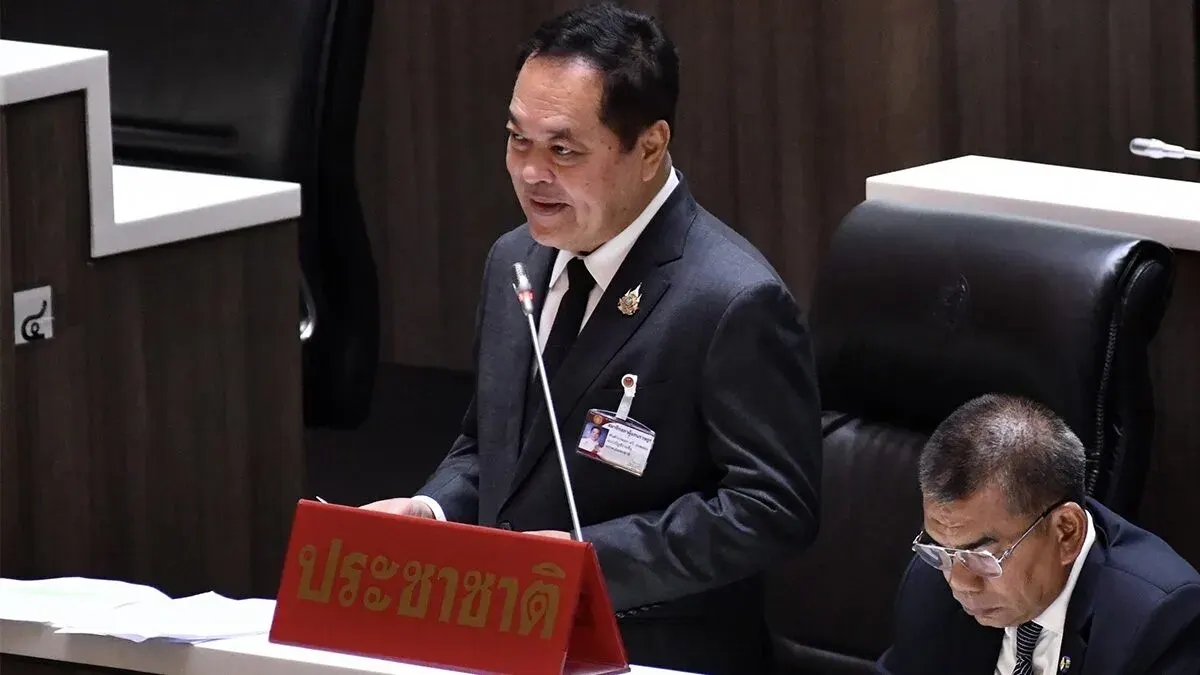
During a parliamentary debate on September 3 regarding unrest in Thailand's southern border provinces, Police Lieutenant Colonel Tawee Sodsong, a list-based Member of Parliament and Thai Nation Party leader, proposed an urgent motion for an ad-hoc committee to study the situation and recommend solutions to end the violence by 2027 according to the national strategy. He stressed that the 2018 national strategy is crucial as a budget-allocation tool for all government agencies. Tawee warned that with only four months remaining until 2027, there are signs some may attempt to abandon this strategic target, which would destroy public hope. He emphasized that success is possible if leaders have the will to act, but failure results from hesitation and cowardice.
Tawee acknowledged that achieving 100 percent reduction in incidents is difficult and that withdrawing all military forces while relying solely on civilians would be reckless, as Thai Buddhists still want military presence. He criticized security officials working in air-conditioned offices who believe weapons and power demand obedience. The most critical qualification today, Tawee argued, is leadership itself; without true leaders, the southern problem cannot be solved. He called for political will from leaders committed to ending bloodshed and creating equal dignity for Buddhists in the three southern provinces and for Muslims to live as Muslims deserve.
Tawee remarked that while the Prime Minister's words carry weight as they represent the entire nation, his statement of trust in the military commander regarding the helicopter shooting incident set a poor example. On solutions, he noted success in coordinating civilians, police, and military, but failure in integration efforts. He cited problems with the Internal Security Operations Command, which lists 200 permanent staff but claims 50,000 personnel including police, civilians, soldiers, teachers, and volunteers—some even claiming credit for cigarette confiscation raids. Police receiving compensation from integration programs need incentives. Tawee suggested restructuring to restore unity in southern border management and emphasized that dialogue, political science approaches, and decentralization—strengthening local communities and reducing central state control—are essential to resolving the conflict.