Chiang Mai University Launches LEPSIA Seizure Drug From Cannabis
Chiang Mai University and Atlanta Medical Care launched LEPSIA, a cannabis-derived seizure medication for children that costs 64.8 percent less than imported alternatives while meeting international pharmaceutical standards.
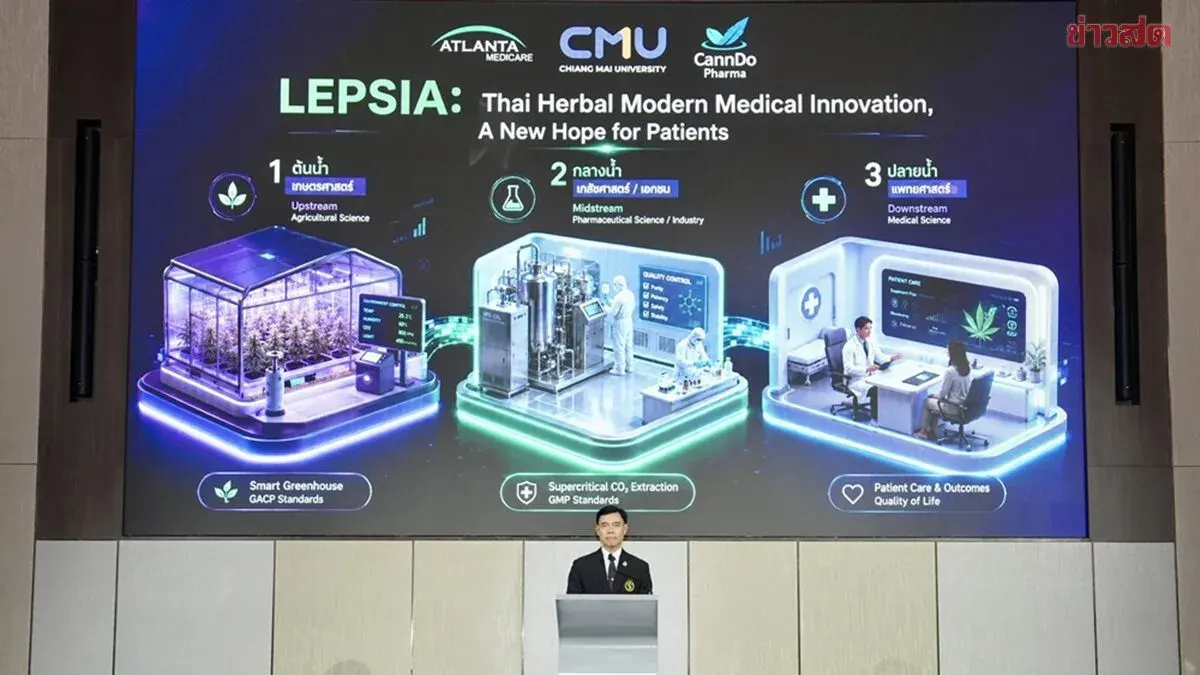
On September 16, Chiang Mai University and Atlanta Medical Care announced a major breakthrough in commercializing leading-edge research by launching LEPSIA, a pediatric anti-seizure medication made from pure pharmaceutical-grade CBD (cannabidiol) extracted from cannabis flowers. The innovation emerged from high-quality research meeting international standards and matches the efficacy of imported alternatives while reducing treatment costs by up to 64.8 percent, enabling Thai child patients to access effective treatment more widely.
The product launch included remarks from Professor Porn Sribanditmongkol, rector of Chiang Mai University; Supadej Amnaviskul, CEO of Atlanta Medical Care; and Supathra Boonserm, secretary-general of the Thai Food and Drug Administration. The university has maintained clear policies since 2562 (2019) to research and develop pure CBD extraction for modern medical use through a comprehensive integrated medical cannabis research project involving teams across agriculture, pharmacy, and medicine, culminating in clinical testing and patient treatment at Chiang Mai Maharaj Hospital.
According to the rector, Thai society has long been familiar with cannabis, but over the past seven years the government has pursued clear policies to advance cannabis for medical benefit. Chiang Mai University accepted the challenge in 2562 to establish a research team studying cannabis extract potential and discovered that pure CBD can treat childhood seizure disorders. The product has now received certification from the Food and Drug Administration, instilling confidence in physicians treating child patients. Clinical trials have already begun with plans for wider rollout. The cost savings are substantial: imported versions cost up to 100,000 baht monthly, while the domestically produced medicine costs approximately 30,000 baht—a saving of 70,000 baht per month or about 64.8 percent, amounting to over 840,000 baht annually.
Supadej Amnaviskul, CEO of Atlanta Medical Care, noted that scaling natural extract production to industrial standards presents the greatest challenge in achieving quality consistency across every production batch, prompting the company to invest in pharmaceutical-grade infrastructure.