Local Governments Buying Solar Lights at 10 Times Market Price
Local governments are purchasing solar street lights through Thailand's Innovation Account at 60,000-70,000 baht per unit—up to 10 times the standard market price of 6,900-16,500 baht—exploiting a loophole that allows direct procurement wit
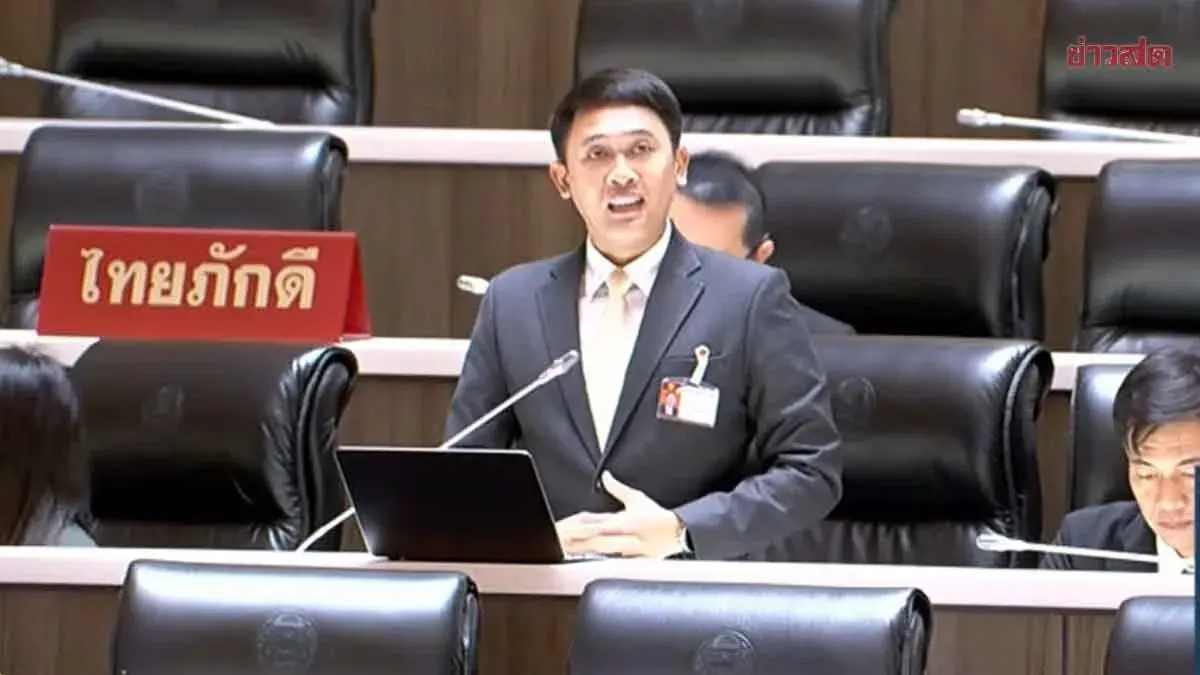
On September 9, 2026, the House of Representatives convened to consider the fiscal year 2570 budget bill worth 3.78 trillion baht in its second and third readings. At 10:10 a.m., Democrat MP Itthiphon Choltharnsiri from Khon Kaen raised concerns under Article 20 of the Interior Ministry portfolio, stating that local government solar street light projects procured through Thailand's Innovation Account cost 4 to 10 times more than standard pricing, exploiting a legal loophole in specification-locking.
While street lights are meant to illuminate roads, it is time to shed light on the lights themselves. Multiple local governments are currently purchasing solar street lights from the Innovation Account at 60,000 to 70,000 baht per unit, compared to their typical procurement prices of 6,900 to 16,500 baht per unit.
The root problem lies not with the lights but with Thailand's Innovation Account mechanism, which allows state agencies to procure goods at predetermined prices without competitive bidding.
Itthiphon further noted that the National Anti-Corruption Commission had warned since 2567 that this mechanism creates a legal gap leading to monopolistic markets, policy corruption, and favoritism toward specific sellers. The Office of the Auditor General has also reviewed solar street light purchases under the Innovation Account and found significantly inflated prices.
"The rigging method under the Innovation Account works like this," Itthiphon explained. "A seller proposes products to the subdistrict chief. Some sellers even take photos with the chief as evidence that the goods are reserved, preventing others from participating. Then the procurement happens through direct purchase without price competition, ending at the ceiling price set by the innovation list, with specification locks in place. The price markup of 4 to 10 times—who benefits along the way remains unclear," he said.