Man Files Complaint Seeking to Dissolve Thai Political Party
A businessman filed a complaint seeking investigation into a Thai People's Party member over a 200,000-baht donation that may violate campaign finance laws, citing discrepancies between her declared assets and the donation amount.
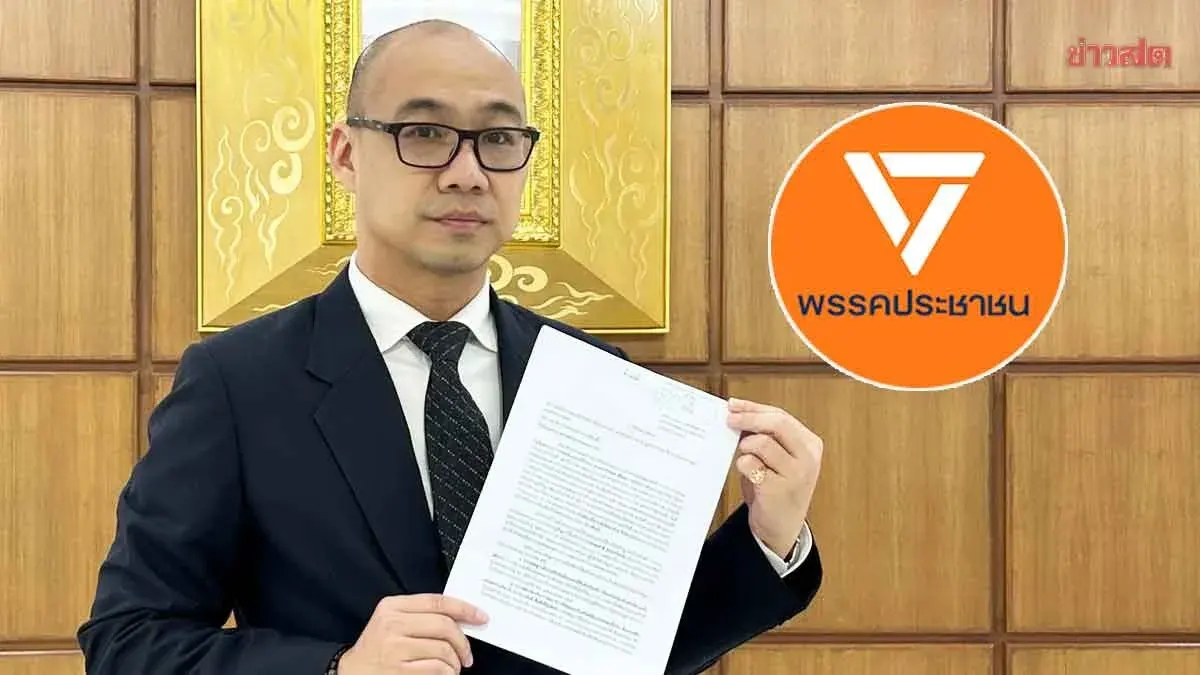
On September 3, 2025, Thanakwint Ratwattakangkul, a businessman and independent academic, submitted a letter to the Election Commission requesting a financial investigation into Ratchanok Srinok, a party-list member of the Thai People's Party, concerning a 200,000-baht donation to the party that may violate campaign finance laws. He requested that the case be referred to the National Anti-Corruption Commission for investigation and potential party dissolution proceedings.
Thanakwint stated that he encountered Ratchanok at the Anti-Corruption Commission office two days earlier carrying stacks of documents related to various corruption matters, which prompted him to question whether she had scrutinized her own financial transparency before investigating others. He noted that she has failed to clearly explain the source of the 200,000-baht donation.
According to asset declarations filed with the Anti-Corruption Commission, Ratchanok has only 170,000 baht in savings but owes more than 2 million baht in debts. Thanakwint questioned how she could donate 200,000 baht when her only declared income is from her parliamentary position, particularly when the amount she reported donating to the party in her Anti-Corruption Commission filing was only 36,000 baht.
Additionally, Thanakwint noted that Ratchanok had borrowed over 400,000 baht from Khemchat Chatratsat, a Thai People's Party member, who was later selected as a Bangkok Metropolitan Assembly candidate. He questioned whether this loan was connected to the 200,000-baht donation.
Thanakwint argued that the Thai People's Party cannot claim ignorance about the source of funds entering the party through one of its MPs and party members, who participated in votes including those for prime minister selection. He stated that the party must determine whether the donation was properly taxed or legally obtained. If found to involve illegally obtained funds, the case could trigger party dissolution proceedings under Section 92(3) of the Political Parties Act, in conjunction with Section 72, which prohibits political parties and office-holders from accepting donations or benefits known or reasonably suspected to be illegally obtained.