Nakhon Ratchasima Unearths More Ancient City Wall Remains
Archaeologists in Nakhon Ratchasima unearthed additional sections of an ancient city wall on the eastern side, marking the first major discovery in two decades. The joint excavation project plans to restore the fortification in phases, reve
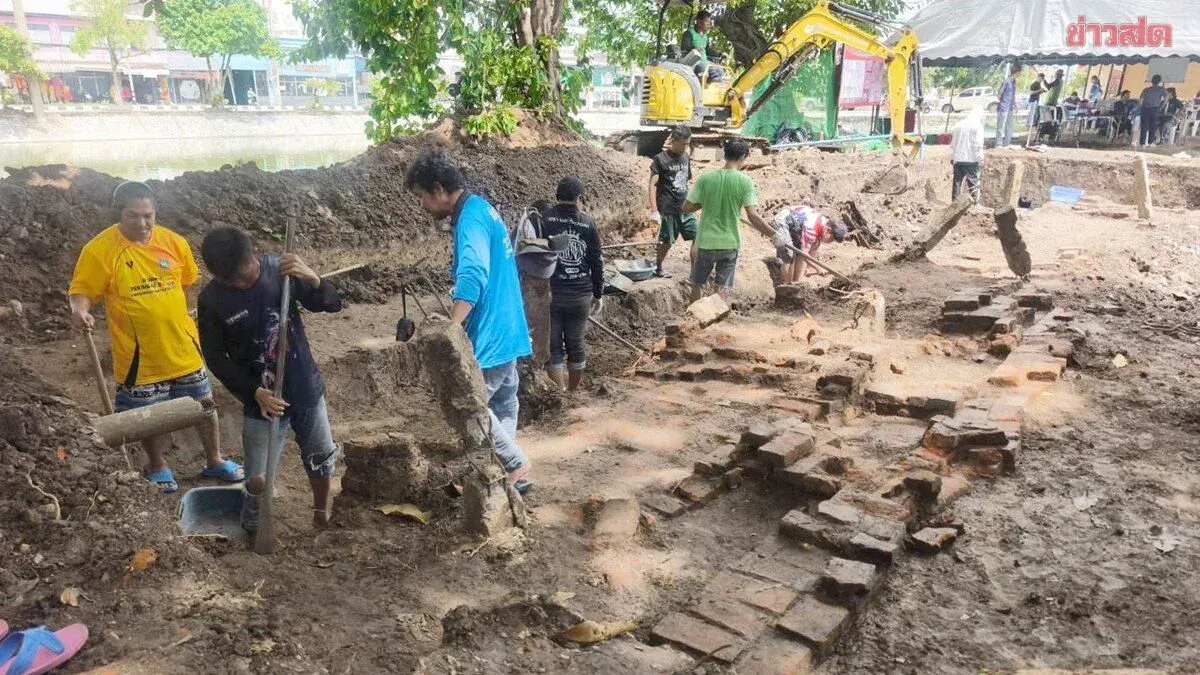
Nakhon Ratchasima celebrated a major archaeological breakthrough on July 31 as excavation work on the ancient city wall on the eastern side of the city revealed additional wall sections. The joint project between the Fine Arts Department Office 10 in Nakhon Ratchasima and the university ran for 20 days from July 20 to August 8, with team leader Somdej Leelamnodharm and expert archaeologist Wanpong Palakavongsa Na Ayutthaya directing the effort alongside staff and volunteer workers.
Following the significant discovery—the first major find in two decades—the team used small excavation equipment to remove sections of sanitation pipes, debris, and wooden pilings from the original ground level. This site had been occupied by a pollution control department facility. The team has now expanded excavation northward to an area measuring 7 to 11 meters in an effort to trace additional wall segments. University students and interested youth have volunteered as archaeology assistants, carefully documenting details to prevent damage to artifacts. Throughout the day, visitors have toured an exhibition alongside the dig site, with some bringing food and refreshments for the workers.
Team leader Somdej explained that the area had been disturbed by residential construction, with pilings and other structures partially disrupting original wall evidence. He stated: "We are working to uncover as much evidence as possible of the remaining city wall in this section. The next phase will involve restoration of the city wall monument in a pattern similar to findings elsewhere—running parallel as a moat around the perimeter of old Korat."
Historical records from the reign of King Rama V describe the wall and fortification as having a rectangular shape measuring approximately 1,000 meters on the east-west sides and 1,600 to 1,650 meters on the north-south sides, totaling about 5,200 meters around all four sides. The brick wall stood roughly four meters high and measured 2.6 meters thick, featuring a walkway and external moat. The four corners contained round bastions, with additional gates distributed across each side—three on the east and south, four on the north, and two on the west, totaling 15 bastions and approximately 5,300 pillars. The surrounding moat measured 10 meters wide.
Previous excavation work beginning in 1999 revealed the wall's construction method: a compacted earth and soil foundation roughly 60 centimeters deep preceded brick laying. Bricks measured approximately 30 by 15 by 7 centimeters or 25 by 13 by 5 centimeters, with soil used as mortar between bricks. The bricks were laid alternately, with long sides and wide sides placed in pairs in a distinctive interlocking pattern.