Opposition Files No-Confidence Motion Against 18 Thai Ministers
Opposition lawmakers have filed a no‑confidence motion against eighteen ministers in the Anutin‑led government, accusing the ruling ‘blue regime’ of monopolising power, colluding with senators, cheating in local examinations and mismanaging public affairs. The motion, signed by 145 MPs, calls for a five‑day debate to present evidence so the public can decide whether to retain confidence in the ministers.
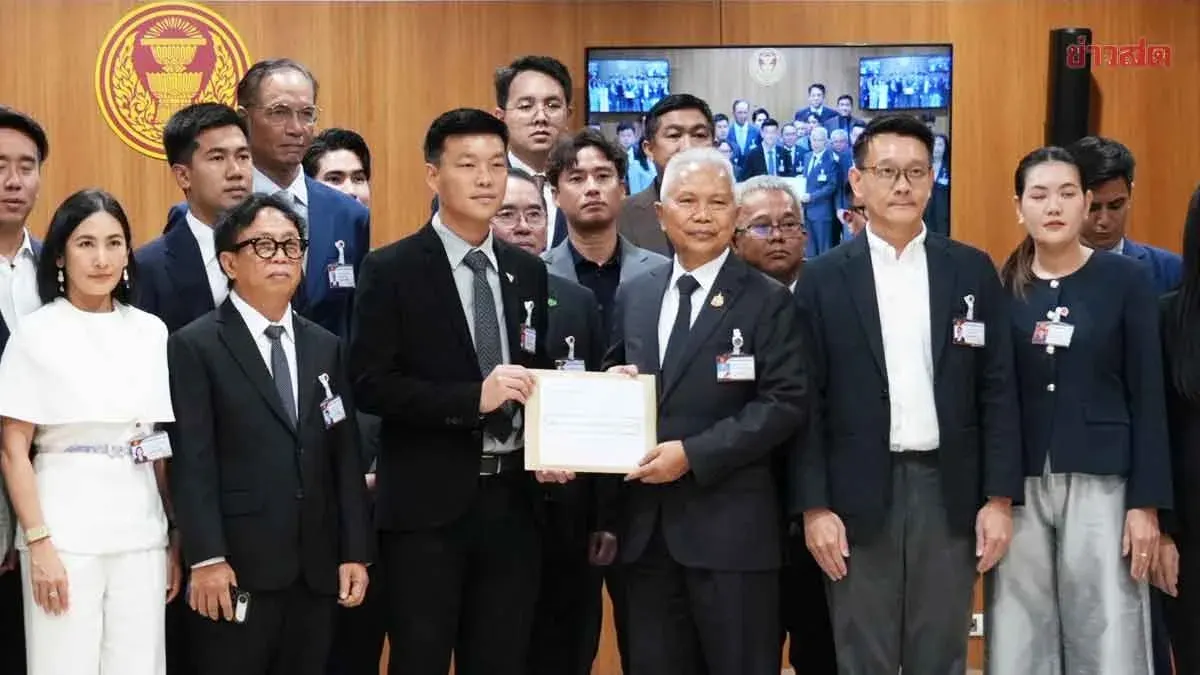
At 2:00 p.m. on 8 October 2026, Natthapong Ruangpanyawut, a party‑list MP and leader of the People’s Party, who serves as the opposition leader in the House of Representatives, together with representatives of the allied opposition parties, filed a general debate motion for a no‑confidence vote under Article 151 of the Constitution to House President Sopon Sarum. Natthapong said they had gathered signatures from 145 members, excluding the Klaotham Party, and requested an individual no‑confidence debate against eighteen ministers. He then listed the ministers: Prime Minister and Interior Minister Anutin Chanvirakul; Deputy Prime Minister and Transport Minister Pipat Ratchakitprakan; Deputy Prime Minister Songsak Thongsri; Deputy Prime Minister and Finance Minister Ekniti Nitithanprapas; Deputy Prime Minister and Commerce Minister Supanthee Suthamphan; Deputy Prime Minister Pakorn Nilphantham; Defence Minister General Adul Bunthamjarean; Tourism and Sports Minister Surasak Phanjeenwarakul; Digital Economy and Society Minister Chaichanek Chidchob; Natural Resources and Environment Minister Suchat Chaomuan; Justice Minister Rutthipol Nauaratt; Office of the Prime Minister Ministers Napinthorn Sirisorrapang, Supamas Israpphak, Pharadorn Prisananantakul, Sukhomsruay Wanthaniyaekul; Transport Ministry assistants Siripong Angkasakkuliart and Jeset Thai‑set; and Interior Ministry assistants Worasit Liangpraisit and Werasit Liangpraisit (names transliterated). Natthapong said the accusations are aimed at the so‑called blue regime that is monopolising the nation, which he described as an enemy and a crime against democracy. He argued the debate would cover not only alleged senate collusion and local‑exam fraud but also broader crises such as flood‑management failures and any misuse of power that runs counter to democratic principles. He noted that many of the ministers named are not implicated in the senate‑corruption cases, showing the motion’s scope extends beyond a single issue to any anti‑democratic conduct. He stressed that parliament’s duty is to reveal the truth, even if public expectations are modest, and that legislators must use their authority to scrutinise the executive. He concluded that once the factual evidence is presented, the public will be able to decide whether to retain confidence in the ministers.