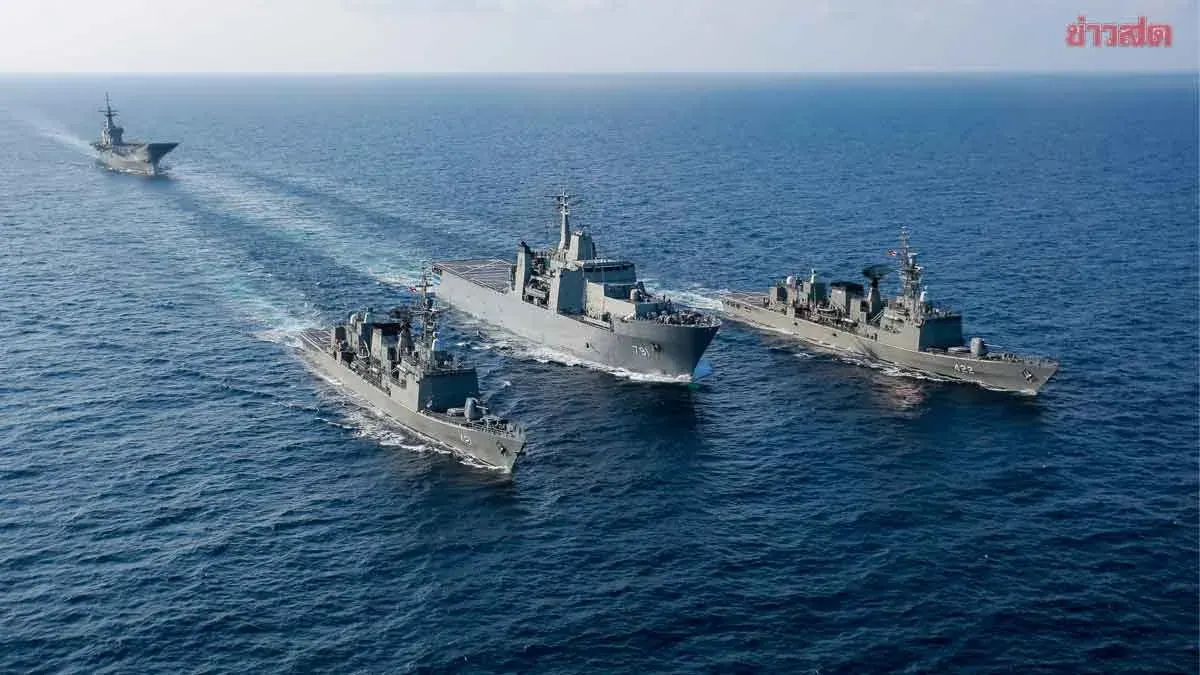
Thailand's Navy secured backing for a four-frigate procurement plan designed to boost domestic shipbuilding capacity, with winning bidders required to invest at least 2.5 billion baht in technology transfer and local production partnerships
On July 10, the Parliamentary Military Affairs Committee held a seminar titled "Security Budget Strategy and Development of Thailand's Shipbuilding Industry and Self-Reliance" at the Royal Thai Navy headquarters. Navy representatives, shipbuilding contractors, and related agencies exchanged views on the Navy's frigate acquisition plan and domestic shipbuilding development.
Chatchai Suphattawanitchai, vice chairman of the Military Affairs Committee, noted that the frigate project has drawn public interest due to its security budget implications. The seminar was organized to provide an open forum for discussion based on facts, data, and academic principles to ensure comprehensive understanding.
Rear Admiral Saravut Chiyangkaput, director of the Naval Logistics and Planning Office, stated that the Navy manages equipment procurement across three dimensions: acquisition, operations, and maintenance. He confirmed that the frigate project has strict terms of reference covering economic offset policies to ensure long-term national benefit.
The key concept, Chiyangkaput explained, is that acquiring frigates is not merely purchasing weapons but investing in industrial capacity and national self-reliance. Bidders must submit offset plans covering five areas: investment in Thailand, technology research and transfer, training and personnel development, co-production with Thai industry, and other assistance.
The winning bidder must conduct economic compensation activities valued at least 15 percent, or approximately 2.5 billion baht, of the first frigate's 17 billion baht budget, with economic impact assessments to maximize national benefit.
The project uses internationally recognized evaluation standards acceptable to manufacturers worldwide and may serve as a model for future large government procurement. The primary goal is ensuring the Navy receives all four frigates as outlined in the national security white paper.
Wiroj Lakkhanadisorn, military committee advisor, supported linking frigate procurement to Thai shipbuilding development, viewing it as investment and job creation rather than mere defense spending. He proposed acquiring all four ships consecutively for maximum value.
Phattharawin Chongwisarn, secretary of the Thai Shipbuilding and Ship Repair Association, confirmed that Thai contractors are fully capable of building frigates. The association's eight shipyards are prepared to cooperate with the Navy, potentially utilizing the Navy's Mahidol Adulyadej Dockyard as a joint production base to stimulate the economy, reduce imports, and increase future export opportunities.