Rare Sacred Amulets From Revered Thai Monks Gain Collector Interest
Sacred amulets from revered Thai monks spanning over a century, including rare pieces cast in 1927 and 1865, are gaining collector interest for their historical significance and reported protective qualities.
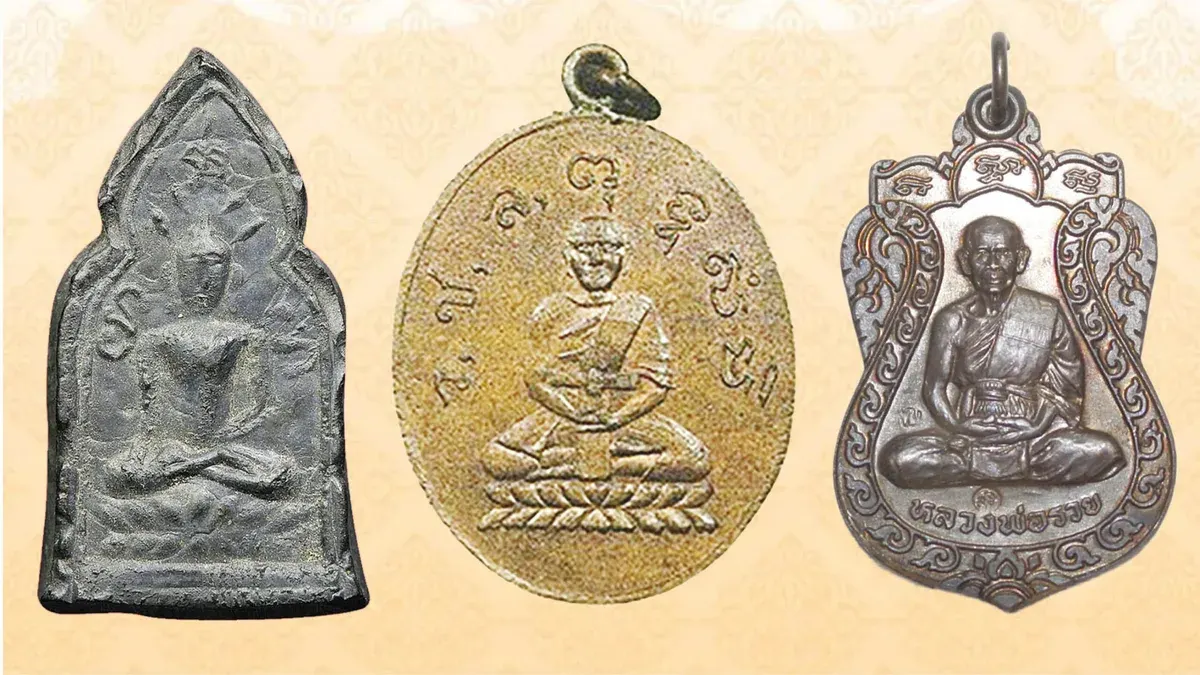
"Use wisdom to understand the mind, use intelligence to preserve the heart, and we will become wise people who know how to train the mind," teaches Luang Pho Cha Subhatto of Wat Nong Pa Phong in Ubon Ratchathani. Luang Pu Jai Inthasuvanno, a renowned Buddhist scholar at Wat Sedet in Samut Songkhram, inspired deep devotion among residents of the Mae Klong River basin. His most popular amulet is the "Phra Zum Pratoo," cast in 1927 when he received his ecclesiastical rank. The single-cast design features a Buddha in Maravijaya posture within a two-tiered architectural frame, surrounded by sacred scripts. Its scarcity and nearly 100-year age make it highly coveted, with users reporting remarkable protective experiences.
In 1865, Luang Pho Hong Puthsaro of Wat Chong Lom in Ratchaburi authorized the creation of stamped coins bearing his image in seated meditation. These oval-shaped coins feature his portrait on the obverse with Thai letters "W, C, L" (Wat Chong Lom) and Khmer script on the reverse—among the oldest stamped coins of Ratchaburi Province, cast in mixed bronze with greenish-yellow and reddish-yellow hues.
Luang Pho Ruay Chanthsiri, a revered abbot of Wat Tha Ruea Gaeng in Rayong, commissioned the "Luang Pho Ruay Commemorative Medal 2535" amulet during his final ordination ceremony before passing away. The leaf-shaped medals feature his seated image with decorative rope-pattern borders and yantra symbols on the reverse, earning popularity among amulet collectors.
On November 11, 1978, Luang Pho Aew Suphathamma, former abbot of Wat Hua Muang in Nong Chang, Uthai Thani, created commemorative oval coins with loop handles for a Buddhist robe presentation ceremony. The design features his meditative figure on the obverse with Thai inscriptions and a four-square yantra grid on the reverse, representing another prized monastic amulet.