Ratchaburi Turns Invasive Fish Into Duck Feed, Cuts Costs, 100% Egg Rate
In Ratchaburi province, village headman Suwat Kitnitchiew is tackling an invasive black-chin tilapia outbreak by catching the fish and using them as high-protein feed for his Khaki Campbell ducks. The innovative approach, supported by the Ratchaburi Fisheries Office, has drastically reduced feed costs and pushed the flock's laying rate to nearly 100%, producing large, chemical-free eggs in high demand locally. The project serves as a model for controlling invasive species while boosting community income.
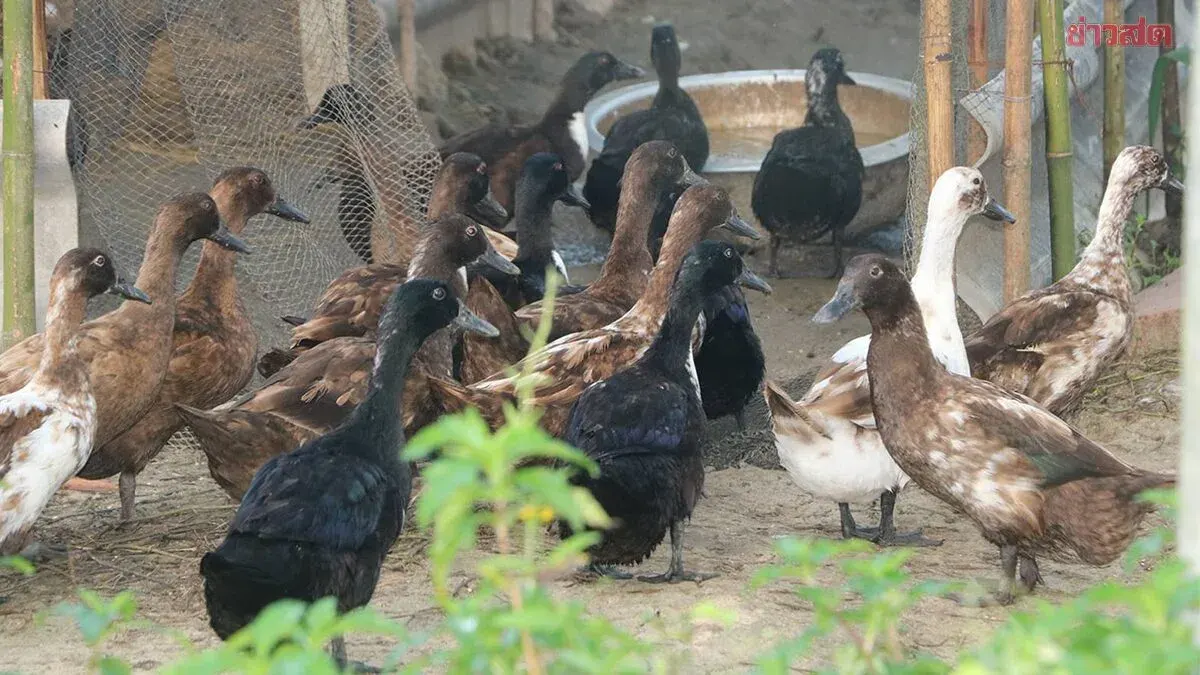
In Ratchaburi's Ched Samian subdistrict, Photharam district, village headman Suwat Kitnitchiew, known as Pu Yai Om, head of Moo 6, has turned a crisis into an opportunity by catching invasive black-chin tilapia from canals to feed his ducks, cutting feed costs while the ducks lay fertilized eggs at nearly 100%, with villagers placing advance orders.
Pu Yai Om's property is fenced with a coop and bamboo groves providing shade for his Khaki Campbell ducks. Each morning he rides his motorcycle with a scoop net to catch black-chin tilapia infesting the Nong Bang Ngu canal and its tributaries. He minces the fish finely, mixes them with rice bran, and feeds the flock morning and evening, significantly reducing feed costs. The ducks are healthy and their egg production increases daily. After laying, the flock leaves the coop to forage happily along the fence line and pond, awaiting their owner's return with the minced fish mixture. Observations show the ducks eagerly devour every bit of the fish-laced feed.
Suwat explained the project began when the Ratchaburi Fisheries Office surveyed the area and found black-chin tilapia spreading through local canals. They introduced ducks to farmers and suggested using the invasive fish as feed. Suwat now catches fish daily, greatly reducing the tilapia population. Previously he bought commercial feed daily; using tilapia has helped enormously. He reports 68 ducks, 8 males, collecting 62 eggs daily — essentially a 100% lay rate. Monthly expenses are around 3,000 baht, but demand exceeds supply because the ducks eat naturally, producing chemical-free eggs villagers trust.
Feeding occurs twice daily using about 2 kilograms of minced tilapia mixed with rice bran. The eggs are large with deep red yolks and good weight. As a project supported by the provincial fisheries office, Suwat aims to maximize community benefit. Eggs sell at 100 baht per tray, affordable for locals, while market prices vary by size.
Ratchaburi Fisheries Officer Amnaj Chin Khaw Dam said the black-chin tilapia infestation in Ratchaburi remains relatively low, not exceeding 10 fish per 100 square meters. Control follows the Fisheries Department Director-General's policy: contain spread, eradicate as much as possible. Large catches are distributed to nearby residents for processing and consumption during canal fishing events; smaller fish become compost, coordinated with the Ratchaburi Land Development Station. Thamakham Witthaya School's director ferments fish into fish sauce. Private sector support also helps the fisheries office target black-chin tilapia for duck feed or snakehead fish feed for farmers in affected areas.
For example, Pu Yai Om's household cooperates to eradicate tilapia in Nong Bang Ngu canal. The Nong Bang Ngu model provides ducks for trial rearing, modifying previous feed by adding tilapia to the mix.