Revered Buddhist Amulets From Four Provinces Attract Collectors
The user wants a short summary (1-2 sentences, 120-220 characters, max 240) of an article about Buddhist amulets from four provinces attracting collectors. The article describes four specific amulets/monks from Samut Prakan, Samut Songkhram
"This Dhamma language is not any ordinary language; it is the language of Dhamma," a teaching by Luang Por Cha Suphattho of Wat Nong Pa Phong, Ubon Ratchathani.
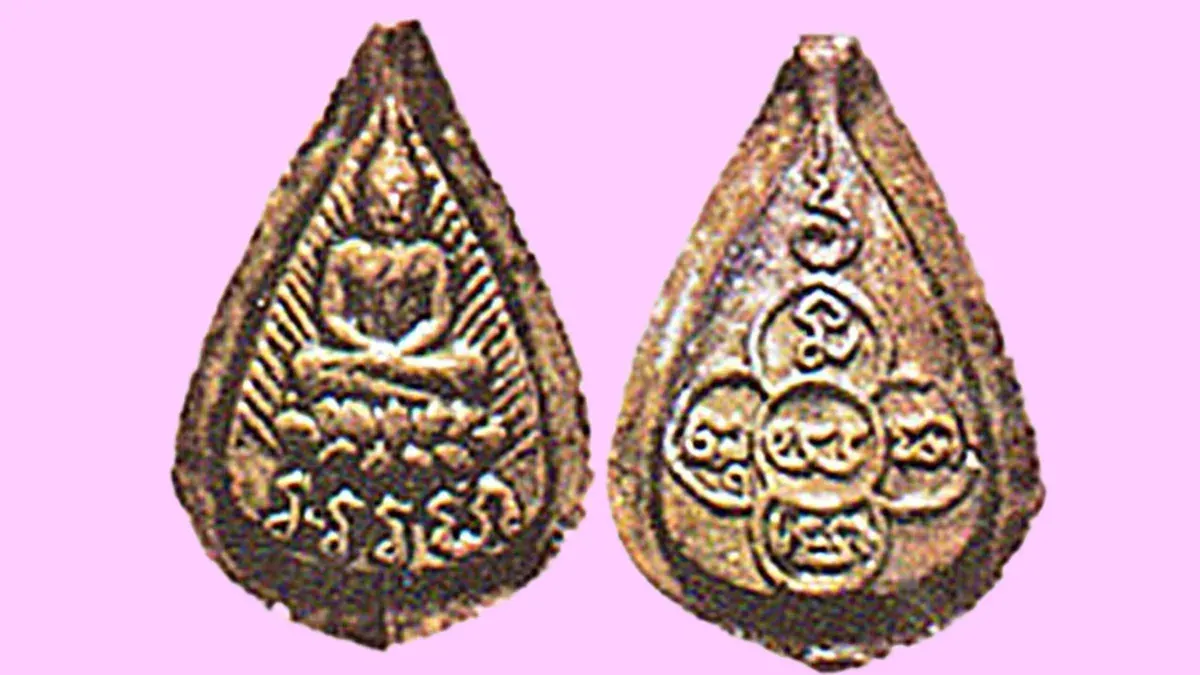
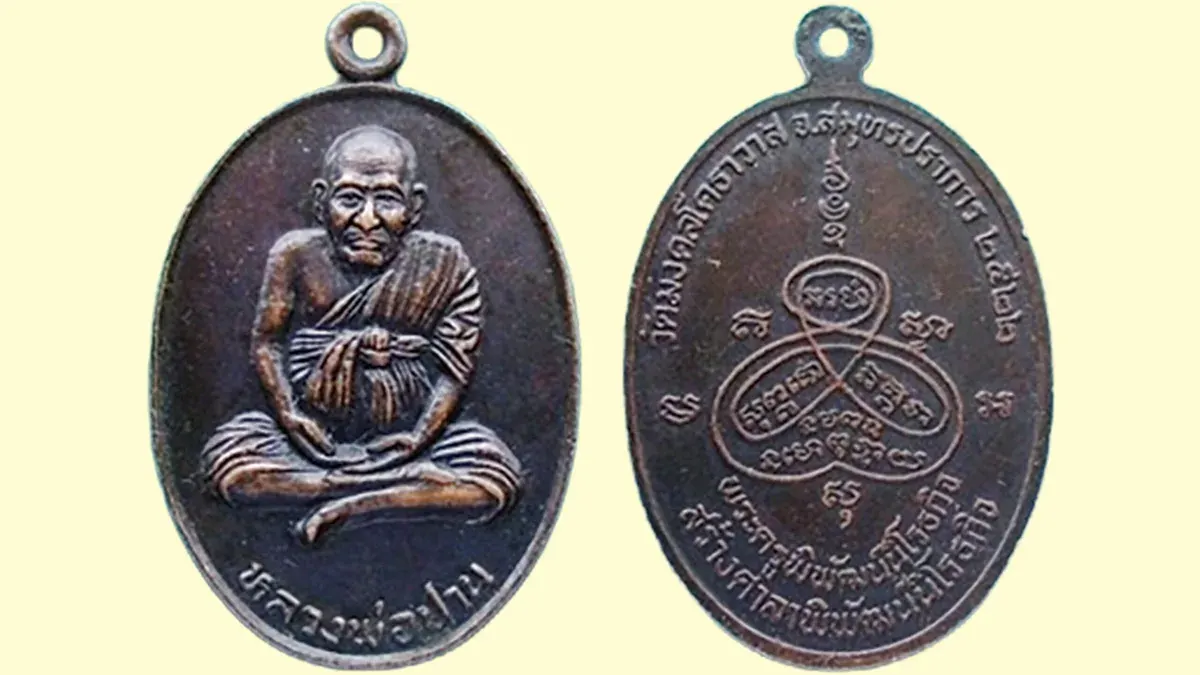
Luang Por Pan's amulet, former abbot of Wat Mongkol Kothawas (Wat Bang Hia), a renowned monk of Samut Prakan. This sala-building commemorative edition was created by Phra Khru Mongkol Phiphathakhun in 1979 to distribute to relatives and merit-makers who helped build the temple sala, and as a memorial to Luang Por Pan, never sold commercially. This oval-shaped coin with a loop features Luang Por Pan in full meditation posture on the front, and his personal yantra on the reverse. It is considered a valuable amulet imbued with Buddhist virtue, worthy of collection.
Luang Por Kaew Promsaro of Wat Phuang Malai, Tambon Ban Prok, Mueang District, Samut Songkhram, a famous teacher of the Mae Klong region whose disciples hold deep faith. He created many types of sacred objects for followers, all popular and highly sought after, especially his takrut made from palm leaves. He insisted on using leaves from sugar palms growing specifically at the mouth of Khlong Bang Pueng, Tambon Nang Takian, Mueang District, Samut Songkhram, using five-month-old tender leaf tips. Luang Por Kaew explained the reason: "Bang Pueng" rhymes with "Bang Pueng" (to block guns), allowing the word to be transformed into "bang pueng" for invulnerability. Once obtained, he cut the leaves into 5-6 inch pieces, sun-dried them, then inscribed characters. The khom script reads "Phu Phi Phu Pha" surrounded by the character "Mi" at the center, with supporting characters as appropriate. The Bang Pueng palm-leaf takrut is Luang Por Kaew's signature amulet, cherished by Mae Klong locals, with outstanding Buddhist power for safety and invulnerability.
In 1994, disciples from Nakhon Phanom created a sayid coin to offer to Luang Pu Khamphan Khosapanyo, former abbot of Wat Phra That Maha Chai, Pla Pak District, Nakhon Phanom, for his 80th birthday on January 10, 1995. Partial proceeds aided Nakhon Phanom Provincial Administration's public charity. The teardrop-shaped coin features a raised naga border on the front, with Luang Pu Khamphan's half-figure floating in relief at center. The robe bears the initials "Th.Ch." from Phra That Maha Chai. Near the lower border is inscribed "Phra Sunthon Thammarak," his highest ecclesiastical title. The reverse bears the Maha Setthi Four-Direction Yantra, Luang Pu's personal yantra. The left side has the character "Na" from "Na Pad Suen Nibbana," the right repeats "Th.Ch." Below the yantra reads "Sayid, Disciples Built as Offering, 10 Jan 37, Wat That Maha Chai, Nakhon Phanom." This is another highly praised edition.
Por Than Khwai Chantasuvanno, the authoritative voice of the South, former abbot of Wat Suan Khan and Wat Phra That Noi, Cha-uat District, Nakhon Si Thammarat. His most popular amulet is the "Por Than Khwai First Edition 1955" or the two-rim version, currently a top favorite among southern monk amulet collectors. The two-rim Por Than Khwai coin was cast in bronze in 1955 when Wat Suan Khan built a multi-purpose sala. It is round-oval with a loop. The front shows a half-figure with the text "Luang Por Khwai Wat Suan Khan Edition 1," clear nianthakom (facial features), a mustache at the right mouth corner, a reeded edge, and a die crack through the character "Khwai" in his name. The reverse has a pierced loop, each yantra character sharp and clear, with a blocked rim, hence called "two-rim edition." Among famous southern teacher coins, this stands out.