Senior Buddhist Leader Warns Against Blaming All Buddhism for Individual Monks' Misconduct
A senior Buddhist prelate warned against blaming all Buddhism for individual monks' misconduct, urging critical thinking and individual case assessment during a September 18 meeting with Thailand's parliamentary Religious Affairs Committee.
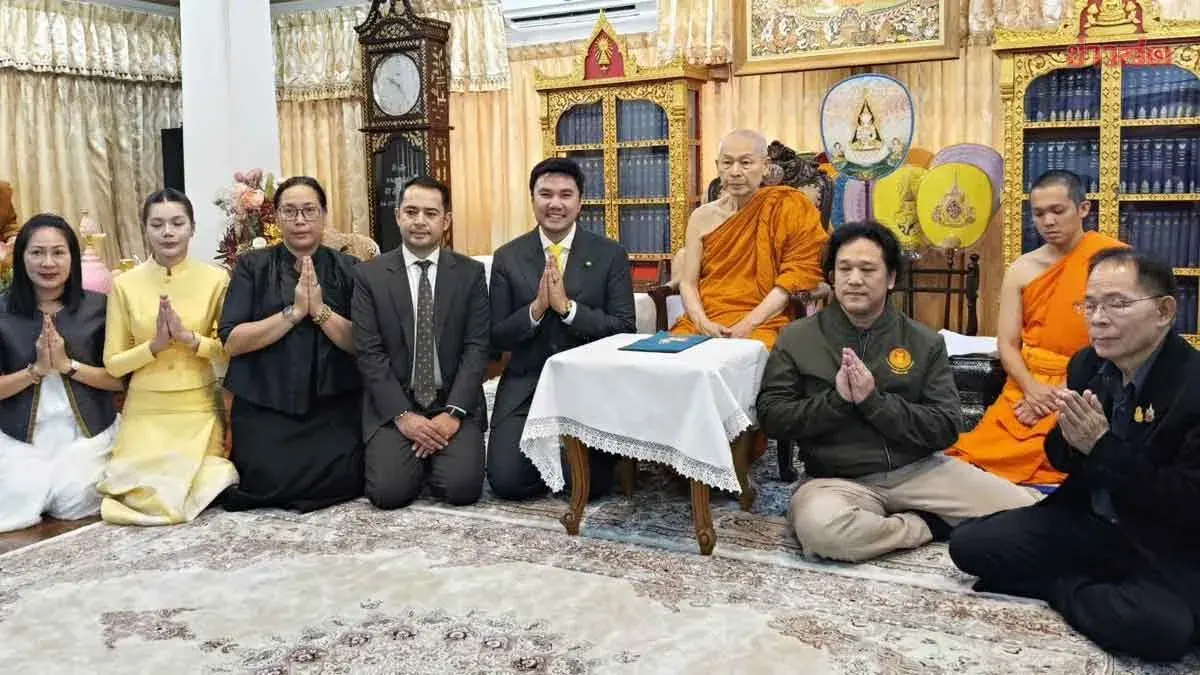
On September 18, the parliamentary Religious Affairs, Arts and Culture Committee, led by Padith Sangkachai and Chananon Thai-Saetr, traveled to Suthat Thepwararam Temple in Bangkok to pay respects to Somdet Phra Sutthisan Wachiramuni, a senior Buddhist prelate and temple abbot. The delegation received guidance on conducting their lives and duties for the people and nation.
Somdet Phra Sutthisan Wachiramuni addressed recent news of monks behaving improperly, which has shaken public confidence in Buddhism. He urged Buddhists to think critically when receiving information, distinguish facts carefully, and consider each case individually, since every society contains both virtuous and misconduct-prone people. When problems arise, their causes must be found and corrected properly—individual misbehavior should not lead to generalizations that the entire Buddhist religion is in decline.
He also advised those serving the nation that being born human and having the opportunity to work for others is precious, especially for those entrusted as public representatives. They must be mindful of this opportunity, use their time and authority honestly, and create benefit for the common good rather than let life pass without value. They must also constantly guard and examine their minds against anger, greed, delusion, and unwholesome emotions, since all thoughts, words, and actions produce consequences. Right thought, right speech, and right action form the foundation of a meaningful life and service to society.
Somdet Phra explained dependent origination, showing how all things arise from causes and conditions: when a cause occurs, its effect follows, and when the cause ceases, the effect depending on it ceases too. Nothing arises without cause. This principle explains the cycle of suffering from ignorance through old age and death, with craving and attachment being the forces that keep life trapped in suffering.
Reducing suffering requires recognizing craving and attachment, not allowing anger, greed, and delusion to control the mind, and remembering that all actions bear fruit. People should cultivate goodness, constantly consider what brings benefit or harm, and live without negligence.
The core message was that life has value but limited time; everyone must use the time available to do good, keep the mind peaceful, perform their duties excellently, and benefit people, society, Buddhism, and the nation.
The committee then toured the Museum of Somdet Phra Sangkharat, established to preserve and promote the biography, life story, and Buddhist heritage of the 12th Supreme Patriarch of Thailand. This residence was where he lived until his death in 1944 before being restored and developed into a museum over approximately 11 years.